Jennifer Steen Booher

Beach Trash

Sand Beach, November 25, 2010

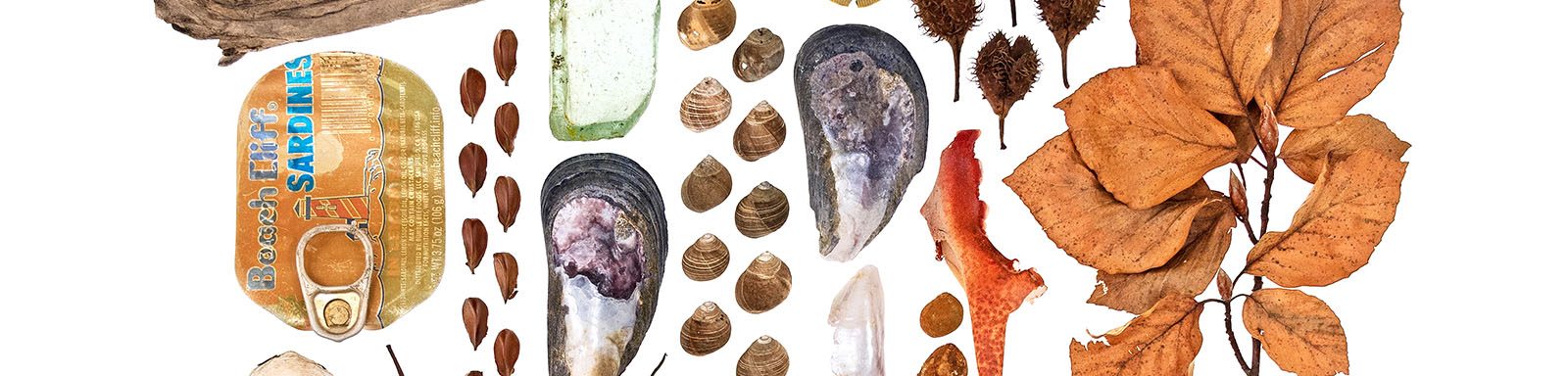
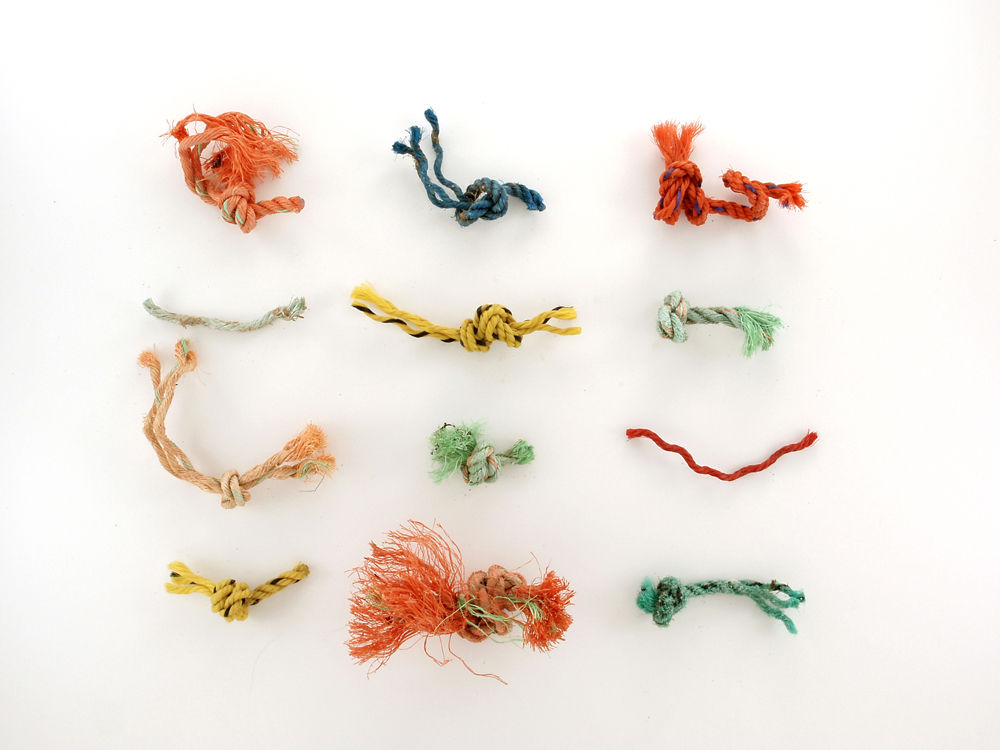
I don’t photograph everything I pick up on the beach. Sometimes it doesn’t all fit. Sometimes a shell or feather won’t show up against the white background. And sometimes an object just isn’t interesting but I don’t want to leave it behind. Like plastic trash. You may have noticed that there isn’t a lot of contemporary trash in these photos. This is because most plastic does not change very much in the ocean. Not a lot of patina on an Aquafina bottle. Irony, yes. Patina, no. So I personally find most modern beach trash boring. But on the National Park beaches I don’t gather anything but garbage (take only pictures, you know, and leave only footprints), so I’m happy to find bits of rope. Even plastic and nylon ropes get frayed and knotted and twisted and faded. I like them.

And I do pick up a lot of other trash while beach combing. It feels wrong to leave it, unless I think the ocean will eventually improve it. Glass, for example, I usually leave, and some metal. Plastic and paperish things like cigarette butts are hopeless, though. Those are true trash, and I make sure they reach … the landfill. Small improvement, I know. In some ways it smacks of NIMBYism. Not OK on my beach, but OK in your dump. Garbage is so emotionally charged, isn’t it? There’s no really satisfactory end for it. But there is some satisfaction in cleaning a beach. I came across this video on the Lino Forest blog:

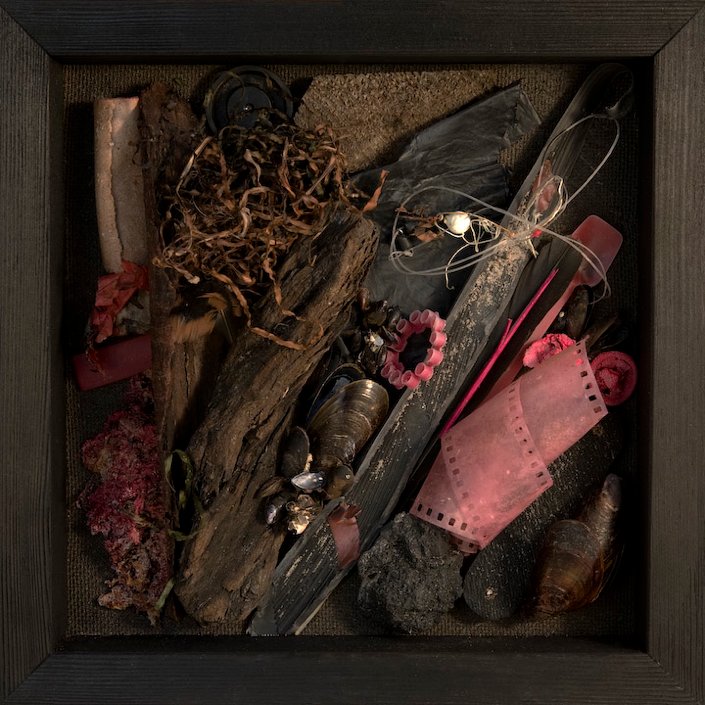
Now I do know some people who do work with plastic they find on the beach. Check out ankepaap‘s blog, for one, and the aforementioned Lino Forest. Ankepaap works on the North Sea, I think, or the Baltic, and the work really makes me think twice about the artistic possibilities of beach plastic:
 And here’s an interesting corporate response to the issue:
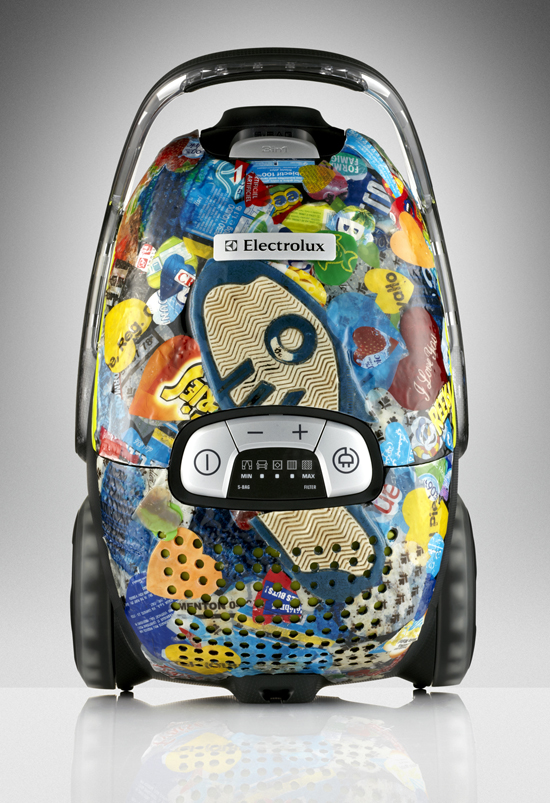
The Electrolux “Vac from the Sea” project. Apparently there isn’t enough recycled plastic available for them to make vacuum shells out of it, so they sent out teams to harvest plastic trash from five seas, then crafted limited-edition vacuum cleaners from the debris. This is the Mediterranean edition. They’ve also got the North Sea, Indian Ocean, Pacific Ocean and Baltic Sea editions. I love it when artists make new objects from trash, but these are incredibly disappointing, especially the crusted-looking Pacific,
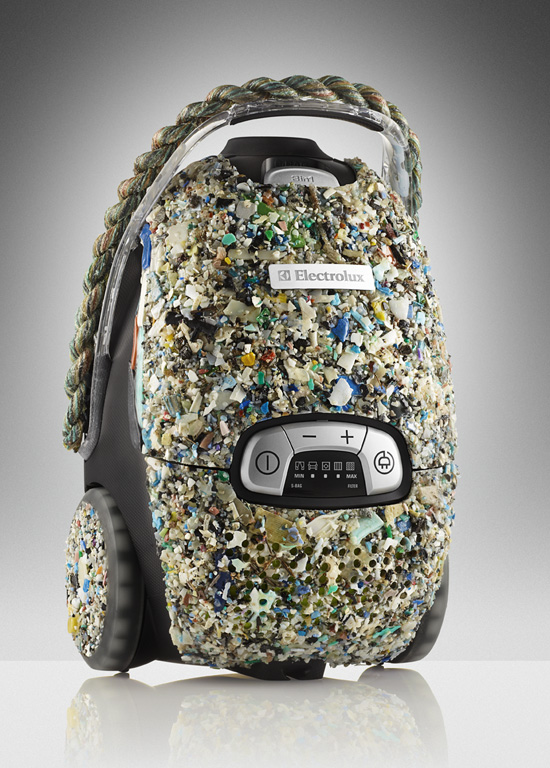
which looks like a kindergarten mosaic that would hold more dust in its crevices than in the vacuum bag. Ick! And it’s hardly a long-range plan. But I give them big points for a rich concept. And lord knows I’ve got no better solutions up my sleeve. Next up in my Netflix queue is No Impact Man,

No Impact Man

about a city guy who decides to leave no impact on the earth for a year. Maybe he knows what to do with the garbage! If I figure it out, I’ll let you know.

And in case you’re curious, too, here are some books on my reading list as I learn about beach trash:
Flotsametrics and the Floating World: How One Man's Obsession with Runaway Sneakers and Rubber Ducks Revolutionized Ocean Science   Tracking Trash: Flotsam, Jetsam, and the Science of Ocean Motion (Scientists in the Field Series)   Washed Up   No Impact Man: The Adventures of a Guilty Liberal Who Attempts to Save the Planet, and the Discoveries He Makes About Himself and Our Way of Life in the Process
(I hope you aren’t offended by the Amazon inserts, it’s a great way to get images of the book covers. And we all know I like lots of pictures!)

Share

India: Wood Block Fabric Printing

So what was I doing in India? Well, the nominal excuse for travel was to see Indian fabric printing processes, thanks to two friends, one of whom who imports the wooden blocks and does custom block designs, and the other designs and imports block-printed quilts. (I am just amazed at the many cool things my friends do!)
You’ve had some glimpses of the workshops in the post on Bagru, but here’s a more detailed look at the whole process.

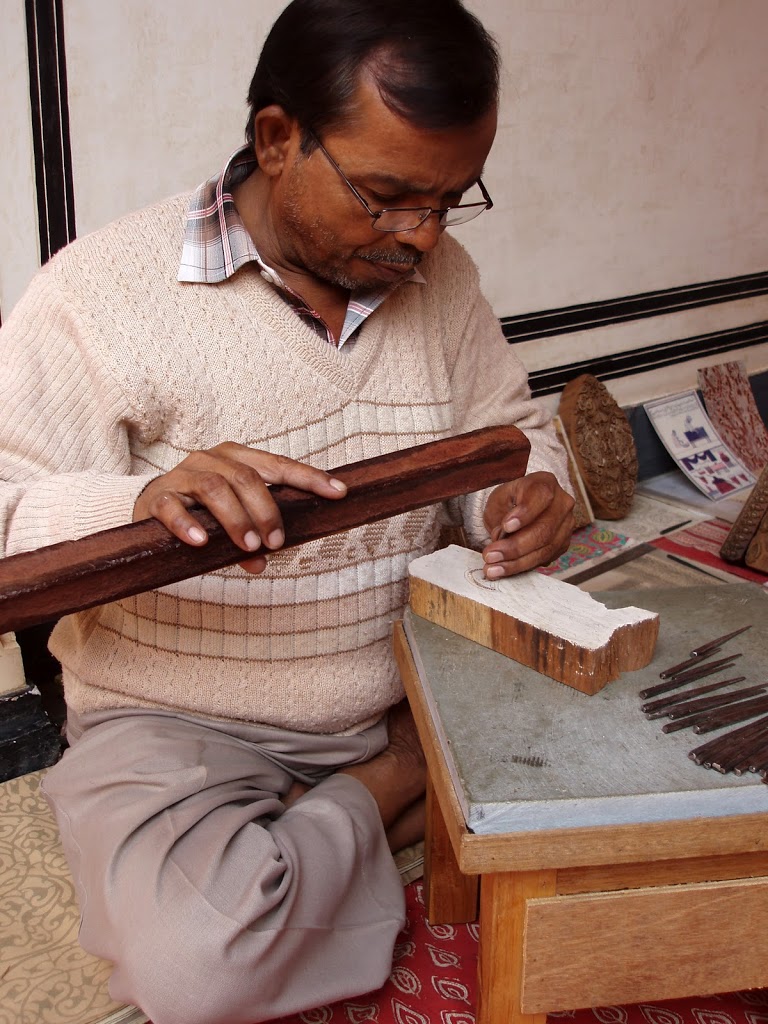
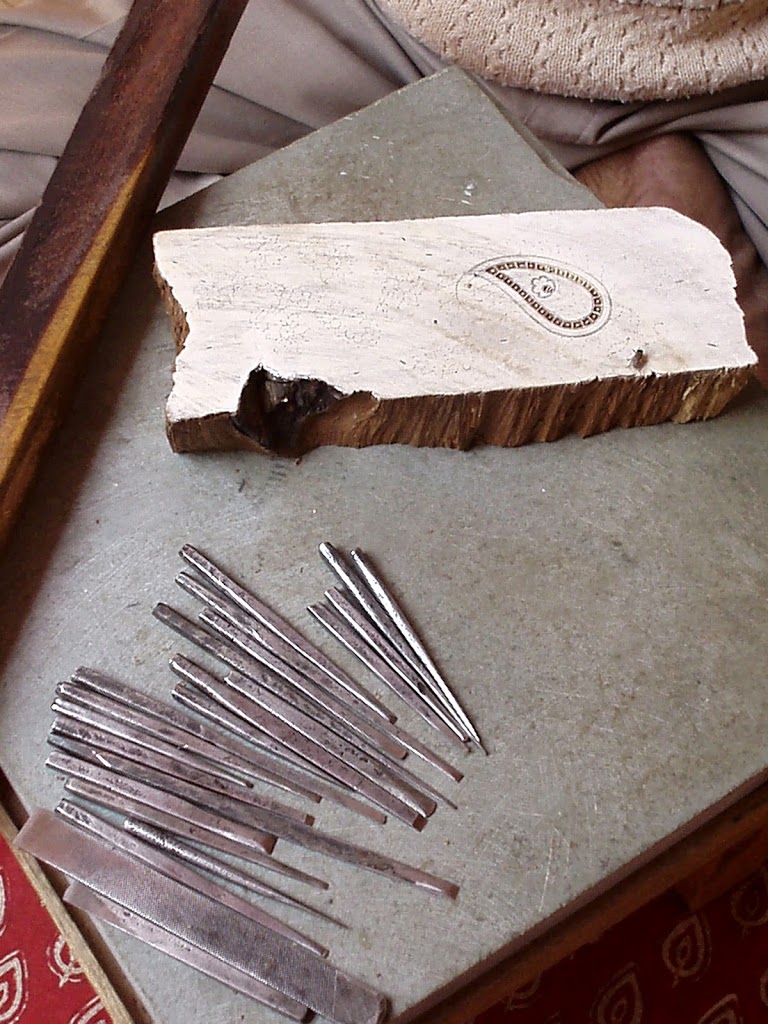
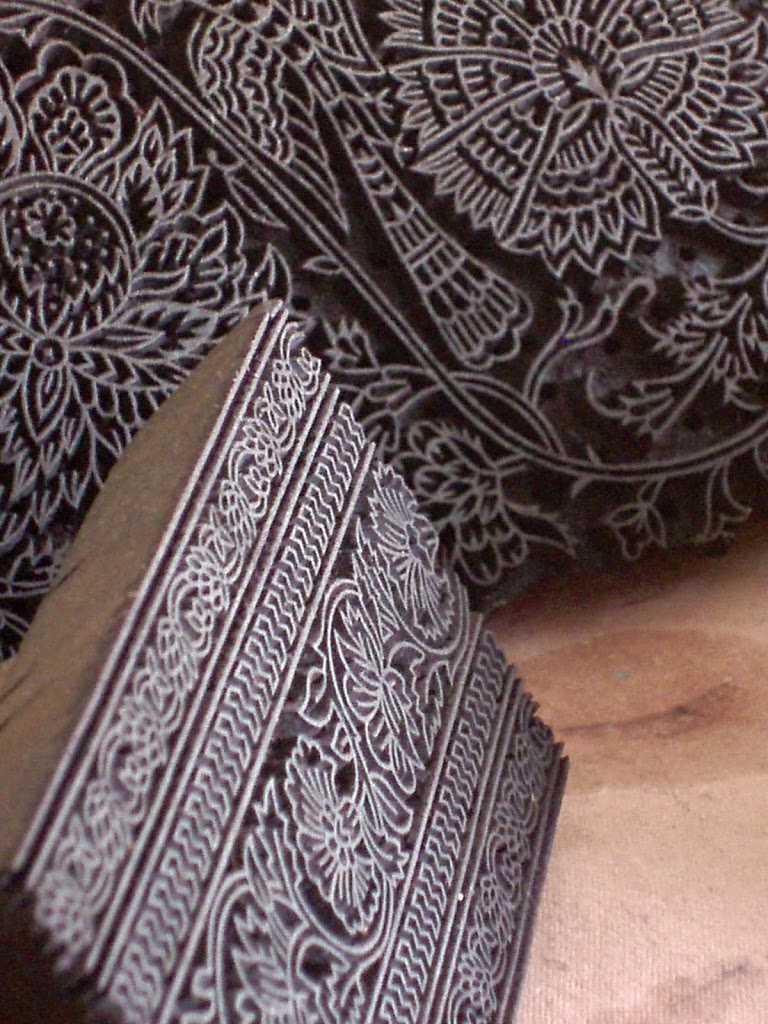
First, you need to carve the block. This man is a master carver giving a demonstration at the Anokhi Museum of Hand Printing in Amber, Rajasthan. The white coating on the block helps the carver see the design develop and is washed off before the block is used for printing. He holds a fairly heavy metal bar in one hand and his chisel in the other, striking the chisel precisely to make these incredibly fine incisions.

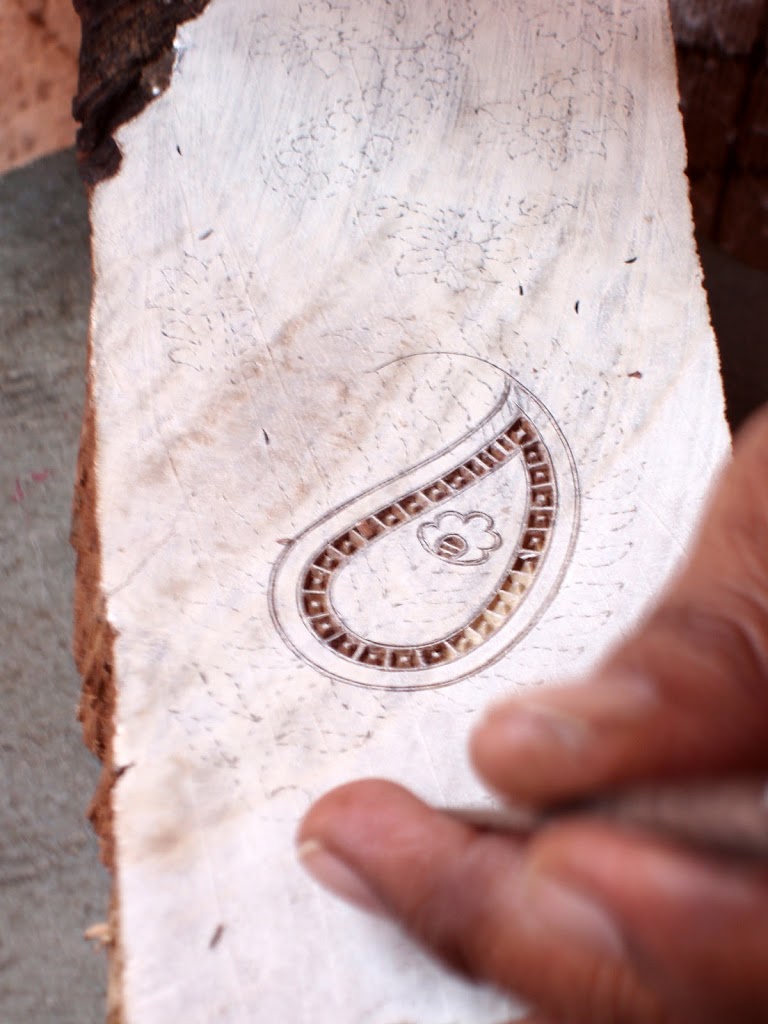
If you look carefully you can see how the design is penciled onto the whole block.

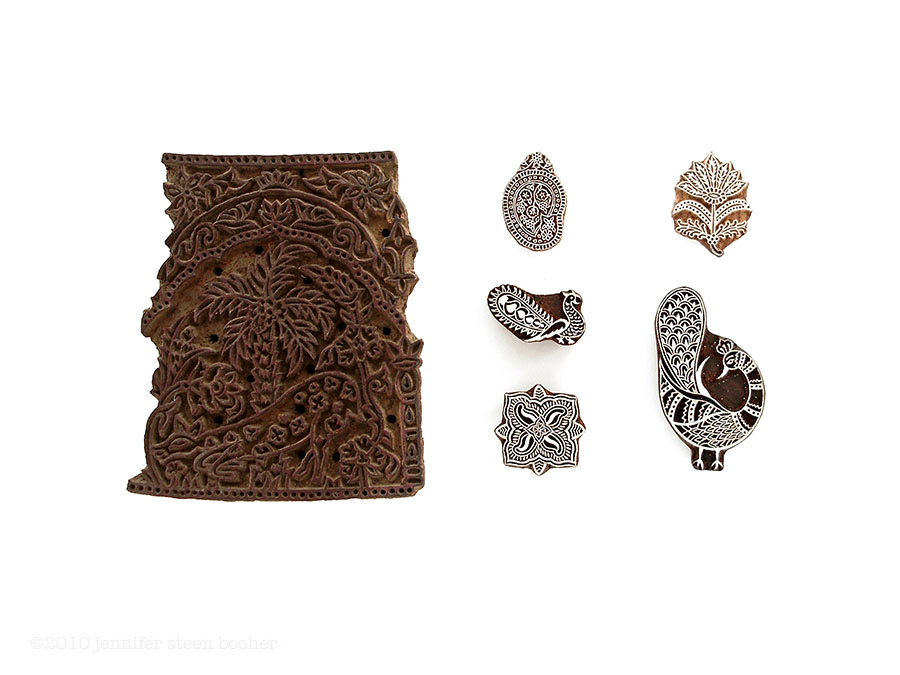
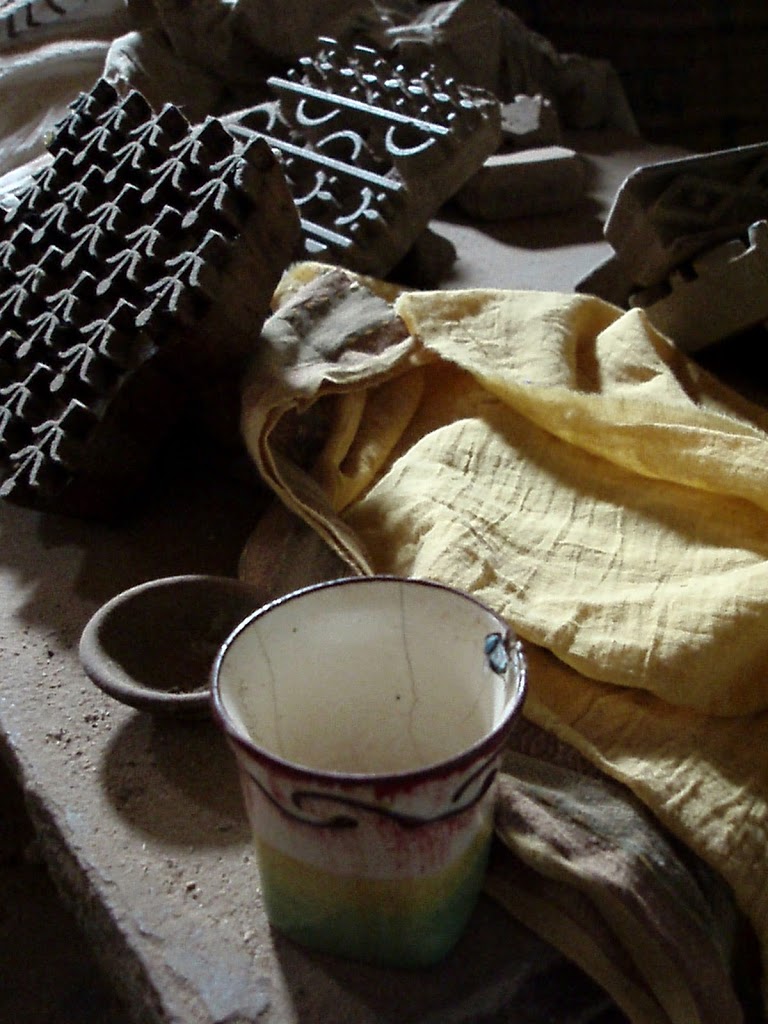
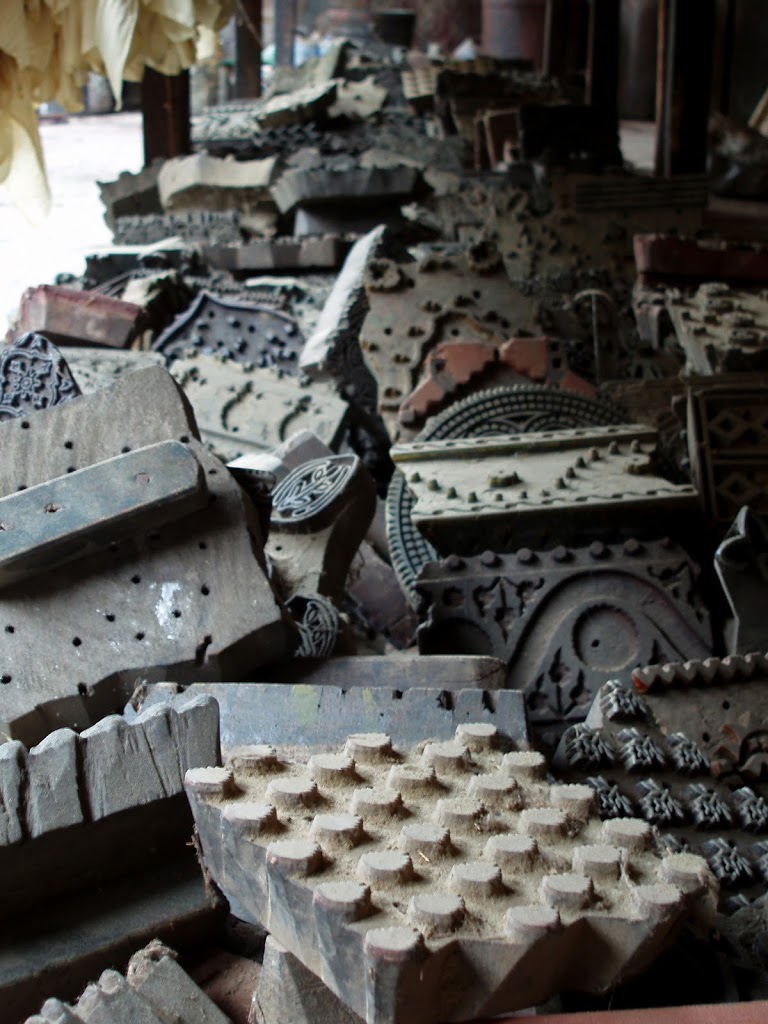
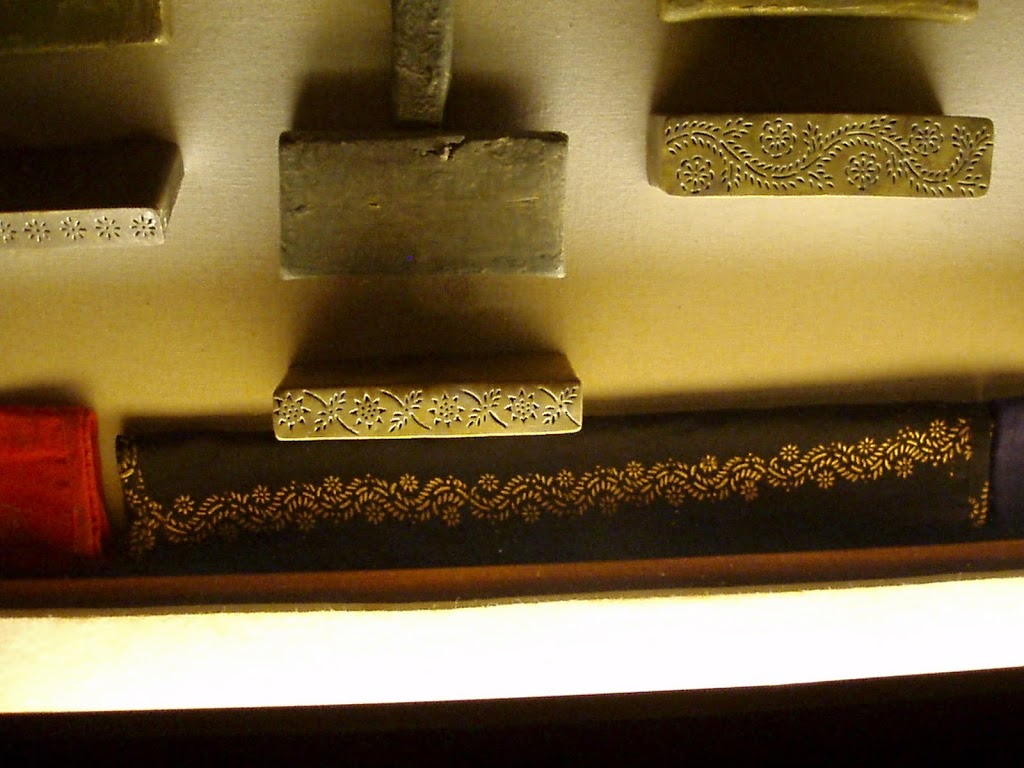
The small paisley design and the flower in the top photo are from the Anokhi Museum. (The largest block is an antique, and the other three are from The Indian Block Company.) All the workshops we visited had piles of fantastically textured blocks that were just begging to be photographed, so here are some unedifying but pretty pictures:
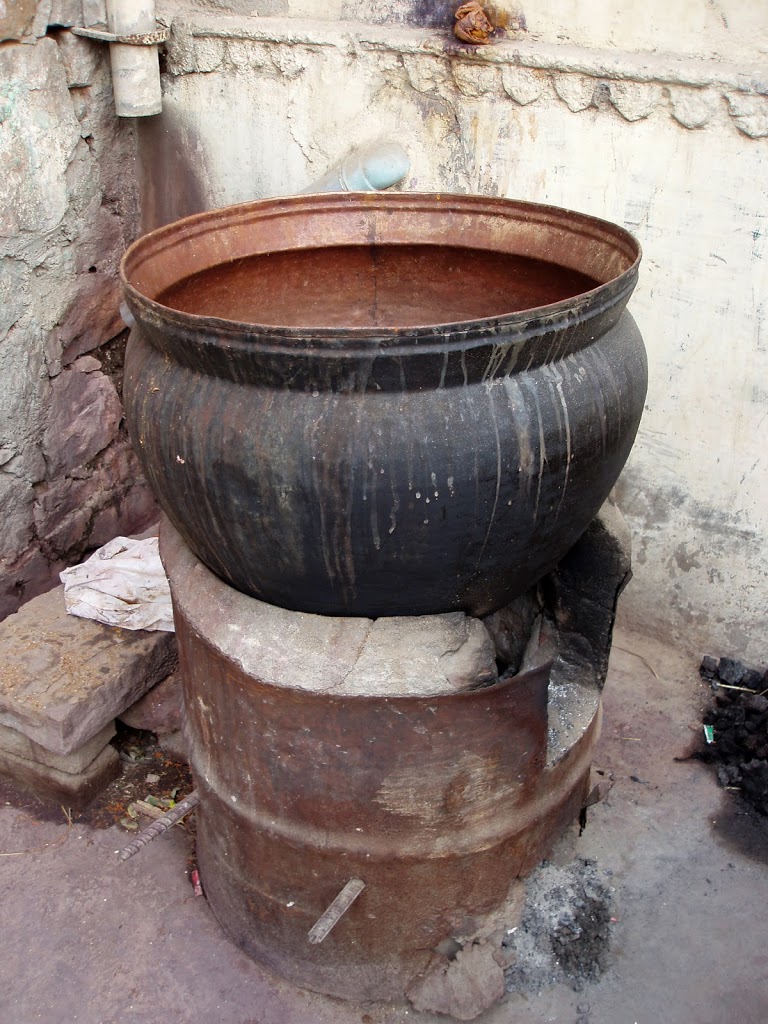
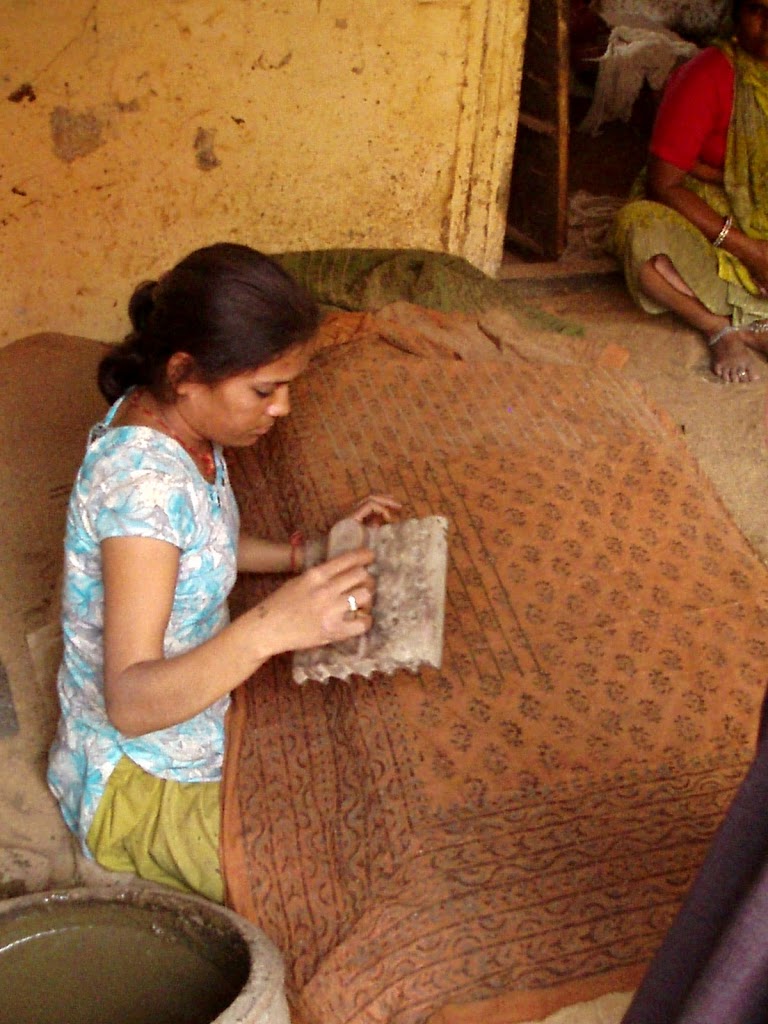
The next step is for the printers to prepare the fabric. Sometimes it is dyed beforehand, but usually it is prepared with a mordant, then the blocks are used to print the pattern for resist-dying. The fabric is prepared in vats like this:

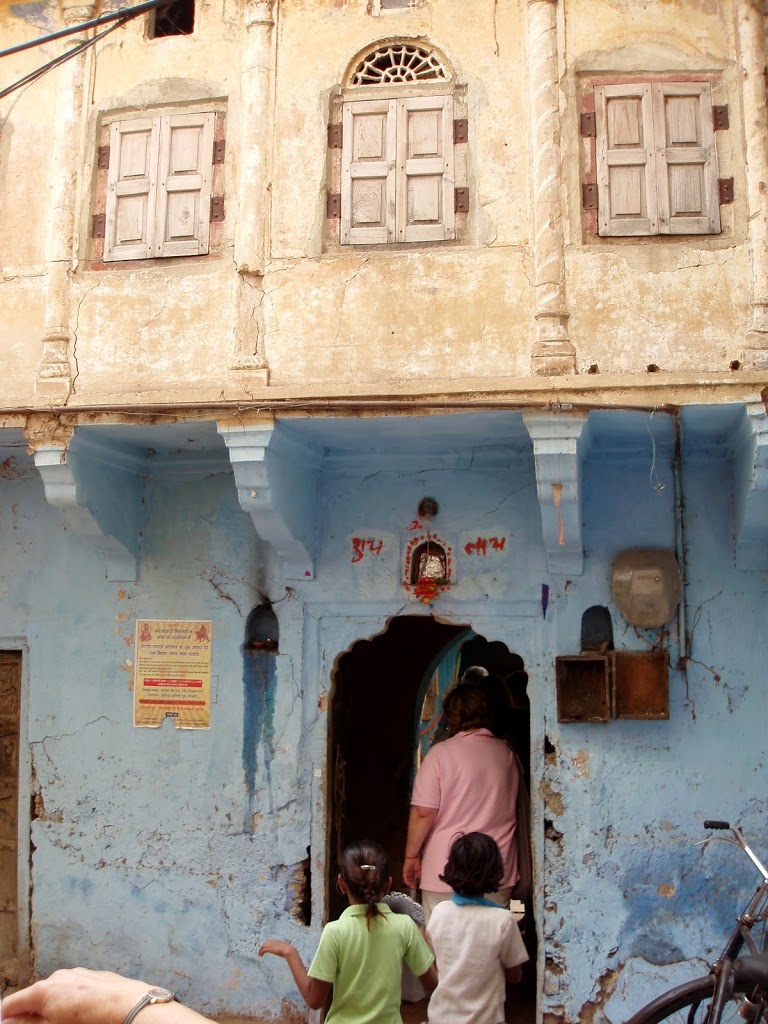
Here is the entrance to one of the “factories,” which are really extended family homes devoted to the fabric printing process:

(Tourists do not go here. We had a train of fascinated children following us the entire time.)

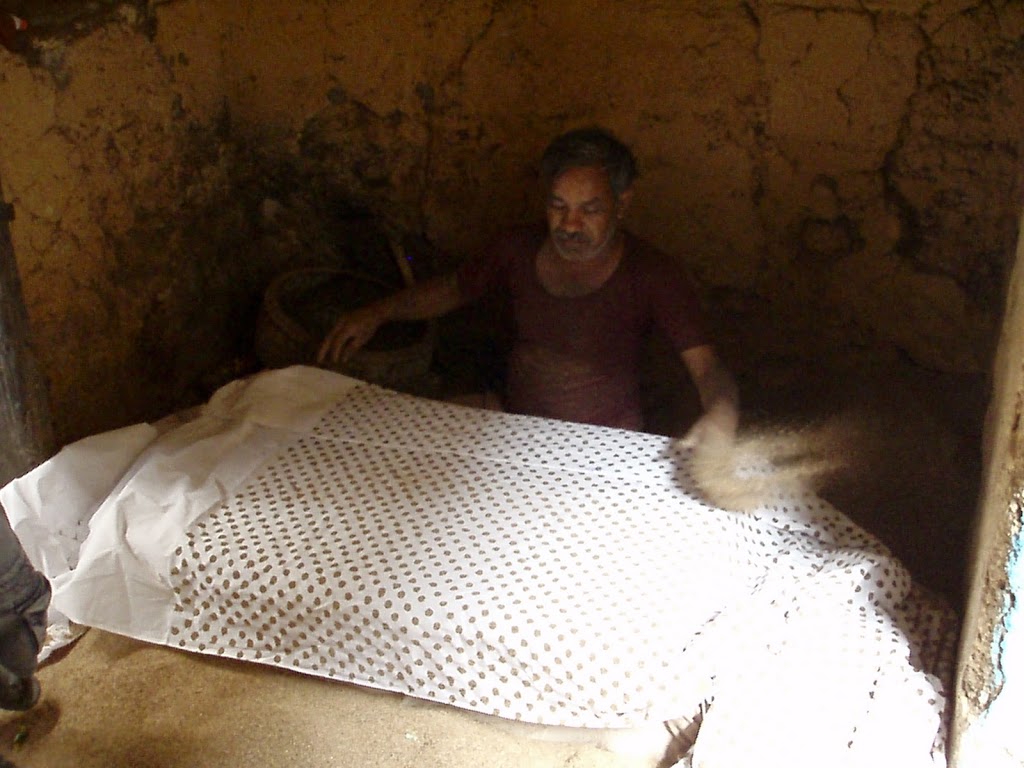
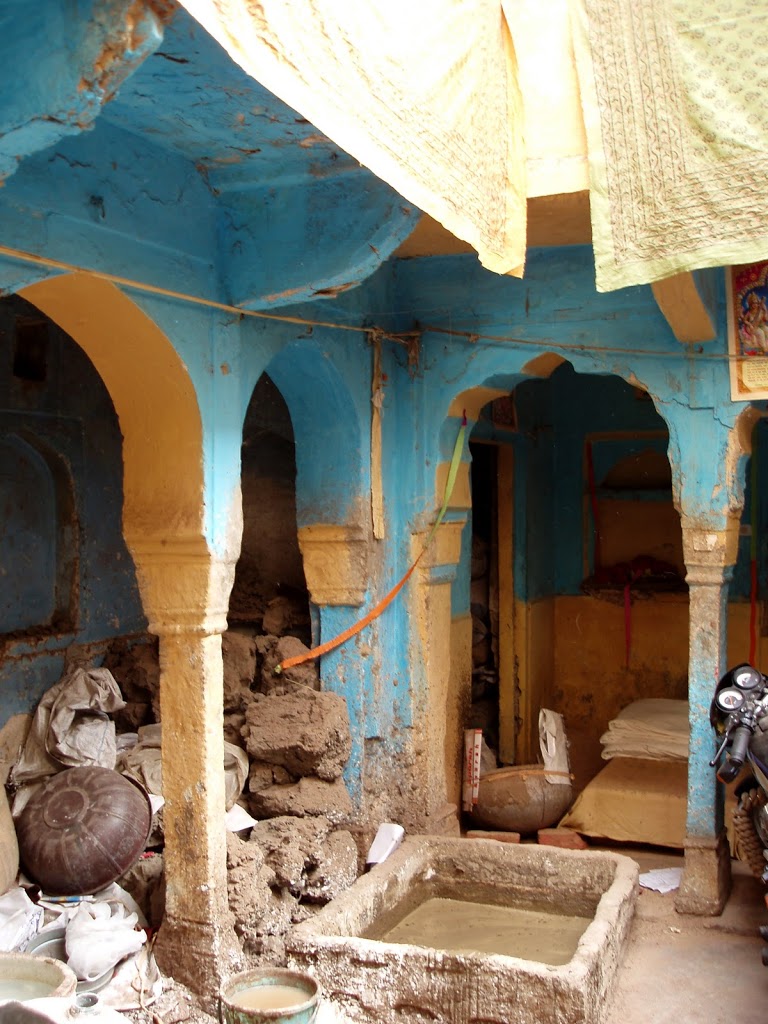
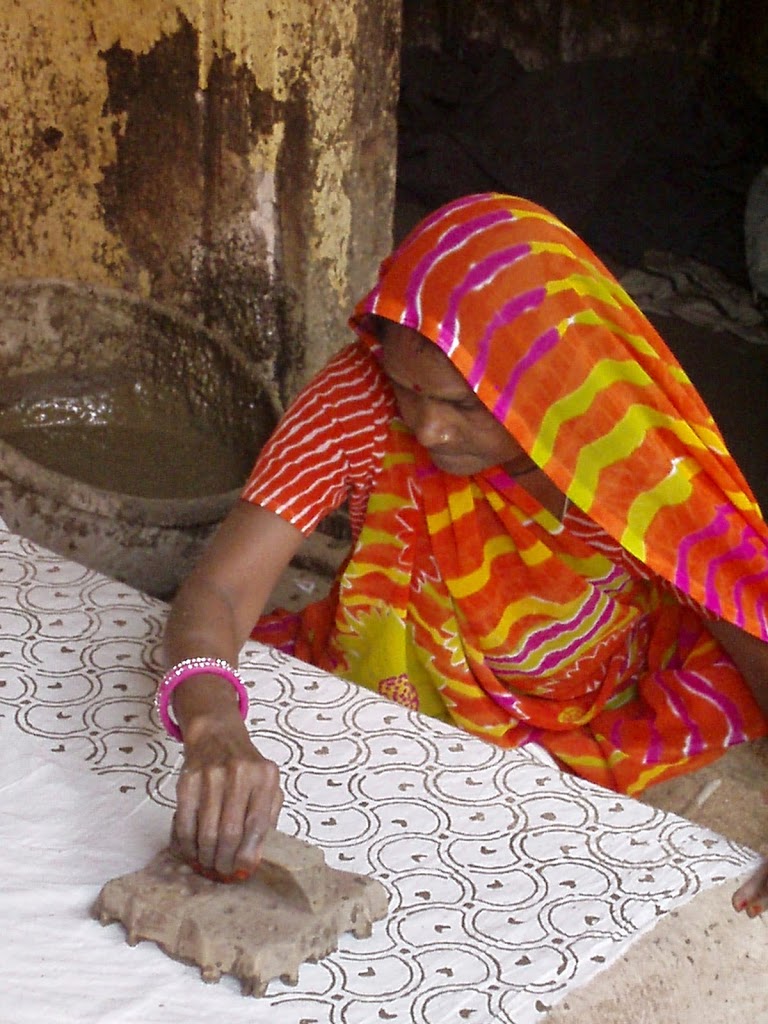
This gentleman is sitting in an alcove just inside the door. He has printed the fabric with a gluey mix that sticks to the fabric while it is dyed. The mixture is washed off afterward, and wherever you see a pattern now will be white in the end. In the photo he is dusting ground wheat (some sort of sandy-textured grain that has spoiled and is no longer good for food) over the freshly-printed resist. Here is the courtyard just past his alcove:

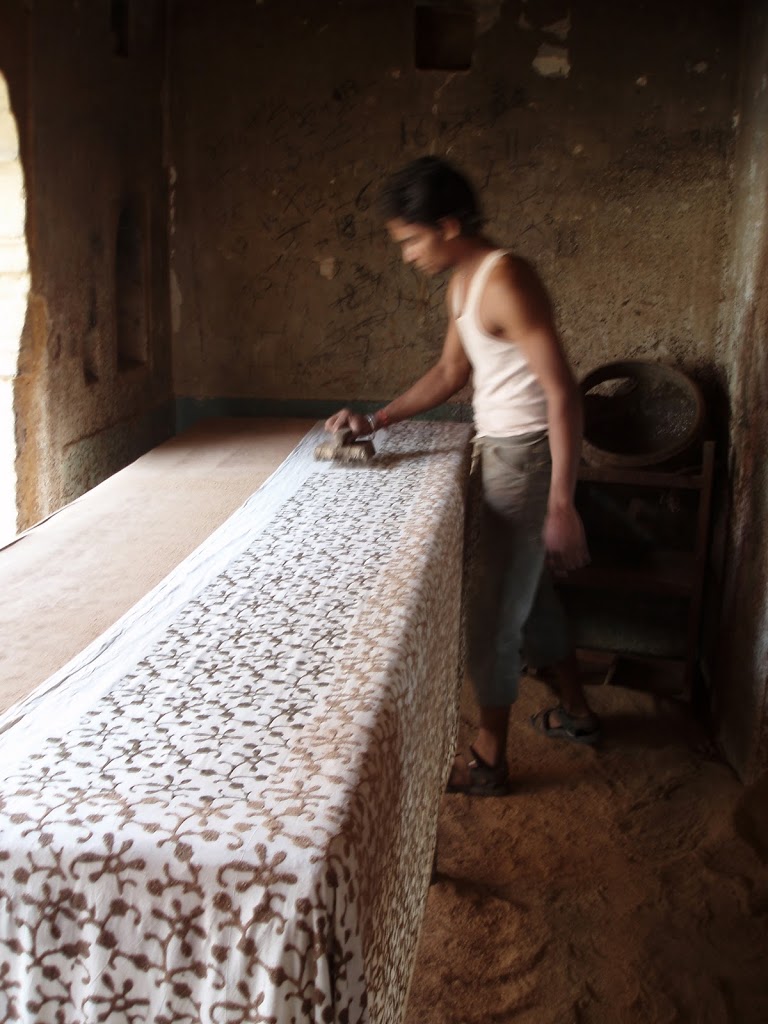
Notice the fabrics hung over the balcony to dry. Upstairs there is a room with long tables for more printing

and several women sitting in a sort of balcony-hall at low printing tables.

They align the blocks without hesitating, strike once with the heel of the hand to set and loosen it, sweep the block back to the dye tray, and smoothly align it again. Thunk, swish, dab, thunk. Smooth as dancers.
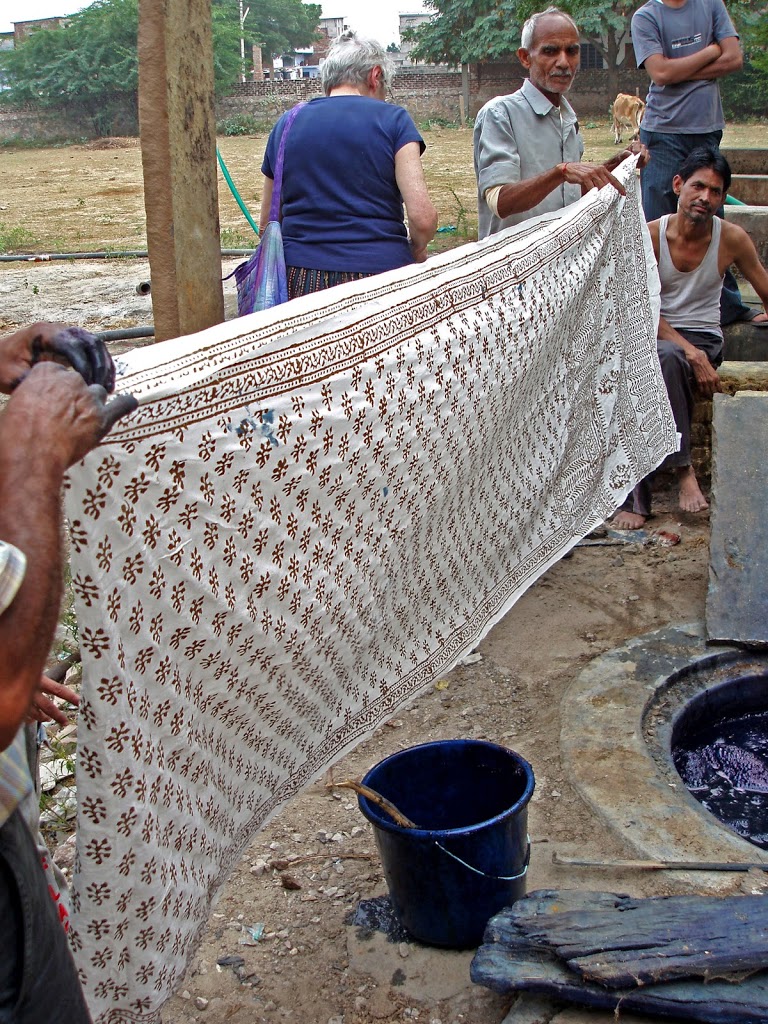
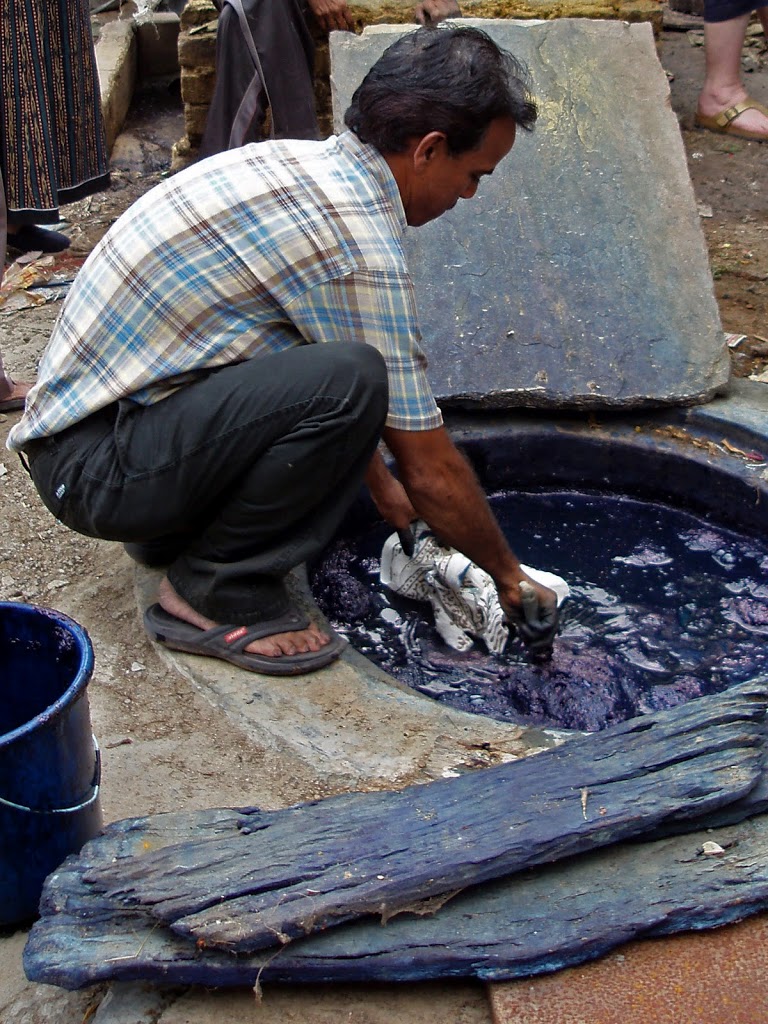
Next the fabric goes to the dye bath. In this case, an indigo bath.

 A white silk resist-printed sari.

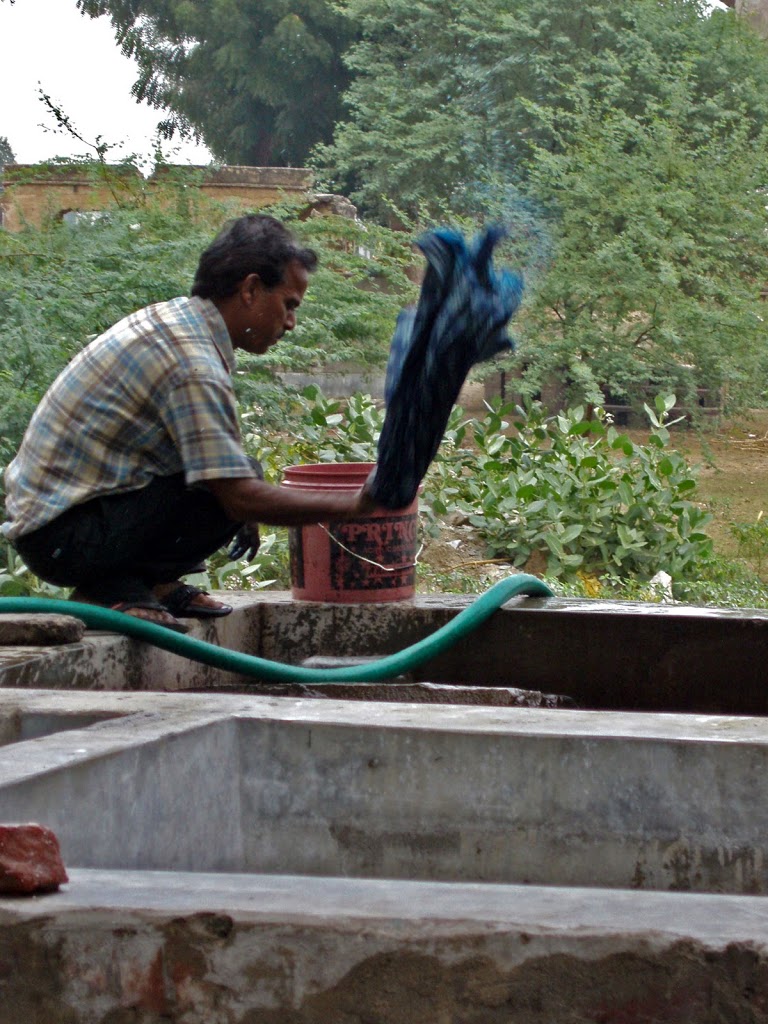
 Into the indigo vat.

 Rinsing.

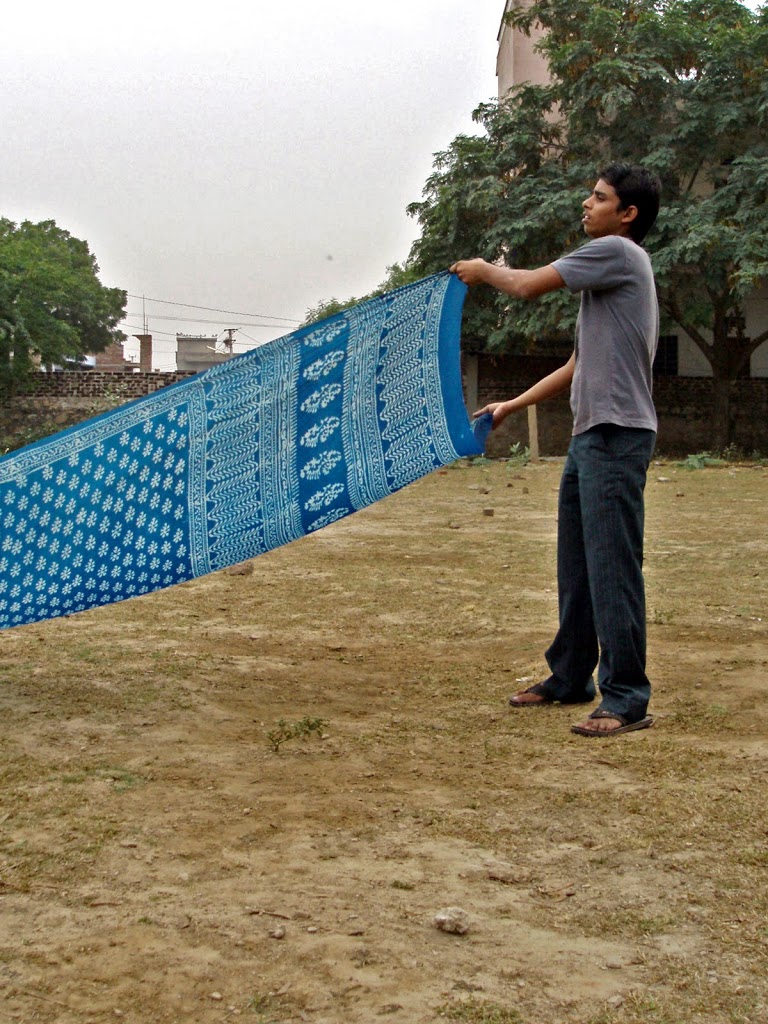
Laying out to dry after 3 dips in the dye bath. See how the parts that were printed are now white? (Well, whitish.)

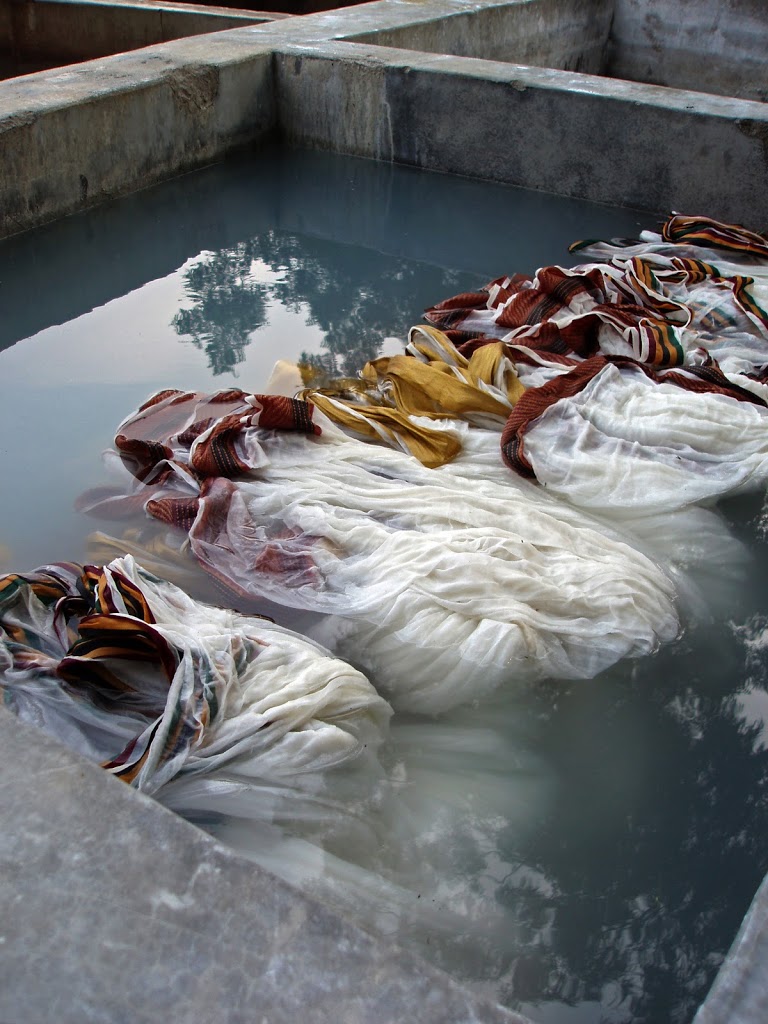
When they want to get the white parts really white the cloth is soaked in tubs with (judging by the smell) some small amount of chlorine bleach. They also use lime for something, but I didn’t understand that part. Sorry! A lot of cloth goes back to the printers at this point and gets a second or third color added, and another layer of detail goes into the design. You’ll see what I mean when I show you the fabrics that I bought.

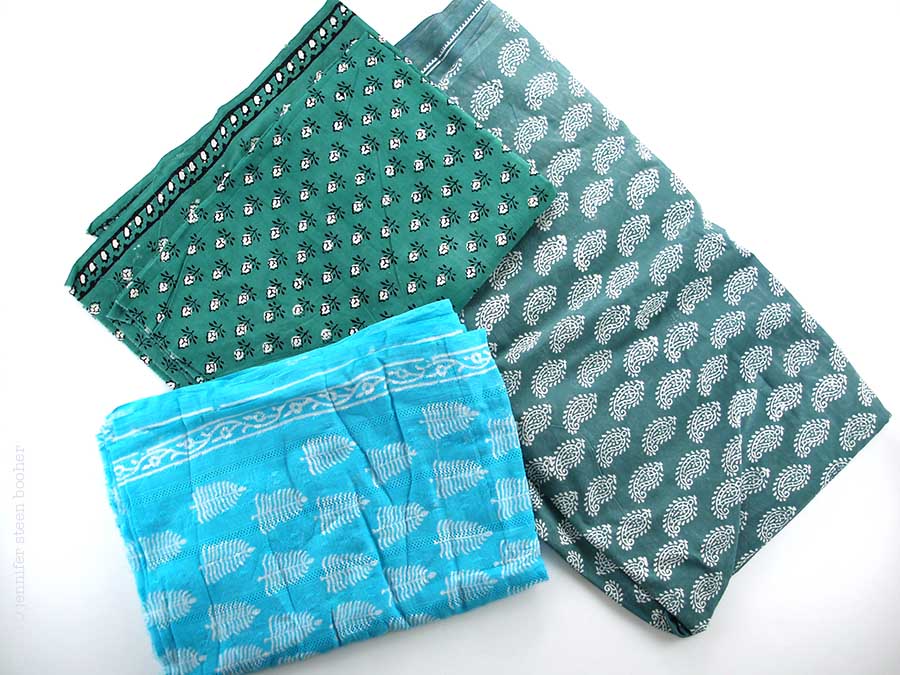
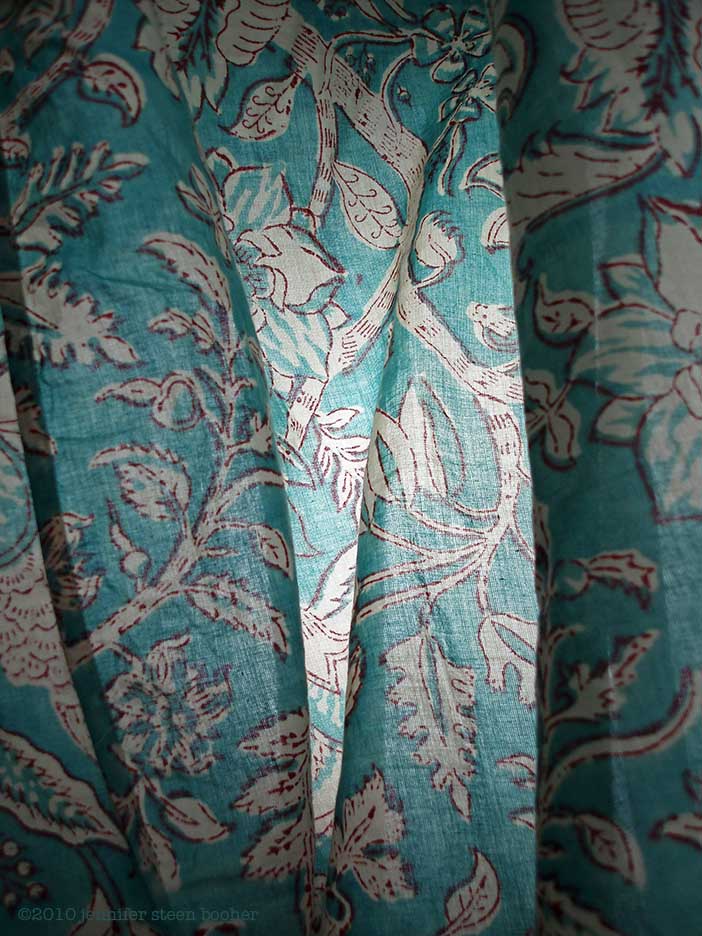
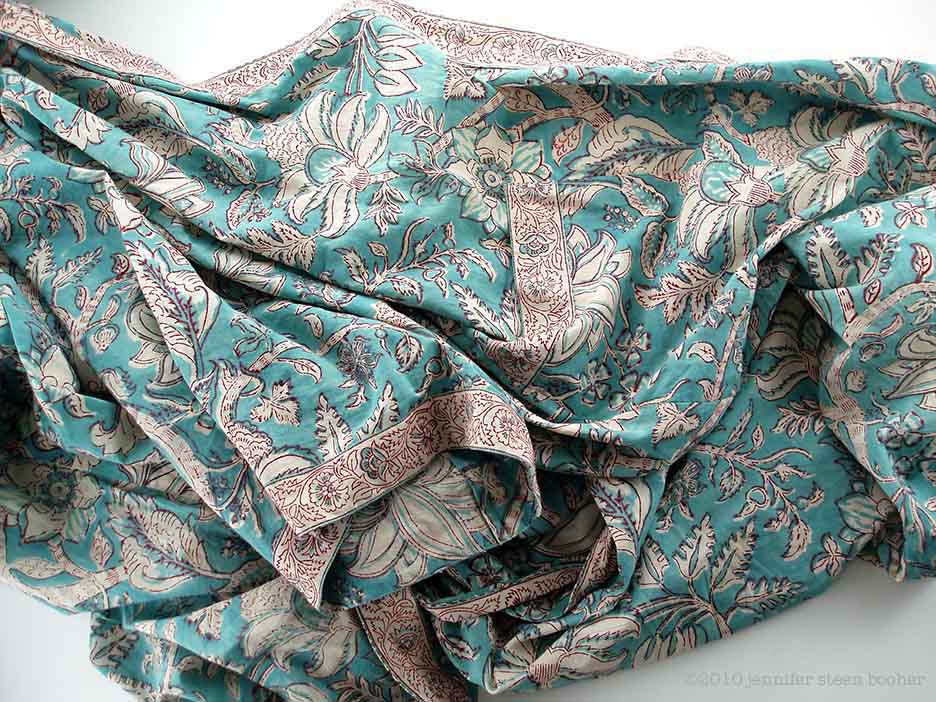
Now for the most part I am not a huge fan of “ethnic” prints. All I really knew of Indian fabric before this trip were the bedspreads everyone draped around their dorm rooms in college, and I thoroughly disliked those. The colors look murky to me, the fabrics are coarse, and I just never liked the patterns.  I liked the wooden blocks better than the fabric! The fabric I saw in India was nicer quality, softer cottons, but most of the colors were earthy browns, yellows, reds – not my cup of tea! I’m a blue and green girl. Well, de gustibus non est disputandum, as my mother used to say (no, seriously, she did. At the drop of a hat.) Lots of people like earth colors. I did eventually find fabric in colors and weights that I like. :

Then we took a shopping trip to Anokhi, a high-end store in Jaipur that specializes in modern block-printed fabric. They’ve been around for a couple of generations, working with the craftsmen to develop gorgeous contemporary patterns on lovely soft cotton and silk fabric. (In fact they financed the museum mentioned earlier.) Their clothing and housewares were spectacular. I could have cheerfully brought home most of their things! They have a US website but the prices are high even by American standards. I’m not saying the pieces aren’t worth it, though! Unfortunately the website photos don’t do justice to the fabric.
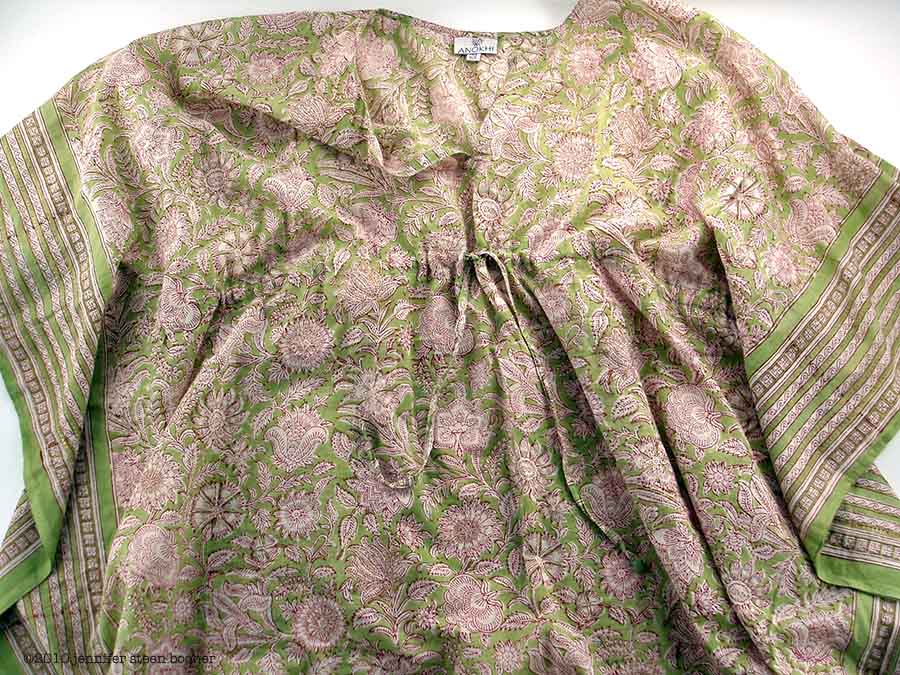
Here’s what I bought at Anokhi:

A gorgeous robe and
a handkerchief and

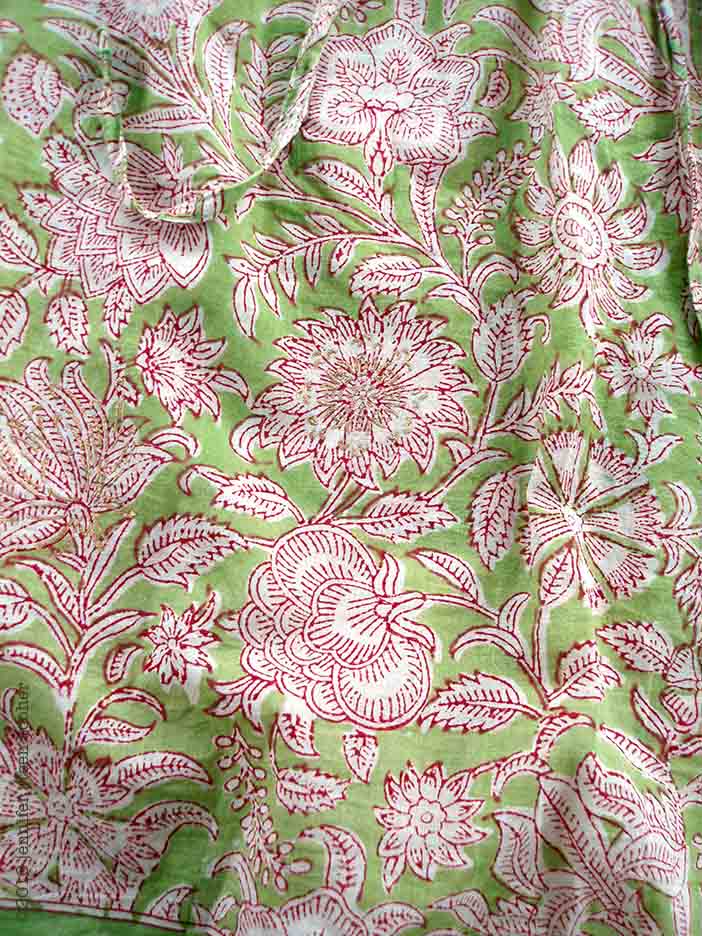
 a tunic.

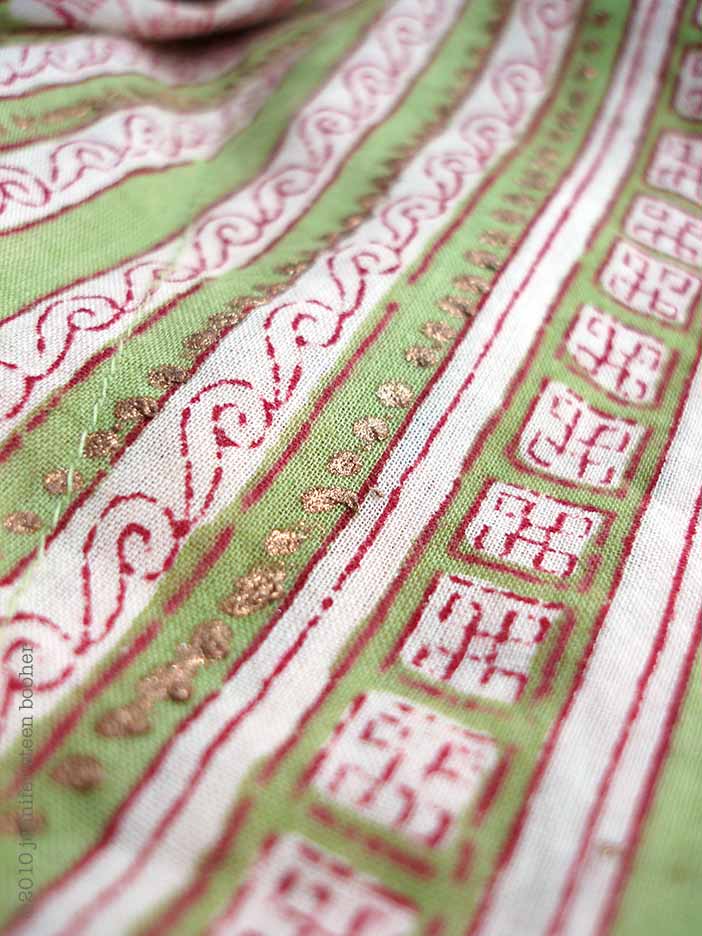
See how the tunic is finished with subtle gold decorations? The gold is applied in a thick paste and you can feel it as a raised pattern on the finished fabric. Here is a really really bad photo of the tools used to apply it:

So there you have it, the basic process by which block-printed fabric is produced. Whew! I still dislike those bedspreads, but I’m awed by the amount of work that goes into them

Share

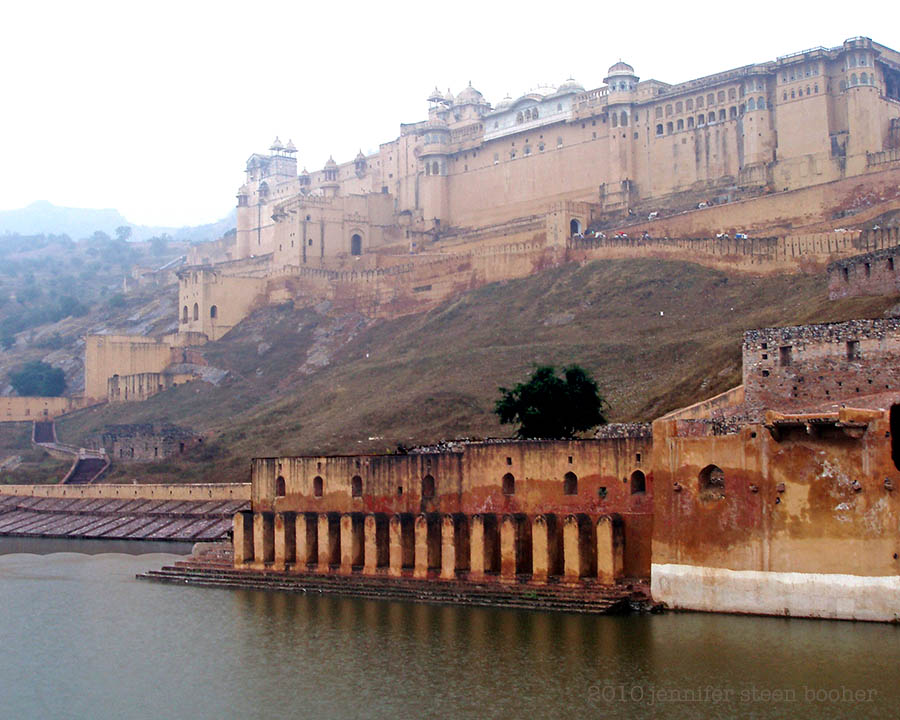
India: The Amber Fort

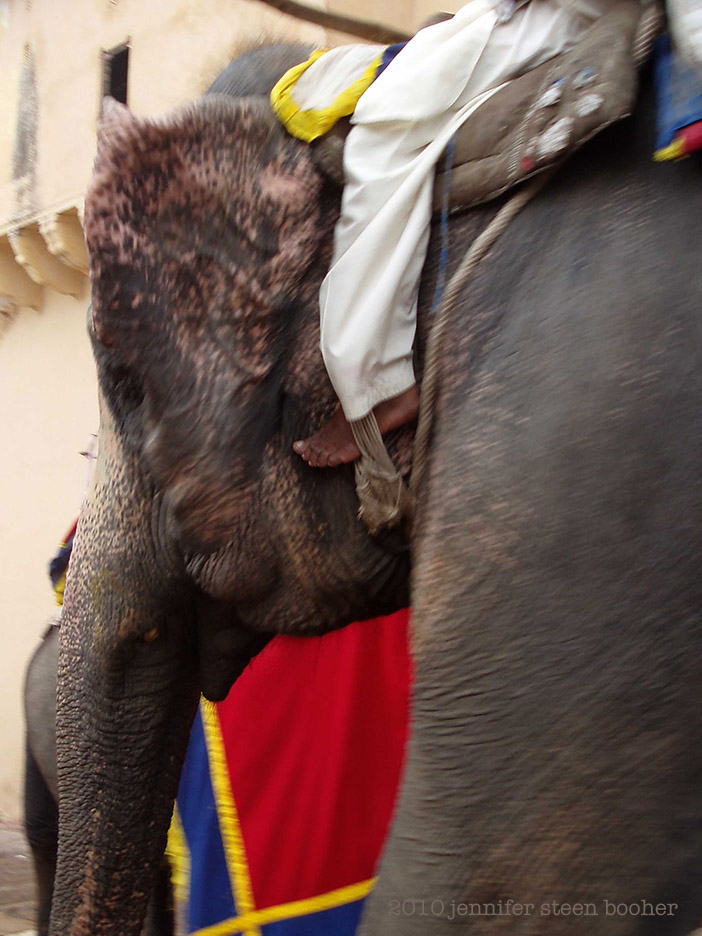
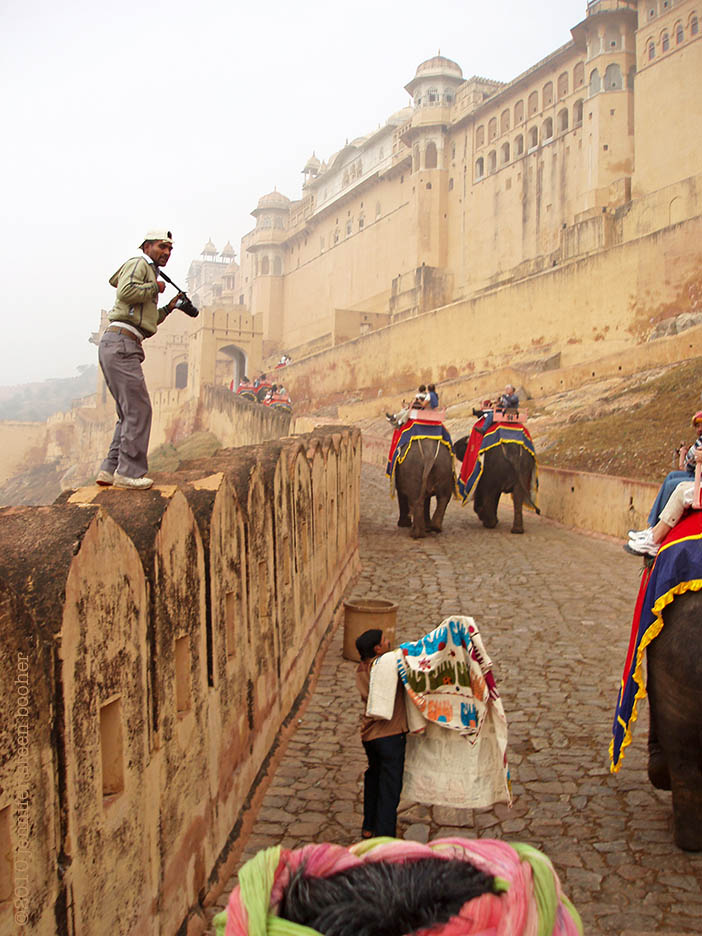
Wake up, wake up, we’re leaving very early this morning to go the Amber Palace. We need to be there at 7am to make sure we get an elephant.

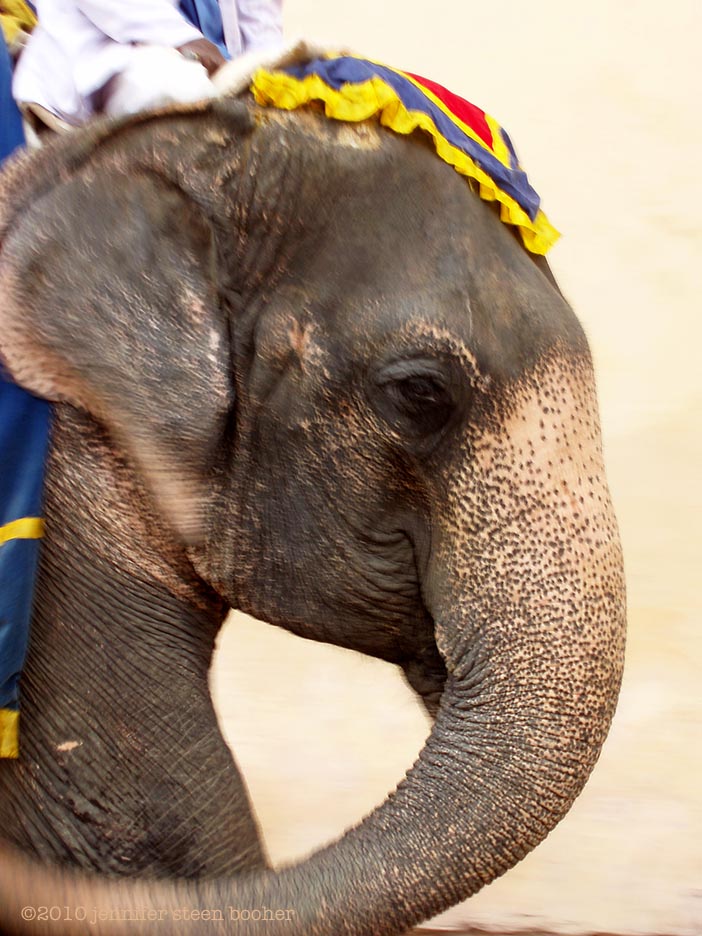
mahouts, elephants, Amber Fort

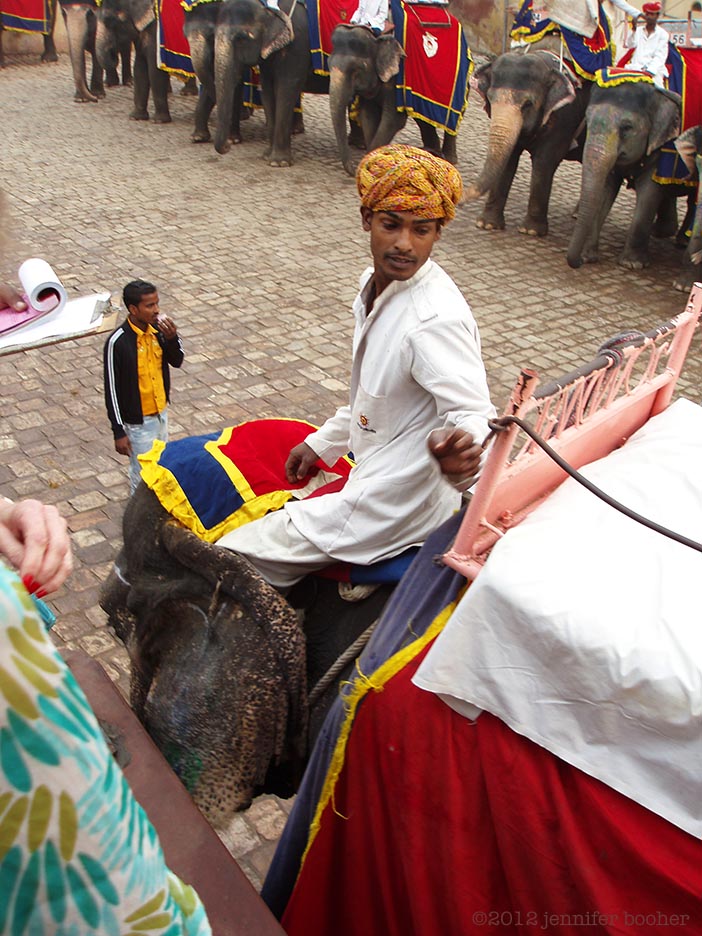
The mahouts are stretching and yawning, checking their harness and fluffing tassels. It’s overcast again. Let’s hope the rain holds off till we finish exploring! Picturesque, aren’t they? Pushy, too, in spite of the huge ‘no tipping’ signs posted everywhere.

elephant driver, Amber Fort, Jaipur

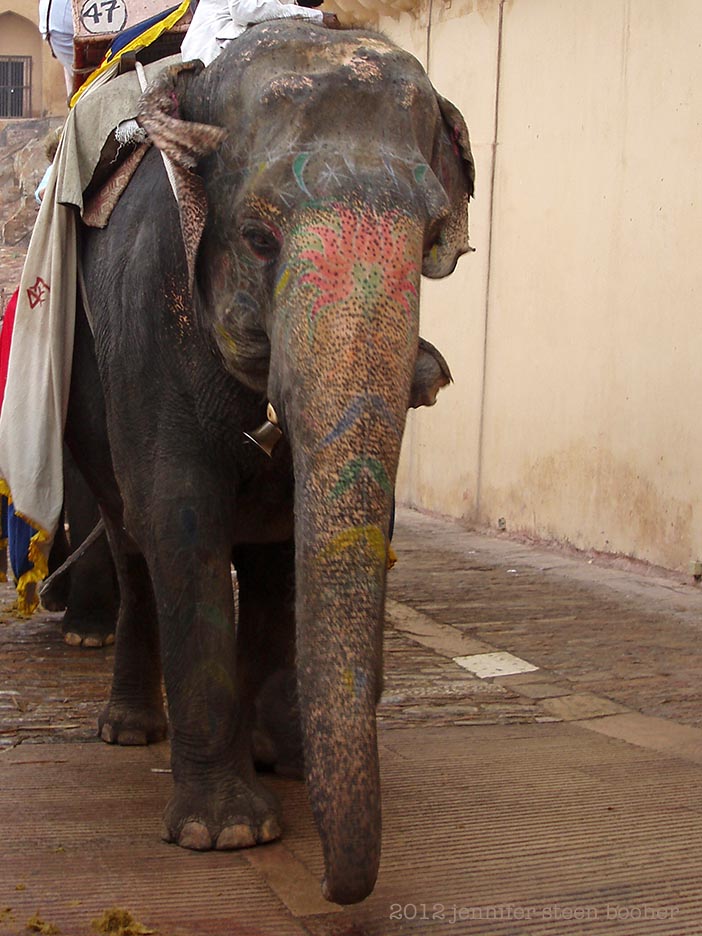
Come on, climb aboard!

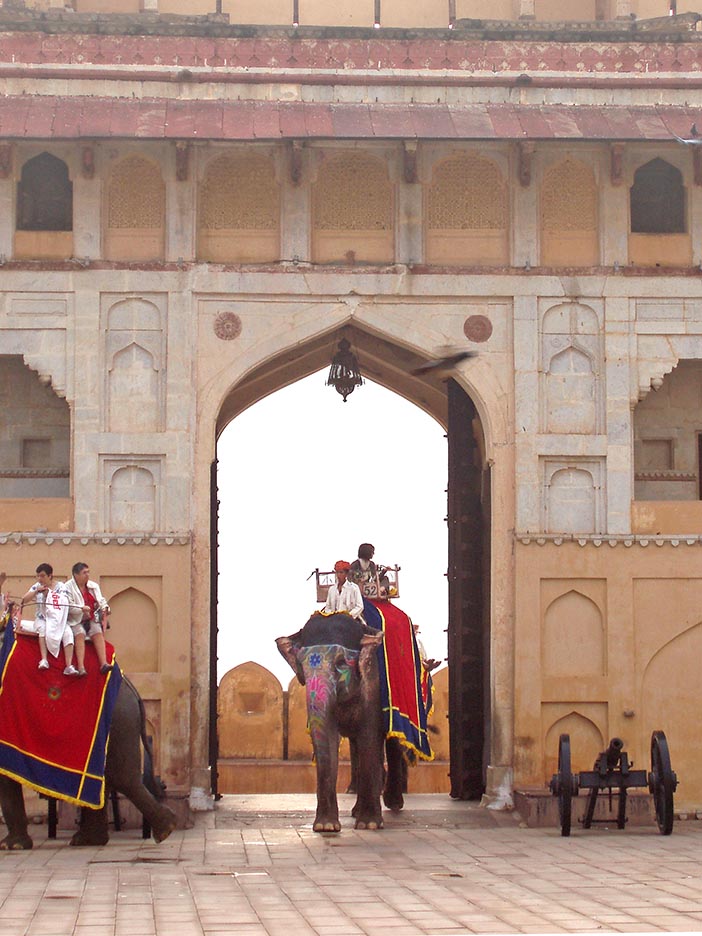
Follow the other elephants up the switchback ramp

elephants, beggars
past all the beggars and sellers-of-useless-trinkets
encampment, trinkets, sellers, souvenirs

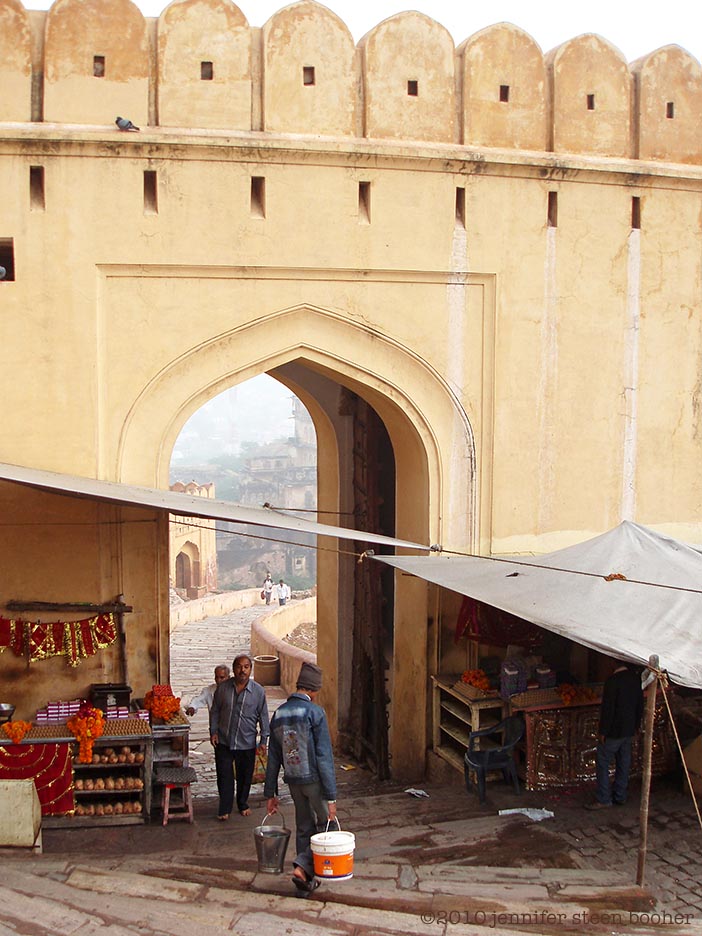
through the outer gates
courtyard, stairs, trees

to the main courtyard.

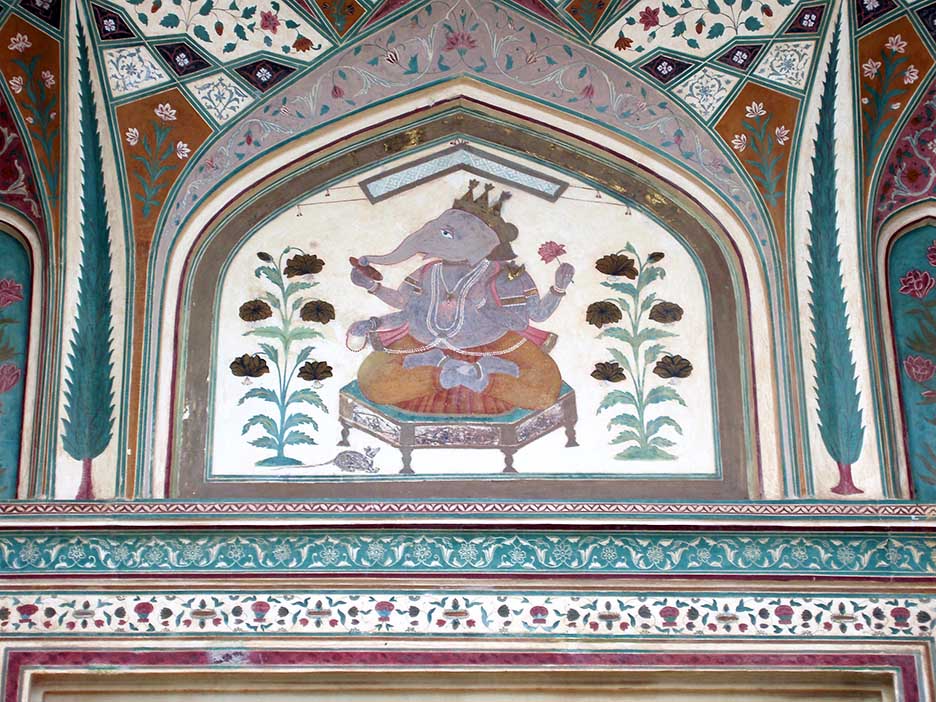
Ganesha
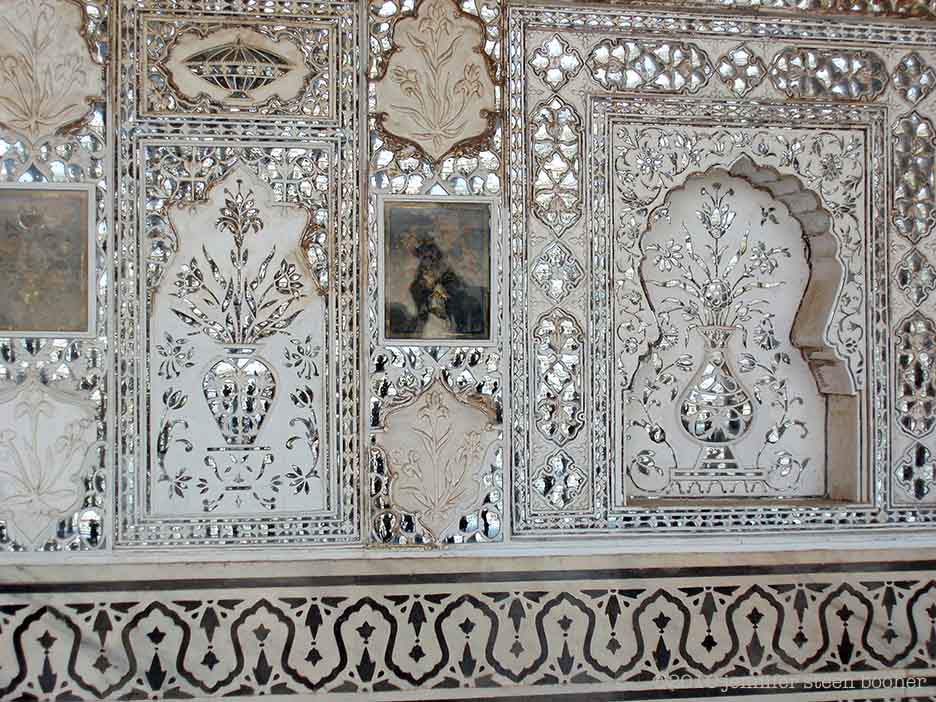
Up the stairs through the Lion Gate, turn right and go through the Ganesh Gate, then turn left and head for the Hall of Mirrors.

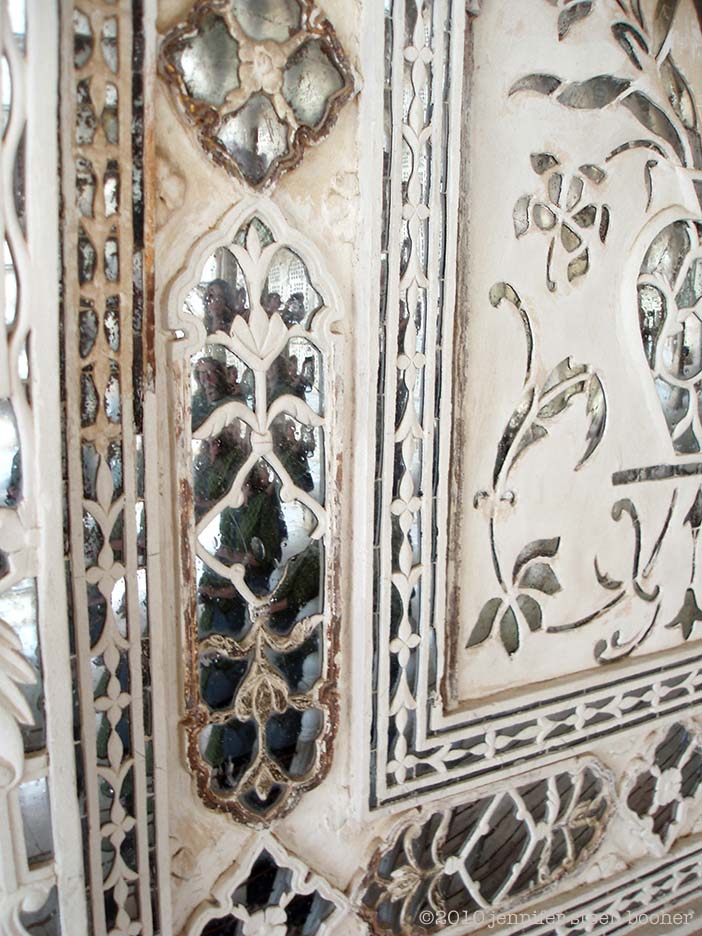
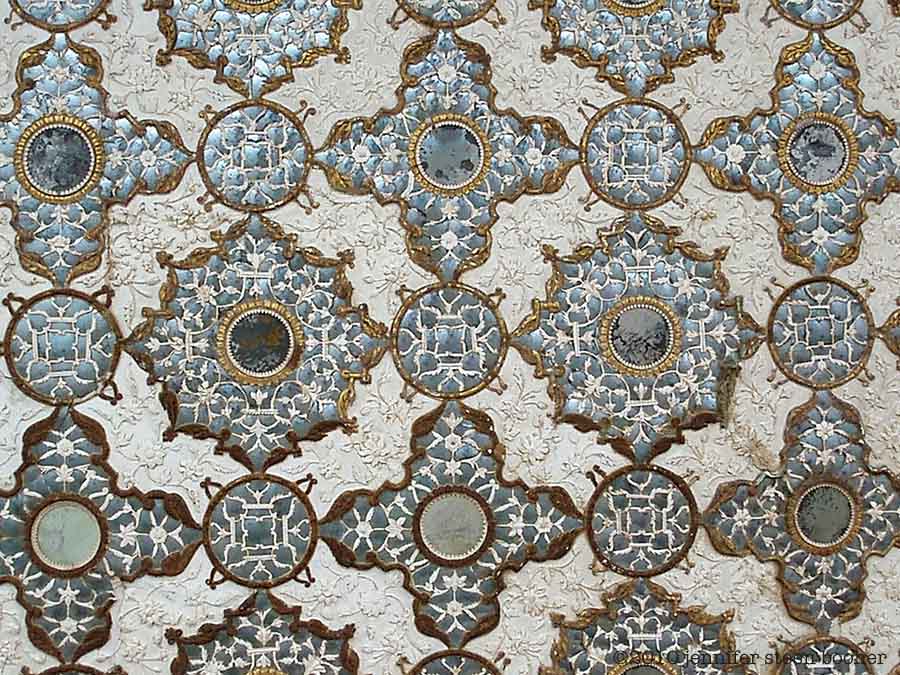
mirror, mosaic, delicate, detail, reflection, shimmer, convex glass
All those silvery-grey pieces are convex glass.

convex glass, detail, macro, mosaic, mirror, shimmer, reflection
All of them.

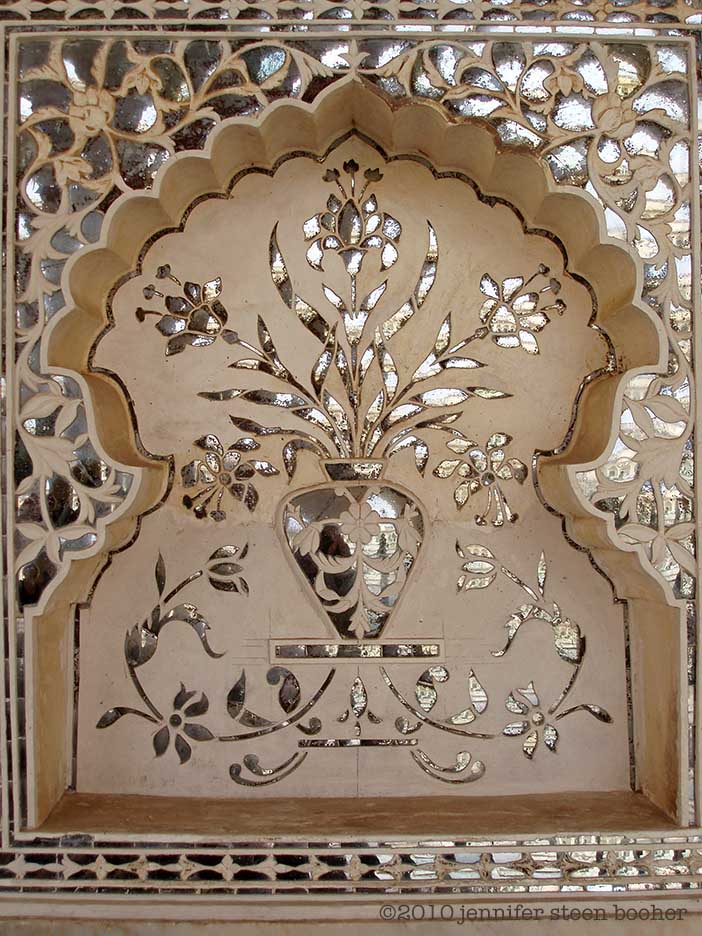
mirror, mosaic
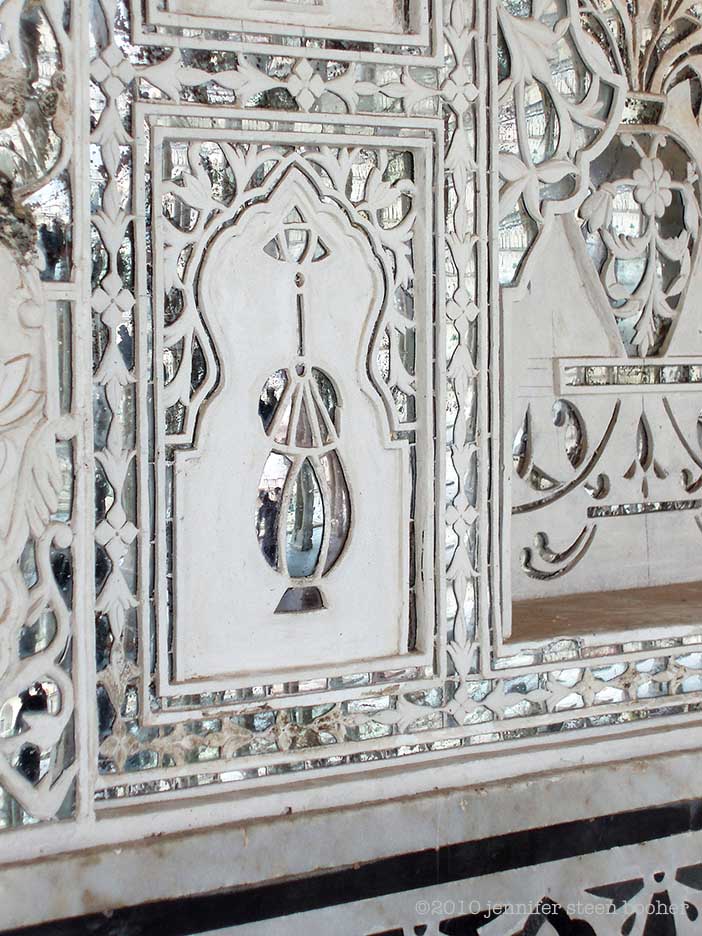
Like glittering bubbles, even on a cloudy day. Make sure you look up:
mosaic, mirror, rosette, reflection

and around corners:

mirror, mosaic

star

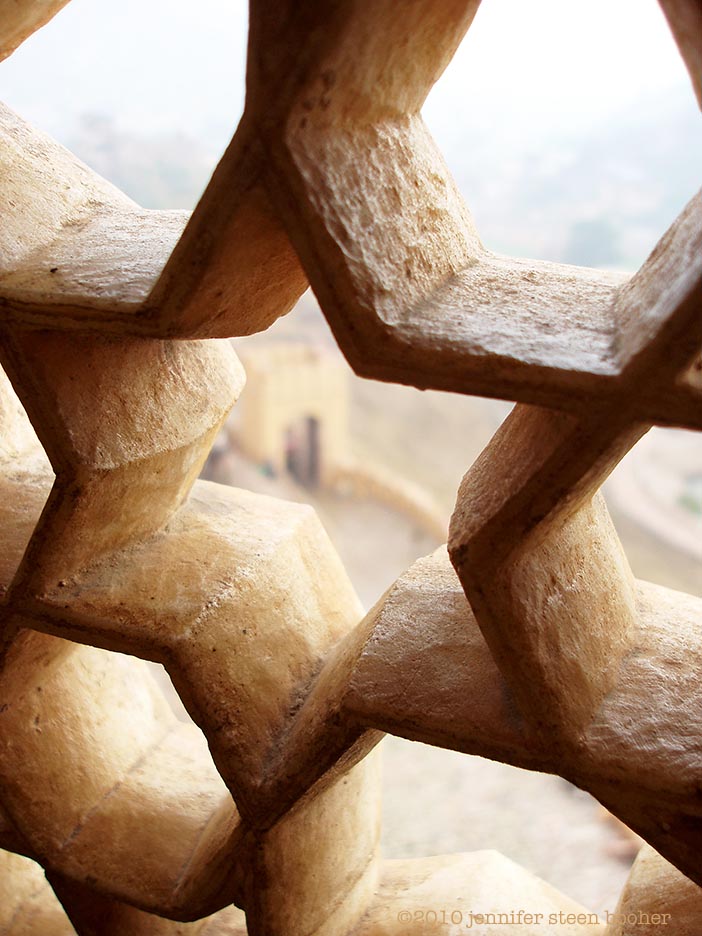
The honeycomb window lattices throw lovely shadows.

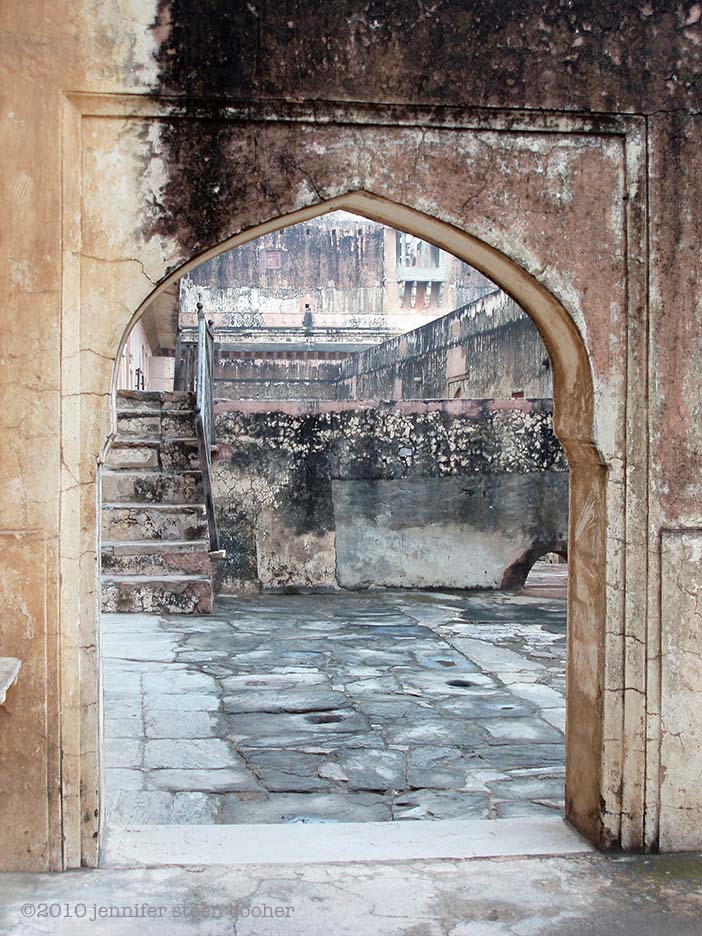
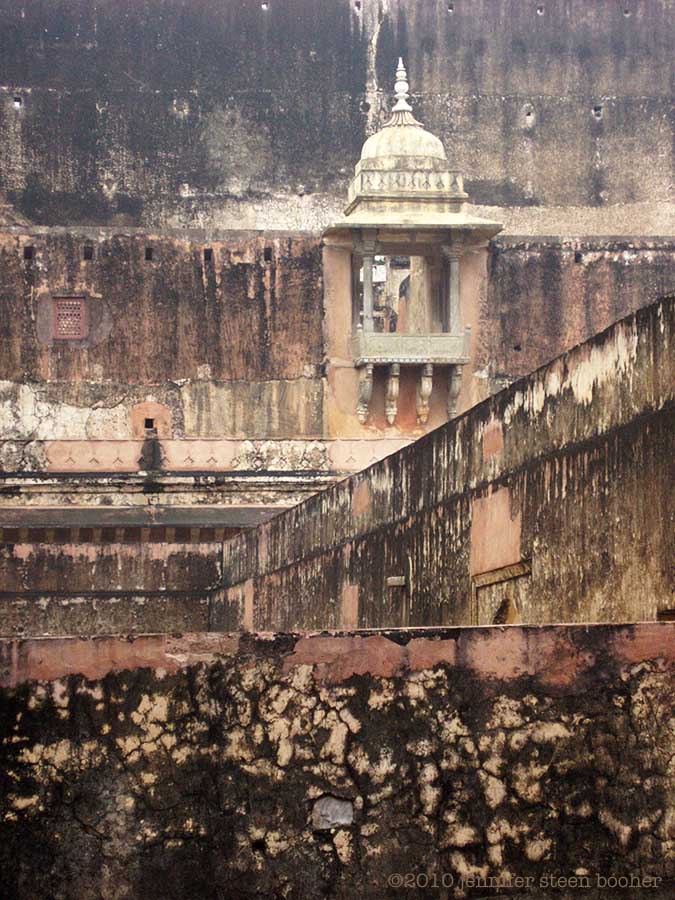
archway, mottled stone, lichen, patina

Let’s keep moving, there is an endless maze of rooms to explore.

 Little balconies have ornate roofs

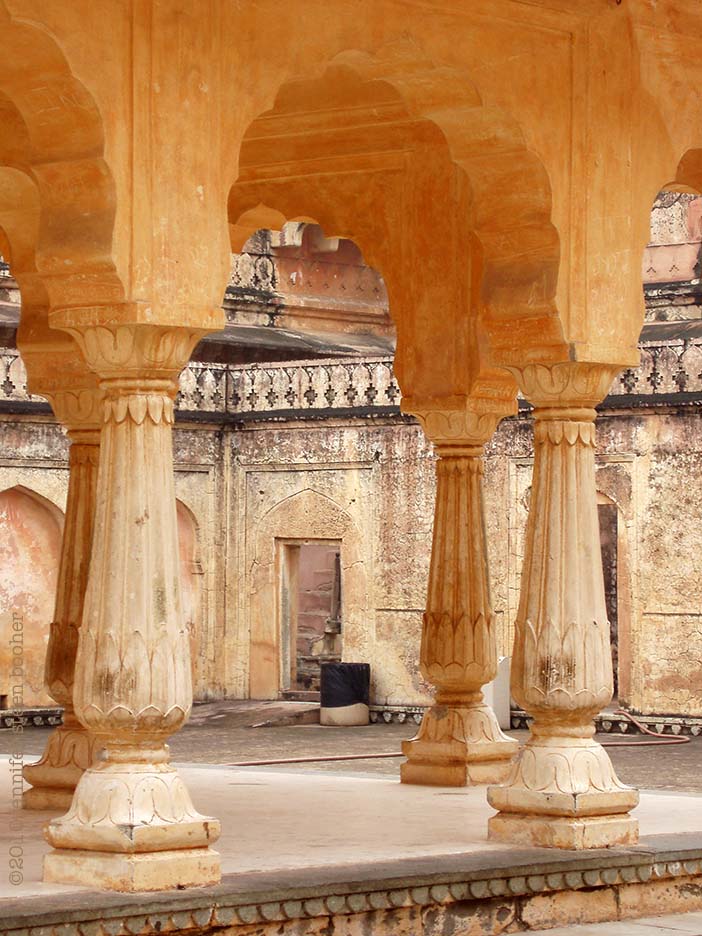
and every courtyard seems to have a pavilion for receiving guests.

cobra

 And just in case elephants and palaces aren’t exotic enough for you, there are cobra charmers by the exit.

Careful on your way down, the elephants are serious road hogs.

Oh nuts, here comes the rain again. It really makes it hard to get a good outdoor photo.

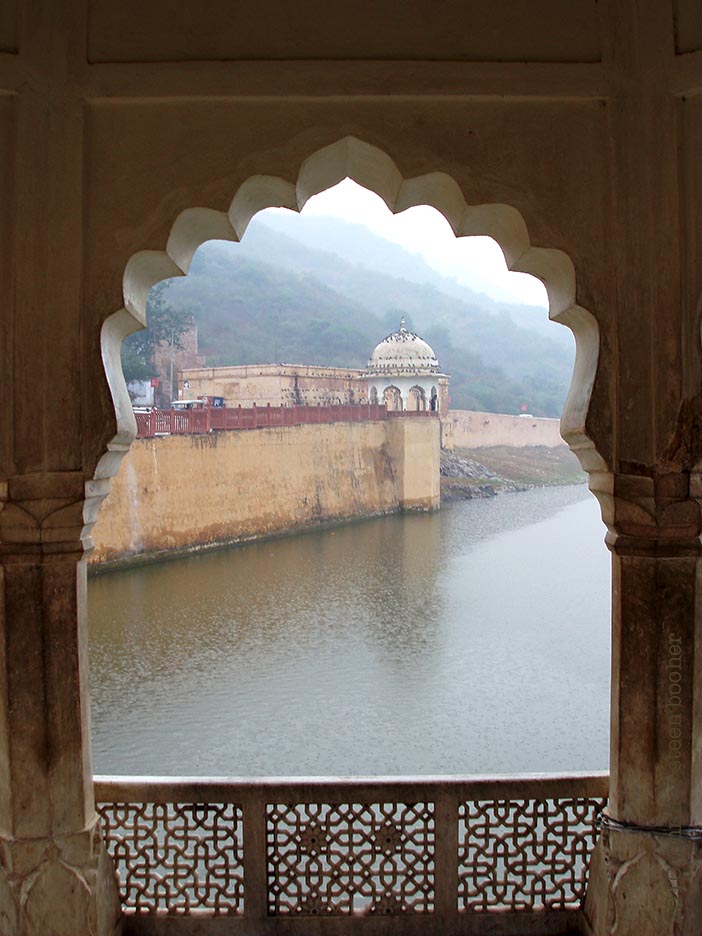
Let’s duck into one of these lovely and convenient pavilions and listen to the rain on the lake.

carved stone railing, archway, framed view

There, aren’t you glad you set your alarm clock?

Share

India: Pushkar Camel Fair and Beyond


Let’s see, I last wrote the night before we left Jaipur for the Camel Fair. The next morning I woke up feeling a bit off, and half an hour before we were due to get on the bus for a 5 hour ride, “Delhi belly” hit with a vengeance. God bless the doctor at the Bangor Immunization Clinic who politely insisted that I take some Cipro with me ‘just in case.’ I took it immediately with Immodium, as instructed, and made it all the way to Pushkar without incident. Discomfort, yes. For about two days I ate nothing but nan (bread) and water. But I only lost one day to illness. Thank you doctor!


I don’t know how to describe Pushkar to you. Imagine a State Fair, with livestock competitions, handicrafts, vendors, fried dough, snacks…. but instead of sheep there are camels. Thousands of them. All decorated and dressed to the nines.


Some had patterns shaved all over! (The light brown is hair, the black is camel skin.)
There are horses and cows, too, by the hundreds. And instead of 4H groups and farmers, there are nomads from the Thar Desert.
There were three ferris wheels


camel cart rides


monkeys


and a parade of men doing a Rajasthani camel dance


and in the evening there were fireworks over the sacred lake.


The lake is surrounded by ghats, which are essentially marble stairs going down to the water. This is a very holy place in the Hindu religion – one removes one’s shoes before descending. The ghats were lit with small oil lamps. All the little yellow lights in the photo above are these:


It was our first peaceful moment in India and we savored it.

The next day we drove back to Jaipur, but detoured through Bagru. See, we’re textile fiends on this trip, and Bagru is a center of block-printed fabric production. It is not a tourist destination. Twelve foreign women stuck out as if there had been a spotlight on us. We saw the block-printing “factories”


and silkscreening


and indigo dyeing


and tailoring.


The children discovered us almost as soon as we got off the bus, and I apparently have some magnetic attraction for them. While waiting to go into the first house, I noticed they were interested in the screen on my camera, so I took a picture of one of them and showed it to him.


He thought that was marvelous, and his friends laughed and laughed and then everybody wanted their photo taken.


And then we realized that nobody in the village has a camera, and they’ve never seen themselves before. It was the most marvelous parlor game! I wished desperately there were some way to give them prints.
After that, in every house we visited (because the factories are actually people’s homes) we made friends with our cameras. In the last house the women were preparing fabric for tie dyeing.


They would put a grain of rice under the cloth, then wrap a string tightly around it so it made a little bump.


One by one various family members slipped in to the tiny courtyard


and had their photos taken. Even the grandmothers came out!


When I took this woman’s photo


she was so excited she seized my camera and ran off to show a woman across the room. The camera strap, of course, was still around my wrist, so I got dragged along in her wake!
When it was time for us to go, the children brought out their parrot to pose for photos. The bird would not cooperate, which led to much confusion and shrieking and laughter.


About twenty people eventually stood on the front steps waving goodbye to us. I will never forget the children of Bagru.


Some other time we’ll talk about the raw sewage in the street and the feral pigs rooting in the garbage piles outside the houses and how those ancient grandmothers are probably only 50 years old and the diseases and parasites those lovely children have and how tiny and damp and empty the houses were.


But only if we really have to.

Share

India


This is my first chance to post since arrival, and it will be two days before I get another internet connection, so it will be a long post.


Since arriving in India I have seen two baboons, several monkeys, two wild peacocks, horses, camels, sacred cows, water buffalo, mynah birds, Indian chipmunks,


wild parrots, a funeral procession, a (different) funeral pyre, a religious parade,


one person pooping by the side of the road, numerous men peeing on walls, rubies, emeralds, gold embroidered saris,


birds feeding on a dead dog, a traveling puppet show,


finely detailed sandalwood carving, marble inlaid with gemstones in intricate patterns,


bicycle-powered rickshaw taxis, natural-gas-powered minicabs,

trucks painted in cheerful patterns,


rapacious salesmen, trickles of foul water seeping from under piles of garbage, incense burned on the fruit vendor stands to keep the bugs away, hovels, straw huts, shacks, houses, walled cities,


palatial hotels


and ruined palaces.


And the Taj Mahal.


I am traveling with a pack of Brits, and we all agree that we are GOBSMACKED.


Tomorrow we leave Jaipur for the Pushkar Camel Fair in the Thar Desert.

Share

London


Yesterday Ellie and I went to the Tate Modern. This is Ai Weiwei’s installation in the Turbine Hall. You may have seen photos of this floating around the Internet. Millions of sunflower seeds – made of porcelain, hand painted – are neatly piled on the floor. You used to be able to walk on them and pick them up, but apparently it produced a lot of dust (bad for the lungs) and you can only look now. Here is another photo showing the scale of the installation:


Today we went to Fortnum and Mason for high tea.


My portable editing program is fairly crude, and I apologize for the quality of these photos. I can’t seem to get the white balance right!


At any rate, we had a lovely feast on finger sandwiches, scones, clotted cream, jam, and pastries. And pots and pots of tea! We had to roll ourselves home.


To try and walk off the pastries we took the stairs, and discovered a gallery of modern paintings hung in the stairwell, and these delightful lamp holders:


Tomorrow will be a quiet day of packing and laundry as we get ready to leave for India.

Share

It’s Saturday, this must be…London


I’m staying in Bloomsbury, in a neighborhood that is probably quiet but is now reverberating with firecrackers because yesterday was Guy Fawkes Day (and it rained, so they must be catching up.) It is still overcast, so my photos are a little dreary. The temperature dropped, too, so I am grateful for my scarf and jacket. This is my hotel:


And this is my street:


I spent the morning wandering between Covent Garden and Russell Square


and in the afternoon I went to the British Museum. I saw the sculptures taken from the Parthenon, the Rosetta Stone, and the Sutton Hoo treasure. I am either wearier than I realized or becoming jaded, because I was slightly bored by all of it. I was an art history major, and I find that when I finally see an artwork that I know well from photos it can either be a revelation (like most of the paintings I saw at the Prado last week) or an enormous disappointment ( like the Mona Lisa, which I saw 20 years ago.)

The most interesting things I saw were the Great Court of the museum itself:


a fantastic space glassed over inside the original courtyard, and this incredible automaton:


Read this:


The craftsmanship was amazing, and the whole thing was slightly surreal. I want to see it in action!

Share

Riding in the Sierra Nevada


To celebrate my daughter’s 10th birthday, she and I went riding in the foothills of the Sierra Nevada, on the edge of a national Park. (Still in Spain!) It was a 2 hour ride. She is a good rider, I am a complete novice. Guess who is sore and achy today! Yes, I am saying “ouch” “ooh” and “yikes” every time I move! But it was lovely.


And I am on the front page of etsy again today! Wow, that’s the second time since I went on vacation. It still blows my mind that people like my work and want to buy it. And it also blows my mind that I can (more or less) manage my shop and fill (most) orders from across the Atlantic! It’s a wonderful world (most of the time.)

– Posted using BlogPress from my iPad

Share