Jennifer Steen Booher

Tadpoles

Spring is moving so fast I don’t even have time to edit the photos from one day before something new and awesome happens on the next. I may do a bunch of posts that are long on photos and short on text. As if that were a bad thing!
The Wood Frog eggs we saw on April 16 in the Frenchman’s Hill fire pond have hatched into tiny tadpoles about 1/4″ to 1/2″ long. They must have hatched at least a few days ago because they were swimming all over the place. The eggs turned greenish a couple of weeks ago (which is normal) and algae has started to grow in the pond: see how much murk is in the water now?

When the tadpoles stop moving, they lie on their sides and you can see the translucent tail structure. There are two not-tadpoles in this shot; I think those are mosquito larvae.

The eggs we saw along the Hemlock Road on April 17 have also hatched:
This brood is younger than the Frenchman’s Hill crowd: they are still clustered tightly around their egg sacs.

 And just to keep things interesting, a new crop of egg masses appeared sometime in the last week:
 They are big blobs of jelly and you have to look hard to see the eggs inside. I think these might be salamanders!
Share

Baby Foxes!

baby babies young foxes
It must be spring because every day brings another miracle, and I feel a bit dazed by all the marvels I get to see. This morning it was a mother fox nursing her kits. This particular fox family has had a litter every spring for several years in my friends’ back yard, and this year I finally got to see the babies!
foxes vixen kit kits babies baby young
My friends are very respectful of their fox neighbors, so we watched from inside the house at least a hundred feet away. I’m sure the foxes appreciated our discretion, but my poor little 300mm lens was not quite up to the job. There’s a lot of cropping and pixel-boosting in these shots, but I think you can see enough to be overwhelmed by the sheer cuteness.
Here she is nursing four babies:
vixen foxes baby babies
If you look very closely, the middle baby is licking its nose off after nursing with a little pink tongue:

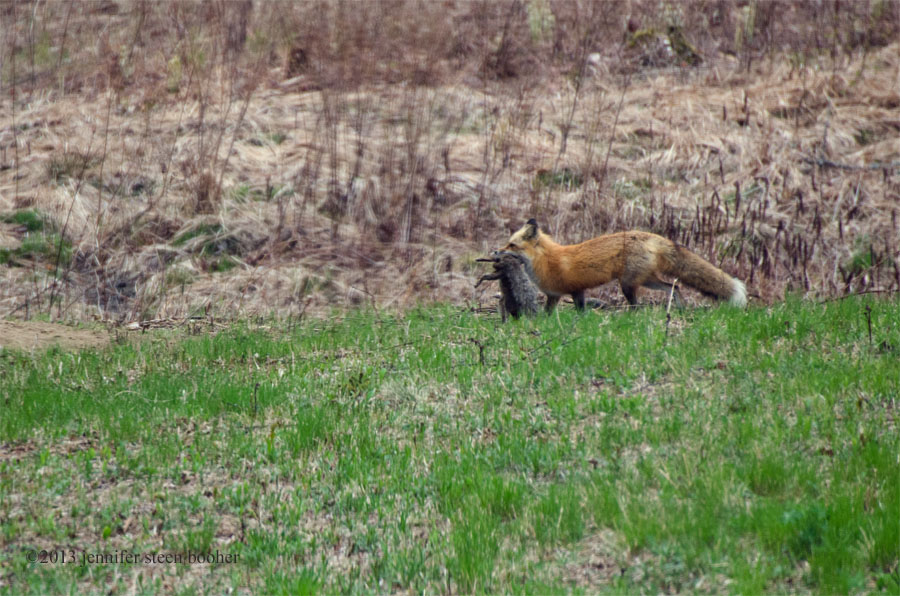
And just so we don’t forget in the midst of all the cuteness that they are wild animals, here’s Mama Fox carrying around a formely-cute-but-now-dead squirrel that Papa Fox brought for her breakfast.

 Even though the babies are nursing and not eating solid food yet, they are still running after Mama’s squirrel.

My kids were like that, too, when they were little. “Whatareyoueatingisityummygivemesome!”
Share

Wandering Beaver

I met a young beaver near the town dump, of all places. The stream there is broad and shallow and most un-beaverlike – I’ve only seen beaver in ponds or narrow streams that they plan to dam – so it was an odd and very unexpected meeting. I thought it was a muskrat at first glance and couldn’t believe it was a beaver until I saw the tail. There is a slightly deeper pool right under a culvert, and I watched it swim around for a good quarter hour. They are unexpectedly graceful underwater.

The game warden told me that at this time of year the parental beavers toss the young ones out of the lodge to make room for the next litter of kits, so our friend here is probably house-hunting.

Good luck with the real estate, little beaver!

Share

Frog Eggs

frogspawn frogs egg eggs Maine

Round about this time of year T.S. Eliot’s phrase, “April is the cruelest month, breeding / Lilacs out of the dead land” gets bandied about a lot, although on Mount Desert Island we don’t see lilac blossoms until late May. For us, April breeds Wood Frogs and Spotted Salamanders. I haven’t seen a salamander in years, but I’m pretty sure these are their eggs:

 and here is a Wood Frog with masses of frog eggs:
frogspawn frogs egg eggs Maine Rana sylvatica
I don’t know how old the eggs are, but the embyos are just starting to elongate into vaguely tadpole-like shapes.

The photo at the top of this post shows the eggs against a white background so you can see the babies more clearly. We scooped an egg mass into a glass baking dish full of pond water and held it over white fabric. (These were eggs that the neighborhood kids had brought home in a bucket – I believe it is best not to detach frog eggs from any grass or twigs supporting them.) I’ll try to get another shot in a few days when the tadpoles have started to develop.

Share

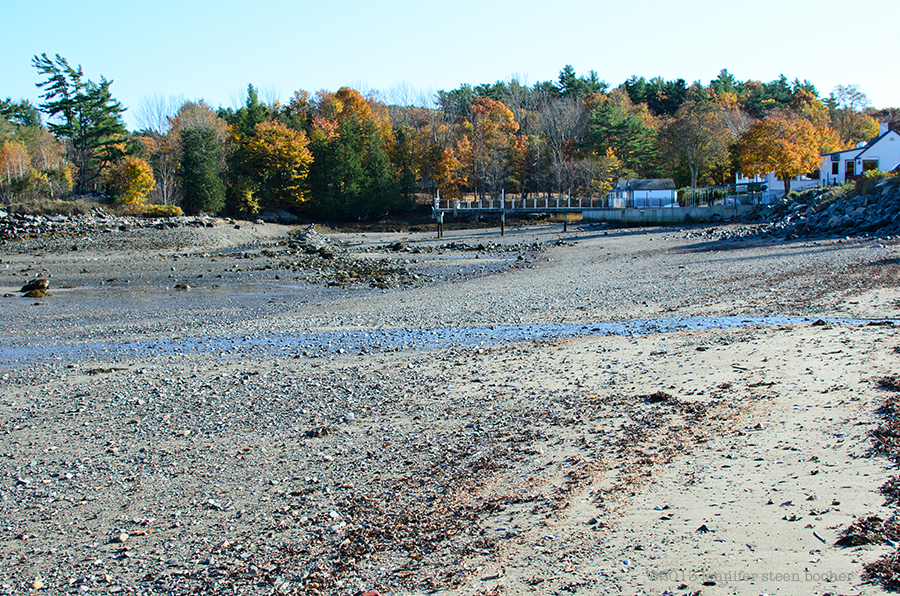
Hulls Cove, October 26, 2012 (Beachcombing series No.67)

Hulls Cove, Maine; October 26, 2012 (Beachcombing series No.67)

The first new Beachcombing series in six months! I don’t know why it took so long to pull together, but I’ve been moving these pieces around on my light table since early November.

beach seashore dock pier wharf strand

It was a gorgeous October day, warm and sunny with deep blue skies and a cold wind. Most of the debris that caught my eye was typical of what I usually find: clam, crab, whelk and slipper shells, driftwood, fishing rope and shotgun shells, all of them anonymous. I do know where the white mesh disk and the half-burned piece of wood came from, though, and it’s an odd feeling to find something on the beach and know its history.
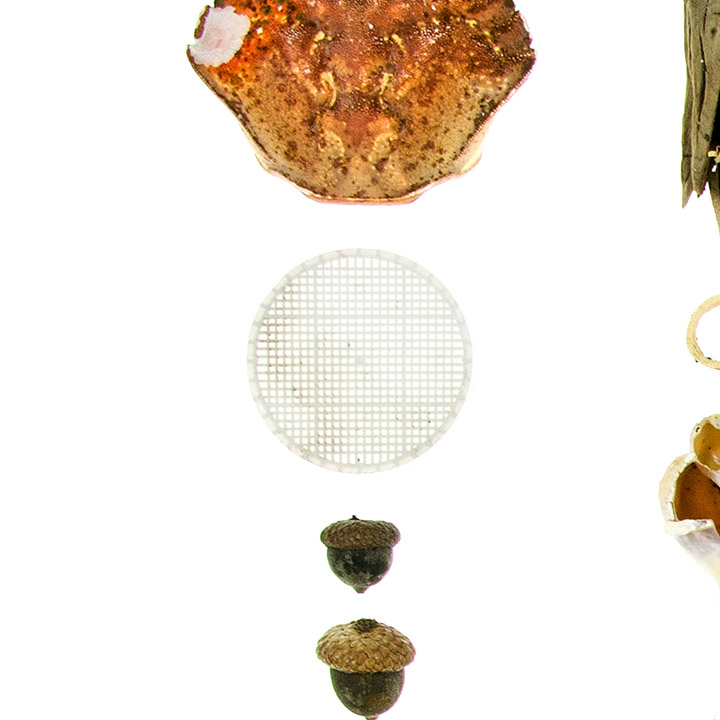
The plastic disk is one of 4 million that were accidentally released from a New Hampshire sewage treatment plant during a storm overflow in 2011. They washed up on beaches along the Massachusetts and New Hampshire coasts for months. In spite of official attempts to recover them, at least 400,000 are still at large. Now they have entered the currents that circle the Gulf of Maine. Harry Johnson has an excellent report on tracking their migrations in his column for the Portland Press Herald. And just look at it – two full years in the ocean, and it’s practically like new, only a little dirty. Forget diamonds – plastic is forever.
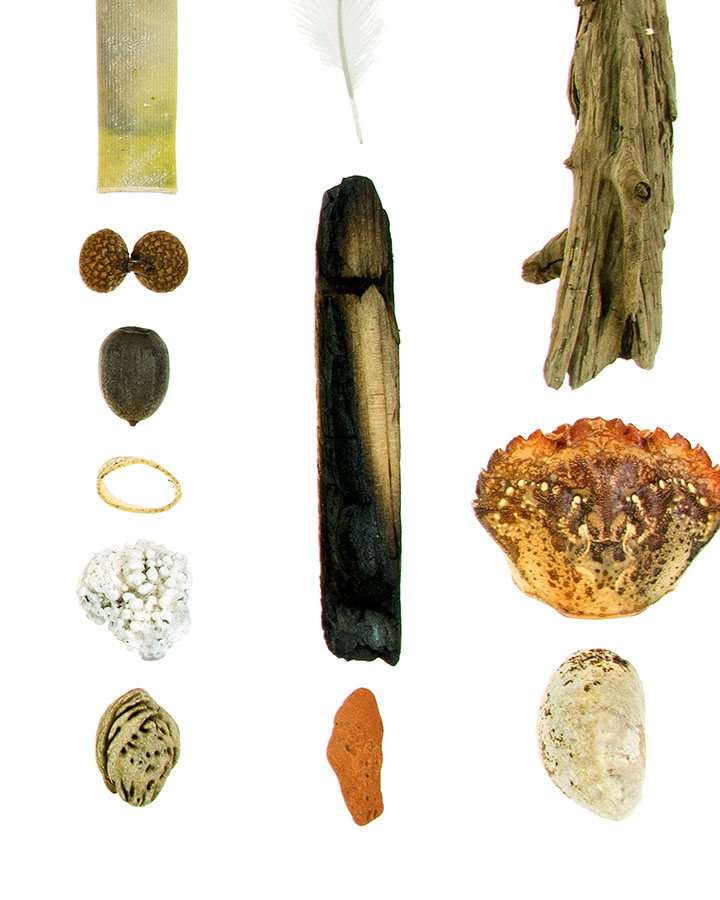
The piece of burned wood was probably washed down onto the beach after a fire earlier in the month at the R.L.White carpentry shop just across the road. Fortunately no one was injured in the blaze, but R.L.White’s has been around since 1903, and they lost all their historic tools, moldings, and a large quantity of old-growth lumber that they had stocked back in the ’30s, all of those irreplaceable today. Weeks after the fire the beach was still littered with charred wood and tremendous quantities of wood shavings.

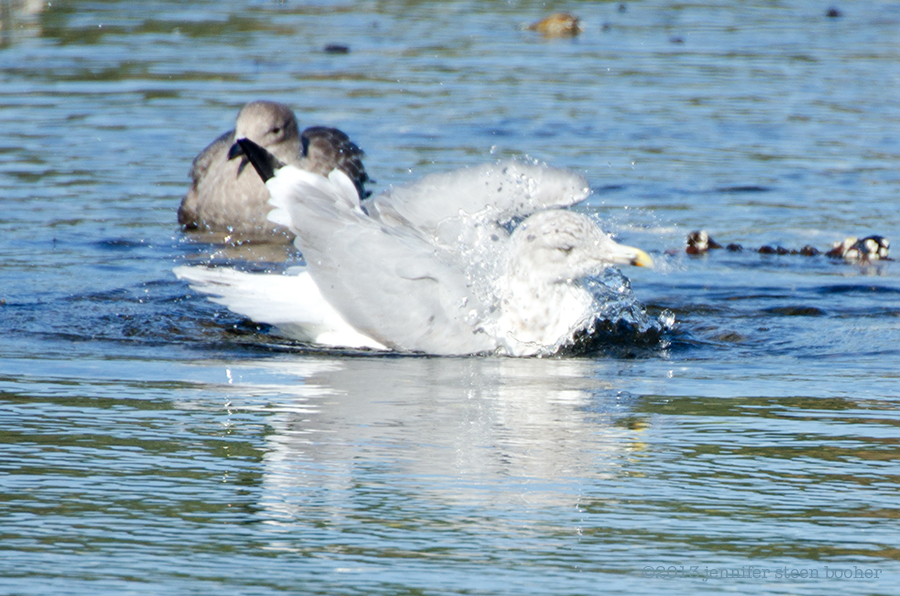
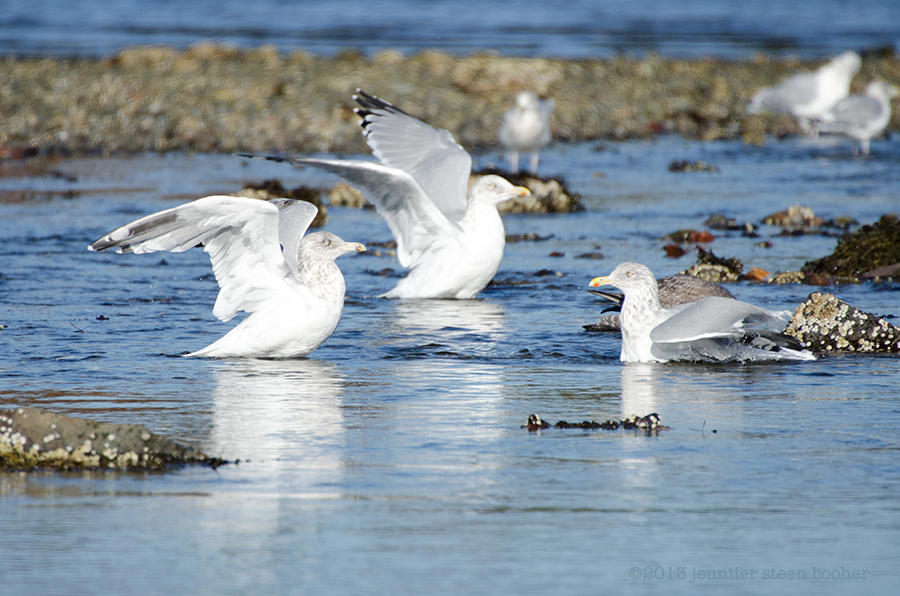
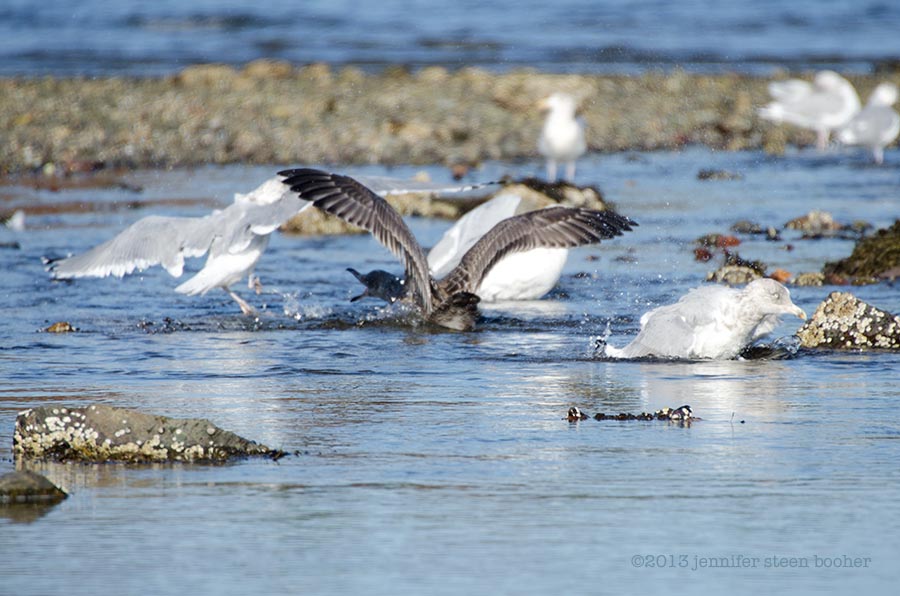
The seagulls distracted me from my gloomy meditations. Three of them, third-year juveniles, were splashing in the shallow water. (Mature herring gulls have a pure white head. First-years are brown, like the one in the background above. These with the grey wings and the mottled head are in their third year.) They would energetically shake their wings in the water, dunk their heads way under, and then stand, spread their wings and shake all the water off.

herring gull

If they were bathing, it was a very aggressive bath. There was a first-year juvenile watching, and sometimes the older birds seemed to be threatening it and sometimes trying to impress it.

Eventually the younger bird seemed to get fed up, and chased one of the others. I watched for a long time, but I never did figure out what they were doing. Any bird-watchers out there who understand seagulls?

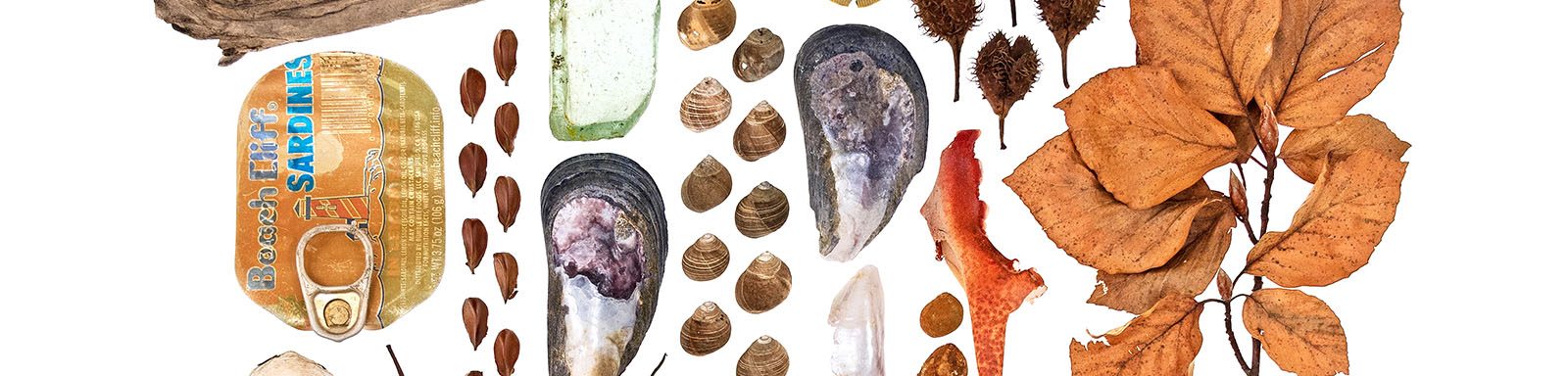
In the still life: Green Crabs (Carcinus maenas), plastic sewage treatment disk, acorns (Quercus sp.), driftwood, lobster-claw bands, Waved Whelk (Buccinum undatum), fishing rope, feathers, White Pine cone (Pinus strobus), Soft-shell Clam (Mya arenaria), Dog Whelk (Nucella lapillus), plastic shotgun shell, Coralline (not sure of species), peach pit (Prunus persica), sea brick, Common Slipper Shell (Crepidula fornicata).
Share

Sugar Shack

Yesterday was Maine Maple Sunday, a fairly brilliant campaign organized by the Maine Maple Producers Association. On the fourth Sunday in March, sugarhouses all over the state open to the public, offering tastings, demonstrating the process, and generally having a sweet time. A lot of smaller operations aren’t on the website map – I headed over to visit my friends Patti and Greg at Heart of Eden here in Bar Harbor. This is Greg’s sugarshack:

Looks a lot like an iceshack, doesn’t it?

For my friends outside Maine, a couple of definitions might be in order.
Sugarhouse: this can be either the building in which the sap is boiled down (“I’ve been down in the sugarhouse all morning.”) or a business (“My grandfather started the sugarhouse back in the 1940s.”)
Sugarshack (or sugar shack): always the building.
Sugarbush: a stand of maple trees tapped for sap. I only know people who tap sugar maple (Acer saccharum) but it’s also possible to tap silver maple (Acer saccharinum). The botanical names are a clue.

So what’s inside a sugarshack? Well Greg’s got an ancient restaurant stove under an enormous pan he built himself. That white bucket in the background is about half full of sap. The tubing leads into the large pan, and the sap trickles in constantly as the pan bubbles and the boiling liquid evaporates and thickens. After about five hours or so, Greg will let it cool a bit, then pour it into another pan, which you can just see on the right there (much smaller), and let it bubble away for a few more hours, thickening even more.

Greg at work.
Maine

As it boils, he skims the impurities out by hand. This is a labor of love. Emphasis on labor!

 The boiling sap. It looks like water when it comes out of the tree, but gets darker and darker as it thickens. The syrup produced at the beginning of the season is lighter than the stuff made at the end, and the flavor changes through the season. 
Maine
I usually like mine dark-dark-dark (also the way I like my coffee and chocolate) but I bought some early syrup from Patti yesterday and the flavor was so different I may convert. I can’t describe the difference, either. I need some syrup-tasting vocabulary! In fact, I think I’ll go have a spoonful now and ponder that.
shadow light amber
If you’d like to learn more about making maple syrup, my friend Karen wrote the definitive article, full of facts, figures and funny anecdotes, for Maine Morsels. The only thing she got wrong is that nobody around here buys a year’s supply of maple syrup in one day. It wouldn’t fit in the house!

Share

Off-Season

snowstorm seagull seagulls gulls dock wharf jetty March
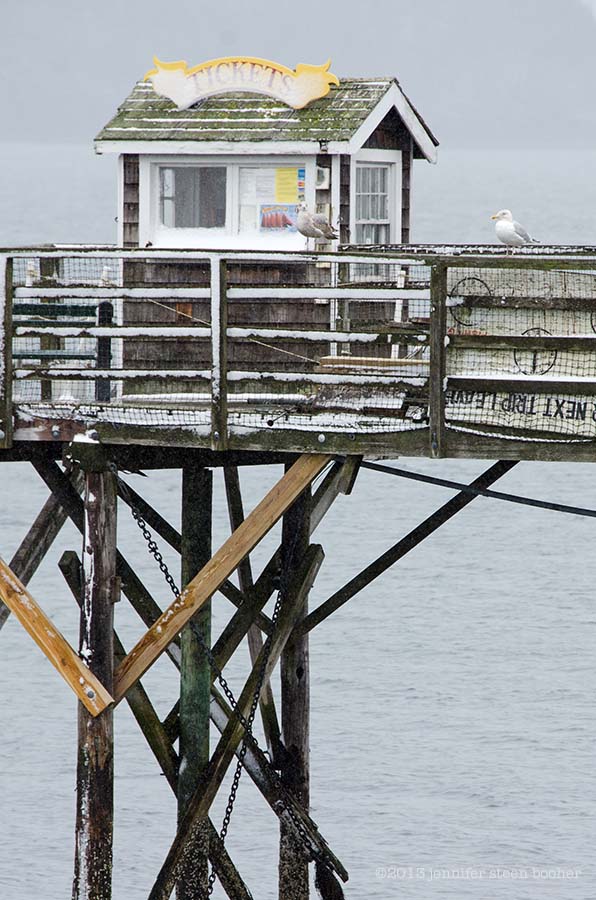
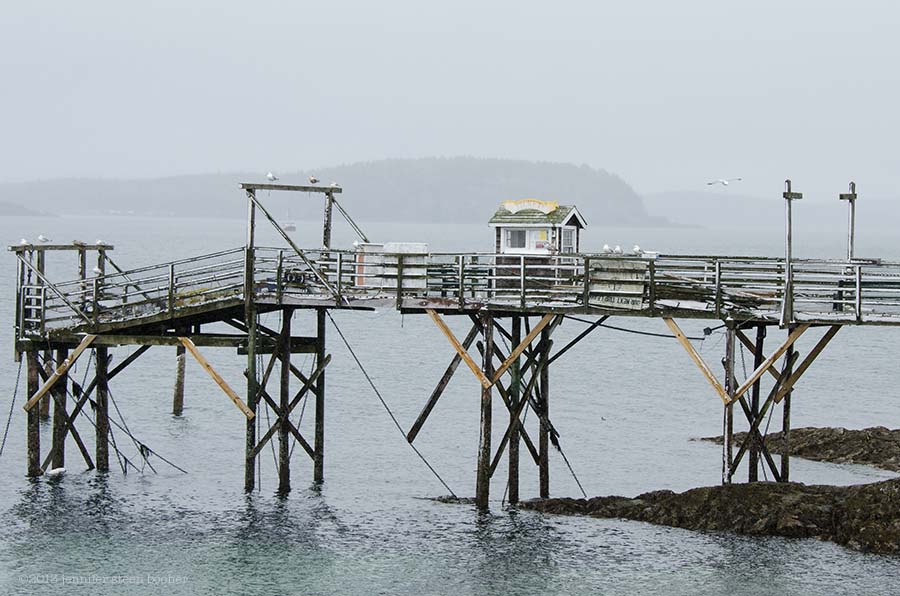
The weather this week can’t decide if it wants to rain or snow, so we’ve had a lot of very wet, mostly frozen stuff coming out of the sky. I wandered down to the Town Pier hoping to take some “falling snow” shots but the flakes were so small they don’t show up at all, so instead of pretty “falling snow” pictures, I have “cold, grey, yucky weather” pictures.
seagulls sea gulls snow March

Which is a much more realistic portrait of Bar Harbor in March. It’s still beautiful, but you have to be awfully determined to go outside.

Share

Foggy Window

drops, droplets, water, pattern, texture, monochrome, Maine
Condensation on my bedroom window. 
I’ve been sick for the last week or so, holed up in my room with the humidifier on high, watching H2O change from a gaseous form to a liquid on the window panes. It’s a little more entertaining than watching paint dry. Two blizzards have come and gone, along with Valentine’s Day and Mardi Gras, as I’ve been lying around reading my camera manual, coughing, and taking pictures of my feet. (Practicing the camera settings, see.) I’m starting to feel better, and am really looking forward to leaving the house again!
Share

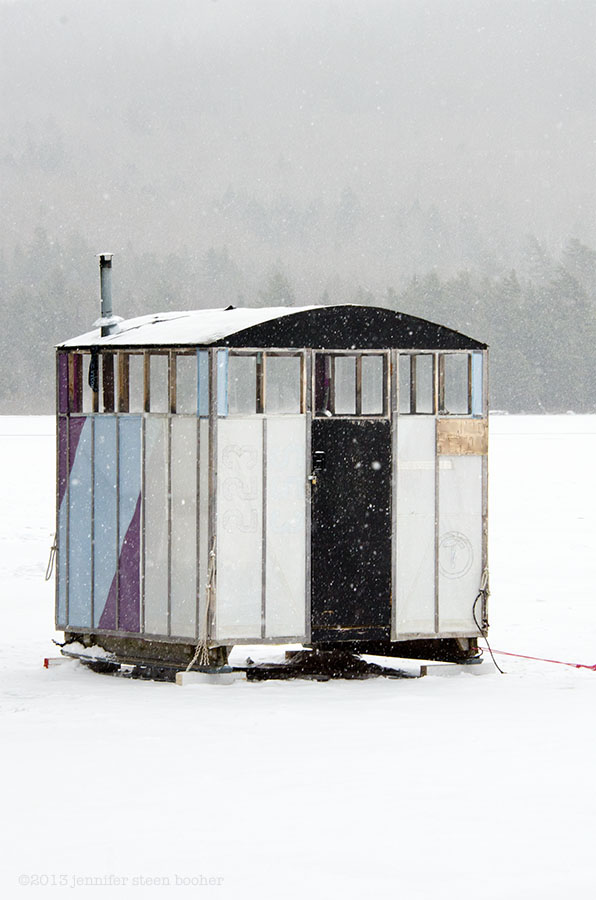
Ice Fishing Shacks on Eagle Lake

Bar Harbor, Maine, Acadia National Park, shack, house
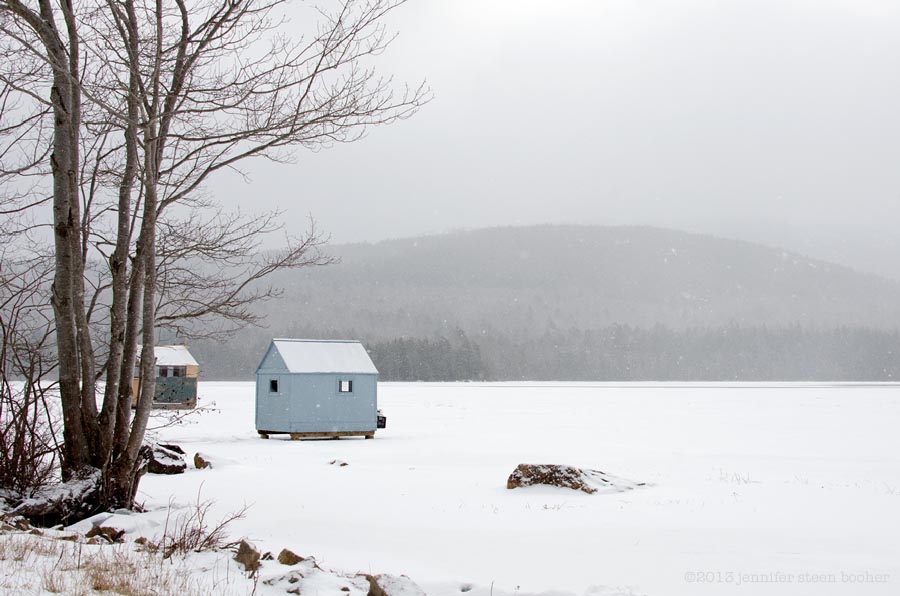
 We had a nice little snowstorm yesterday. Big fat snowflakes came down hard for a couple of hours and then the sun came out and shone brilliantly on the one or two inches that accumulated.
Bar Harbor, Maine, Acadia National Park, ATV
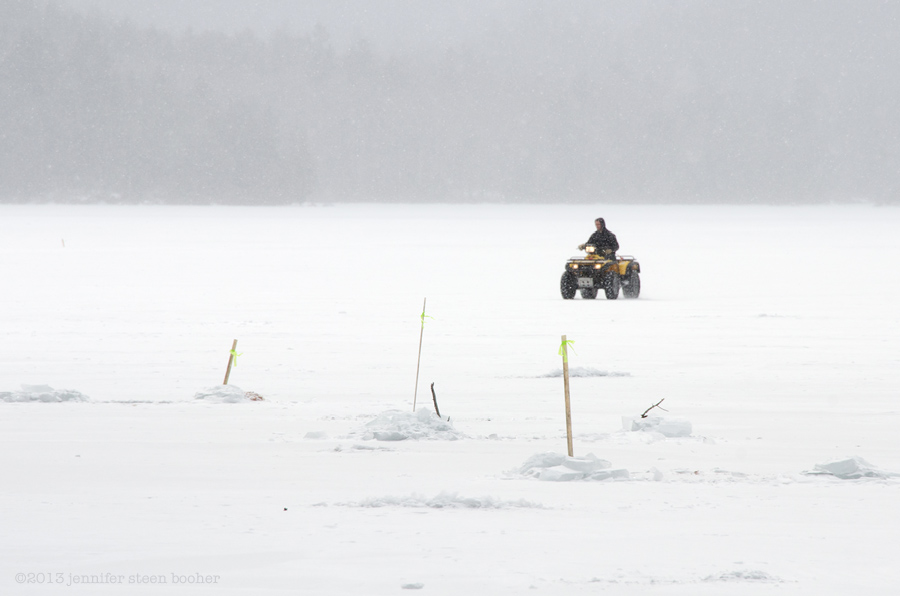
 While the flurries were still swirling I went out to Eagle Lake and poked around the ice shacks. For my friends who live in warmer climates, and for those of you who love Maine but wonder what we do here in the winter, ice fishing is a pretty serious winter sport. You drill holes in the ice with an auger, like this gentleman:
 and then you set your lines with sticks, as in the photo above. The lines are attached to flags, which are triggered to lift when something takes the bait, so you can hang out in your hut
 and keep an eye on your lines.
Bar Harbor, Maine, Acadia National Park, shack, house, snow
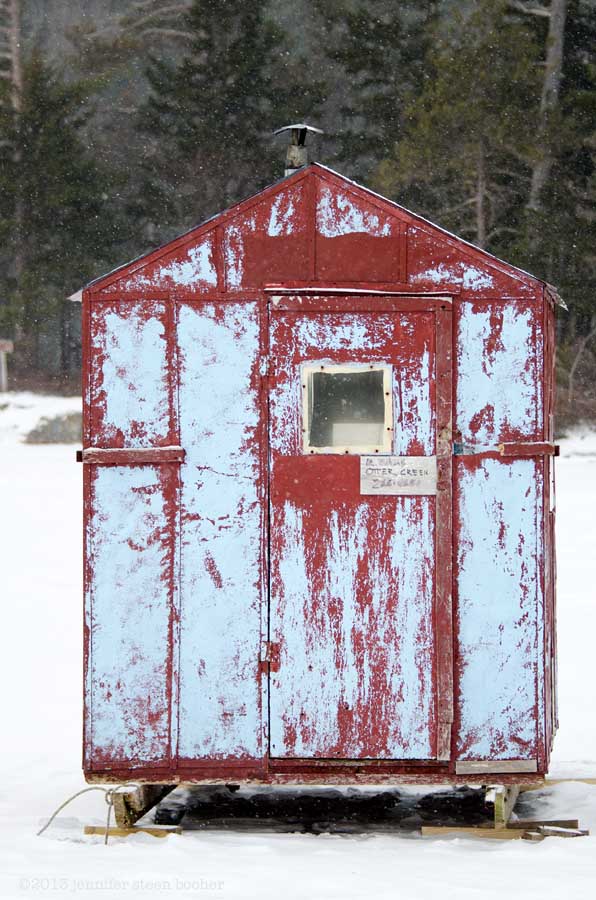
 I have to confess that I am not much of a fisher-person at any time of year, although I’m always willing to help eat the catch.  I love hanging out in (other people’s) ice shacks, though. They’re exactly as insulated as they look – not a bit – but many of them have a woodstove or propane stove, and once you pack three or four people in even an unheated one you find you shed hats and mittens pretty quickly. Then you drink and eat and play cards and laugh a lot, and maybe keep one eye out for flags popping up on the lines if you want fish for lunch.
Bar Harbor, Maine, Acadia National Park, shack, house, snow
 The lake looks pretty bleak in these photos because of the storm, but on a sunny weekend day people are skating and the ice house owners have spread folding chairs out in front and are barbecuing and yelling back and forth and there are kids sliding on the ice and dogs slipping around trying to catch the kids and it’s about as bleak as the Fourth of July. Colder, though.
 Is the ice strong enough? Yes, right now I think it’s about 8″ thick. You have to be careful around the edges and anywhere the water is moving (like at a spot where a stream enters the lake.)
 Bar Harbor, Maine, Acadia National Park, shack, house
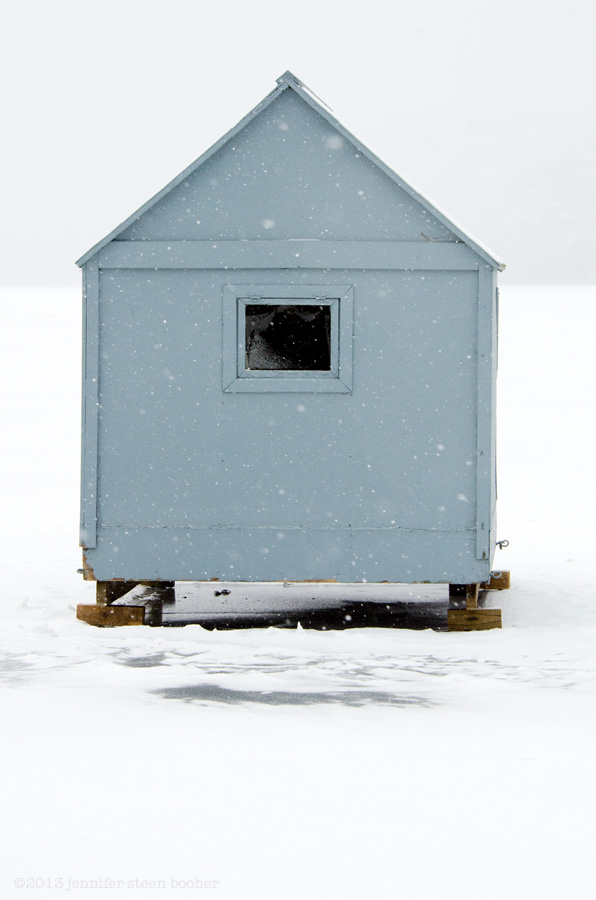
 Do the houses ever fall in? Very rarely. You build a house and put it on the ice, you’re going to keep an eye on the weather. We had a problem last week because the ice thawed very fast, and two or three houses did go in. That’s the first time I can remember that happening in fifteen years, though.
 How do the houses get on the ice? The owners usually haul the house to a boat-launch area in the bed of a pickup truck, and then pull it onto the ice with an ATV (All-Terrain Vehicle, like the one near the top of this post.) You can see that each house is mounted on sturdy wooden runners.
 On other lakes they might just use the pickup to pull it on, but Eagle Lake is part of Acadia National Park, and cars aren’t allowed on the ice.
 This one’s my favorite!

Share