Jennifer Steen Booher

January 2013

winter woodland
Oh geez, it’s February! Somehow the whole month of January has slipped by, and we’ve spent so long going through the Oaxaca photos I never got around to showing you how beautiful the winter has been here in Maine. Those of you who know me on Facebook have seen a couple of snowy photos, but let’s have a quick catch-up so we’ll be ready for the new month.
winter woodland

SNOWFALL

On January 16,  big fluffy snowflakes began falling at 8am. I’ve been wanting to try taking photos of falling snow, inspired by this article, so I headed out to the Jesup Path.
winter woodland

I ran into technical difficulties pretty quickly. The snow got increasingly wet, and the edge of my hood developed a slow drip. My gloves were damp and flakes melted as soon as they touched my coat. My camera will take a fair amount of wet weather, but I noticed droplets forming on the barrel of the zoom and decided to put it in its Rain Sleeve, which instantly fogged up, making it impossible to read the camera settings. Still, a fogged plastic bag is better than sucking water into the lens, so I muddled on. I had brought a microfiber cloth to dry my lens when it got droplets on it, but it never occurred to me that the cloth itself would get wet between my pocket and the camera lens! On the bright side, it turns out that small streaks on the lens don’t necessarily ruin a photo.

winter landscape, snow storm
SEAGULLS
 On the 19th, I slid down to the Bar after a morning snowfall to stalk the seagulls.
seascape with snow
The whole flock was lined up on the tiniest sliver of mud, watching the tide inch closer and closer to their toes.

winter seascape
FROST
ice on glass

Toward the end of the month we had a spell of bitterly cold weather. When it dropped below 0ºF, my studio windows sprouted psychedelic frost patterns.
ice crystals on glass
 ice crystals on glass
When I wake up and see the thermometer at -8ºF, I whoop and run around the house checking windows for cool frost patterns. 
ice crystals on glass
If I weren’t a photographer, I’d probably swear and go back to bed.
Share

Colors of Oaxaca: The Last Photos from Mexico

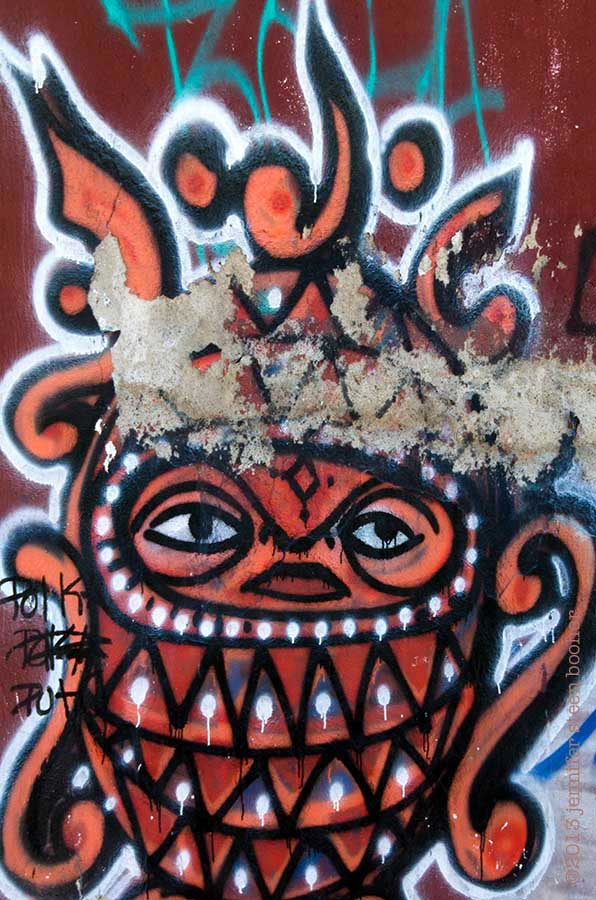
As a grand finale, may I present a selection of rainbow-bright scenes from the streets of Oaxaca? Let’s start with the graffiti, which was outrageously creative:
This one had the title “Luchadora Langstrump” (Pippi Longstocking as a wrestler). 

Now let’s have a quick tour of painted walls and security grilles:

And for the very last images from the trip, how about a few of the most colorful inhabitants?
These girls were gathered in the Zocalo posing for family photographs on the Sunday before Christmas. The bright ribbons woven through their braids with enormous bows at each end were just so adorable I could hardly stand it.
I did ask permission to take photos, and one bright side about having grown up into a plump, cheerful, middle-aged mom is that I’m utterly non-threatening and nobody much minds if I smile at their children.
And the children usually smile back!
Even the busy chef at a well-known local restaurant didn’t mind. For my very last travel tip: this was at La Casa de la Abuela, which serves really really good classic local dishes and overlooks the Zocalo. Next time you’re in town, you have to stop by and try the stuffed squash flowers.
So that’s the end of our visit to Oaxaca. Next post – back to Maine for snowstorms and window frost!
Share

The Stoutest Tree in the World: Tule, Mexico

Tule tree, Montezuma Cypress, Taxodium mucronatum
On the way home from Hierve el Agua we stopped in Tule to see the famous tree. Santa María del Tule is a small town southeast of Oaxaca centered on a colonial-era baroque church and the enormous tree in its churchyard.
Taxodium mucronatum, Tule tree, Montezuma Cypress
El Arból del Tule is an enormous Montezuma Cypress (Taxodium mucronatum) with the distinction of having the thickest trunk in the world. It is #1594 on UNESCO’s ‘tentative’ World Heritage list, which I guess are places that haven’t yet finished the nomination process but are too awesome not include. The tree is somewhere between 1,000 and 3,000 years old, depending on who you ask.
Taxodium mucronatum, Montezuma Cypress, Tule tree
 I think it cost about 10 pesos to enter the churchyard to get closer to the tree (I should really start writing this stuff down), although there is an inner railing protecting the trunk from us tourists. The tree was impressive, but I found it just about impossible to capture its massiveness in a photo. You’ll have to go visit.
church, pre-colonial, statue
 The most amazing thing I saw in Tule was the church hidden behind the tree.
El Templo de Santa Maria de la Asuncion, church, pre-colonial, 18th century
El Templo de Santa María de la Asunción is a charming 18th century church absolutely stuffed with remarkable statuary. 
statuary, Jesus Christ, Passion, santossantos, church
The walls of the nave are lined with smaller saints standing around in and out of glass cases:
saints, icons
Some of these are apparently pre-colonial painted santos, although  I couldn’t tell you which are which.
sleeping Holy Child, santos, saint, baby, Catholic
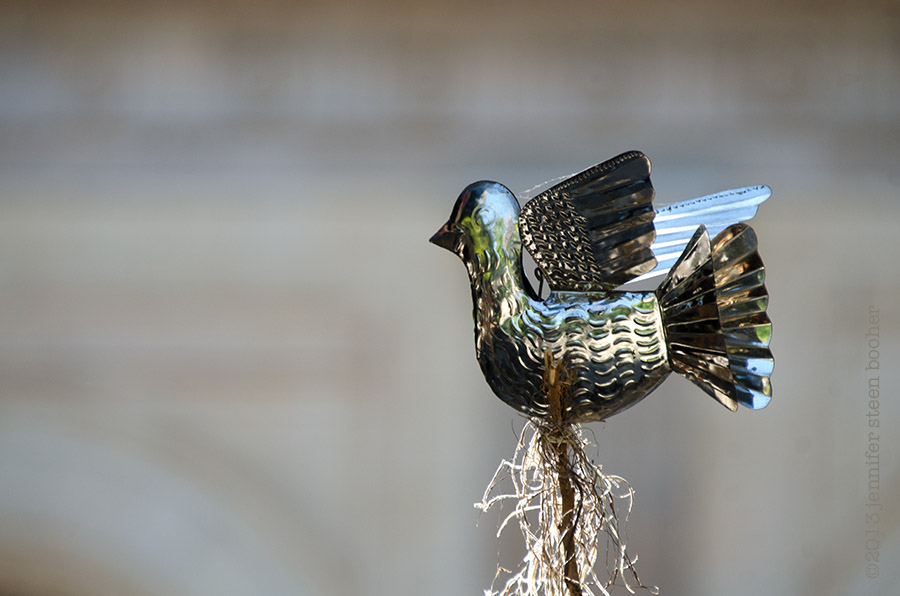
 The whole church was decorated for Christmas with rainbow-colored metal lanterns, swags of faux evergreens, gold baubles, and poinsettias to the point where the original elaborately carved and gilded altarpiece and the enormous crystal chandeliers were quite overshadowed.
Christmas decorations
It was also incredibly dark, so I couldn’t get a good shot of the interior, but this should give you some idea of the over-the-topness of it all.
 Larger-than-life angels holding lanterns and flanked with electric lotus flowers. Wow.
Then there was this memorable altarpiece. It’s like Georgia O’Keefe collaborated with Hieronymus Bosch and then Terry Gilliam chimed in. If it doesn’t give you fits of giggles then you are much more mature than I am.
Santa Maria de la Asuncion, Santa Maria del Tule, Oaxaca, Mexico
 On our way out of the church, we met a nun selling cookies and rompopo. I found the name later – at the time all we could decipher is that it was made with eggs, cream, cinnamon, and something alcoholic, which turned out to be quite a bit of rum. I finally bought a bottle because in my limited experience when nuns sell food it is usually worth tasting. And it was!

Share

Petrified Waterfalls at Hierve el Agua: December 29, 2012

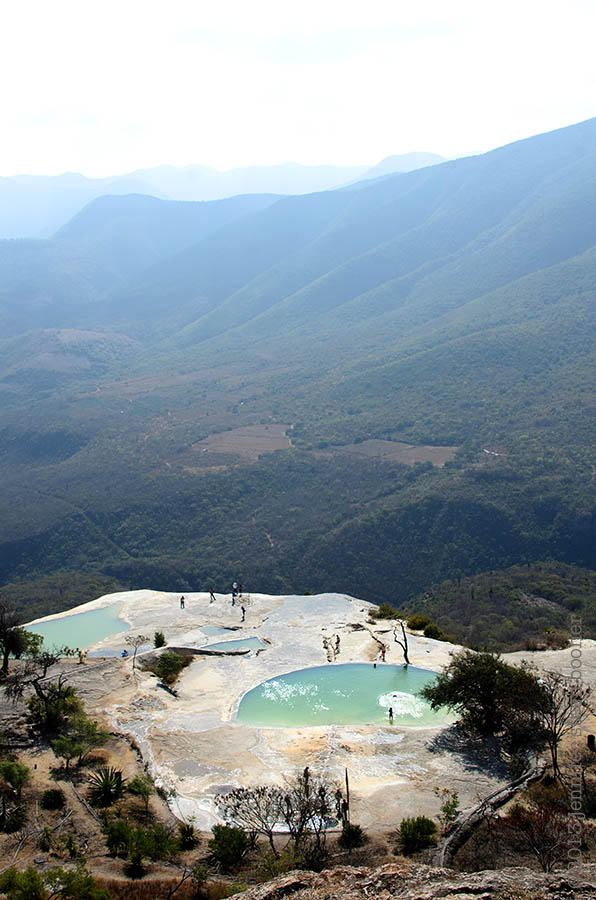
Hierve el Agua is a well-known mineral spring in a remote agricultural area in the Sierra Norte mountains. Water trickling down from the springs has built fantastic stone formations that look like waterfalls flowing down the cliff walls. It’s about a two hour drive from the city of Oaxaca and a very popular day trip for tourists and locals alike.

With nine of us traveling together the simplest way to get there was to hire a van and driver. After seeing the route we took I was profoundly grateful that we hadn’t tried to rent a car and drive ourselves: I’m pretty sure we’d still be lost in the Sierra Norte. About half the trip is on paved roads, but then you turn off and wind your way through the mountains, bumping through villages and dodging the donkeys grazing at the side of the road. The road goes so close to the buildings that in places we could look right in through the front door.

 When you arrive at the Hierve el Agua parking area you can go straight down to the pools or wander among the stalls selling food and drink. You’re on a mountaintop near the equator, so the sun is strong, there’s little shade, and a strong wind blows steadily, so wear a hat you can tie firmly to your head, slather on lots of sunscreen, and bring gallons of water. If you’re going to try the trails down to the valley floor, you might want a stout walking stick, too. Me, I found myself wishing for a rope tow.
There’s an easy hike (maybe ten minutes, if you stroll) out to an overlook that gives this view of the pools:
and some spectacular views out over the mountains.
Those are agave plants in flower, and the stalks are about 15 feet tall. Here’s a human for scale:
 There’s another spring on this overlook:
You can see where the name ‘Hierve el Agua’ comes from: it translates as “the water boils,” which is not a reference to the temperature (the springs are very cold), but to the way it bubbles up in the pools.
A steep trail winds down the side of the cliff to the base, where you can get a really good look at the amazing rock formations. A good deal of the trail is giant stone steps, about 18″ high, and fairly challenging. The hike back up left me wheezing, red-faced, and cranky as hell, but my younger, fitter cousins bounded right up. Caveat climber.
The ‘waterfalls’ are formed from calcium carbonate leached from the bedrock by rainwater. If you look closely, you can see tiny people at the right, which should give you some idea of how large those fins of rock are.
This area below the falls is a very popular photo op, even though it is barely wide enough to stand on and the dripping water makes the footing a little uncertain.
Not to be outdone by the locals, we took our turn posing. It’s only a fifteen-foot drop at this point, after all.
The gentle spray from the “falls” was refreshing, and we started to think more seriously about the beautiful aqua pools back at the top of the cliff. There are two pools deep enough to swim in that were made by building a short wall on the slope to capture the spring water. The original walls are now covered in mineral deposits and blend in to the rock around them. 
A detail of the calcite formations along the edge of the swimming areas.
When we finally got back up to the top, we found the rest of Oaxaca had caught up with us. I guess the Saturday after Christmas is a popular time for family day trips! 
Off we scampered off to put our suits on: there is a changing area of sorts, although it doesn’t have a door, so you are a bit at the mercy of other confused people. A tip about the toilets: it costs 2 pesos, and you won’t get toilet paper until you pay. The you take the bucket that stands by the toilet door, fill it with water from the barrel, and take it in with you. After you do your business, use the water in your bucket to flush. If you don’t bring the bucket in, you have to go back out and get it, which will totally gross out all the locals waiting in line.
After negotiating the cultural maze of the bathroom and changing area, I dangled my toes in the pool, ready to dive, and discovered that the water was just above freezing. “Warm springs” my fanny! All of us swim regularly in Maine, and we agreed this water was cold! The strong, steady wind that blows over the mountain doesn’t help. Within minutes of easing in I had forgotten how hot, sweaty, and grumpy I had been on the climb and was trying to decide how long I had to stay in the water for it to count as having gone for a swim. Then I got distracted by the view.
 Eventually we all straggled out of the water, dried off, and sunned ourselves for a bit before climbing back in the van. On the way home I got to sit in the front seat, so of course I took photos for the whole trip.
It is a semi-desert climate, so enormous cacti abound.
Goatherd and flock in the foreground, road cut winding along the mountain in the rear.
And to finish off a beautiful day, on the way home we saw a rainbow below us in the valley.

Photography notes:

I finally realized that no matter what time you get up in the morning, the sun will be harsh and glaring on a mountaintop in southern Mexico. Doh. I’m pretty stingy about spending money on gear, but I’m about to break down and buy a polarizing filter. I’ll keep you posted on what I get.
Share

To Market, to Market: Oaxaca, December 28, 2012

Oaxaca, Mexico
We had eight days in Oaxaca. One was the Radish Festival, two were Christmas, one was Monte Alban, another was Hierve el Agua (next post), and one day I spent in the bathroom debating the pros and cons of antibiotics. I’ll spare you the details, but I took my Cipro.
Oaxaca, Mexico
You’ll see that leaves very little time for the finer things in life, like shopping. At any rate, the day after our trip to Monte Albán, the rest of the family took a cooking class and I tagged along on their expedition to the market. I didn’t join them in the class because I am not, even at the best of times, a recreational cook, and although the worst of my illness had passed my stomach still rebelled at the though of anything more interesting than bread and water.
We started out with a whirlwind dash through the fruits and vegetables:
This is a small zucchini, which I am told is less watery than the kind we see in Maine.
Mangos!
Chiluacle negro (also spelled ‘chile huacle’) is only found in southern Mexico, and apparently makes an excellent mole.
The most vivid red chile I’ve ever seen. I was afraid to touch them because they just look insanely hot.
Quesilla, the unique Oaxacan cheese. It has a texture like string cheese, but a stronger, maybe saltier flavor. If you ask for ‘cheese’ in Oaxaca, this is what you get. There are plenty of other ‘quesos’ but you have to ask for them by name.
Some kind of habañero peppers, I think.
The tejocote tree (Crataegus mexicana) is a relative of hawthorne. I imagine these must be similar to crabapples.
After the vegetables we wandered into areas that were a little more challenging to the American palate. This stall sold various mole pastes and two snack foods:
Ajos fritos con chile (fried garlic cloves with chile)
and chapulines (fried grasshoppers with lime and chile). I never got to try the big ones – we had some small, powdery ones that we used as a spice on tortillas. They tasted like lime and chile.
 
 I’m so used to our sanitized grocery stores that it is very disconcerting to see meat that isn’t wrapped in plastic.
These were in an alley outside the market.
We stopped in at Chocolate Mayordomo to pick up paste for the mole sauce. The raw beans (above) are poured into the giant grinders (below)
and then mixed with cinnamon and chile and other spices to make a sort of paste, which you can use for hot chocolate or mole sauce.
 

Once the others went off with their chef, I wandered into a local artisans’ cooperative, which was hung with papel picado flags.
Most of the shops were filled with standard Oaxacan tourist fare; painted wooden figures, black pottery, beaded jewelry, and hammocks of all colors; but in a poorly-lit back room I found a wall of luchador masks. I own too much stuff, so I sworn an informal oath not to buy anything on this trip, but the masks almost tipped me over the edge.
I know exactly nothing about Lucha Libre wrestling, but that panda mask would scare the pants off every kid who knocks at my door next Halloween!

And on my way through the Zócalo, I saw an inflatable luchador, complete with curly painted chest hair.

Share

The Ruins of Monte Albán, Oaxaca: December 27, 2012

Building IV
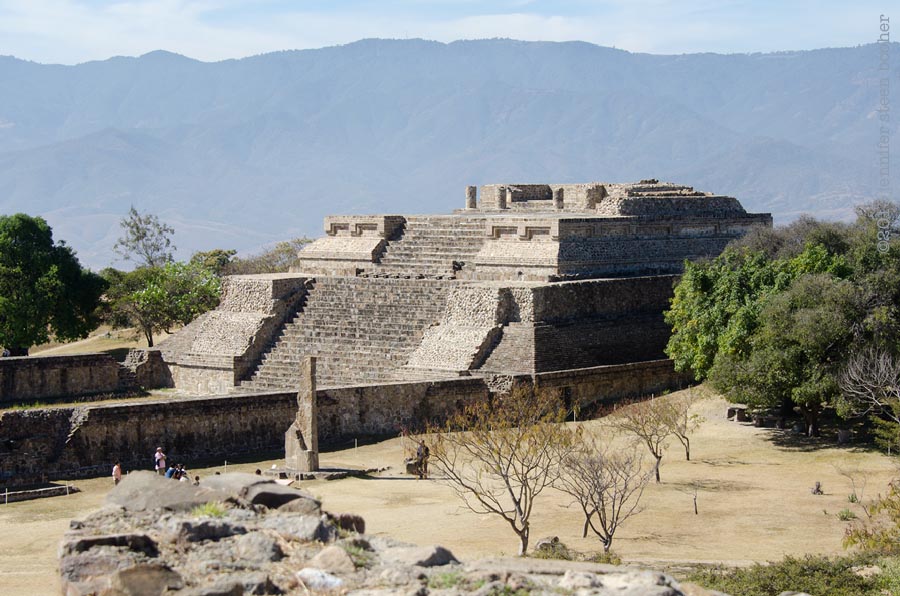
Monte Albán is an enormous ruined ceremonial complex perched on a hilltop just outside the city of Oaxaca. It is number 415 on the United Nations’ list of World Heritage sites, and I find that when planning a vacation you cannot go wrong with a World Heritage site. The Taj Mahal is number 252. The Grand Canyon is number 75. There’s a pretty high standard for making that list, so even knowing nothing about Monte Albán we headed up the mountain to check it out. Some of us took the bus for about $3 round trip. The rest, more ambitious and in better shape, rented bicycles and rode up. The ruin is 1,300 feet above the valley floor, so that was a pretty impressive ride. When our bus passed them on a hairpin turn I closed my eyes and prayed we wouldn’t knock them off the edge.
The first Zapotec builders began here around 300 BC, and they flattened the mountaintop to build temples and palaces. If I understand our guide (and I may not have as she spoke rapidly with a thick accent) only a very small portion of the city has been excavated, and it was primarily ceremonial. The rest is still buried on the slopes of the mountain. If you are curious about the ruins, there is a lot more historical information on the World Heritage site, Wikipedia, and Discover Oaxaca.
Monte Albán, Oaxaca, Mexico
 This is your first view of the great Plaza. My daughter and I took one look at the enormous set of stairs scaling the platform at the other and headed straight for it. Big hill! Must climb!
looking over the Main Plaza to the North Platform
 This is the view from the top looking back over the plaza to the North Platform. All the other buildings are fenced off: you can only climb the North and South platforms, and you can’t go inside anywhere. Phooey.
looking down from the South Platform
And this is the view looking down from the platform. If you squint, you can see the city sprawling in the blue haze beyond the mound. By the way, you’ll notice the site is completely bare, with only a few trees dotted sparsely around the edges. The shade under every one of those trees is staked out by 8am by a local selling replicas of Zapotec masks.
Monte Albán, Oaxaca, Mexico
Go first thing in the morning before it gets hot, and wear a hat with the largest brim you can stand. The really smart people brought umbrellas. If you forget, there’s a small army of hat-sellers lining the steps up to the museum. Buy one! Even in December the mountaintop bakes, and by noon any uncovered skin is sunburnt. As an aside, the souvenir-and-trinket sellers are very polite, and some of them had beautiful things for sale. They approach and hold up a sample, but if you say, “Non, gracias,” they move on. You do have to say it a lot, unless you are in the market for a Zapotec replica, in which case, boy, are you in luck.

Leucaena leucocephala, Monte Albán, Oaxaca, Mexico

 The guaje tree (Leucaena leucocephala) is also called Huāxcuahuitl in one of the local languages, and Oaxaca’s name is derived from it. It grows wild all over the mountain, and the red beans are very striking with the sun shining through them.
Ipomoea murucoides, Monte Albán, Oaxaca, Mexico
 The casahuate trees (Ipomoea pauciflora or Ipomoea murucoides) were in bloom, and they also grew all over the hillsides. According to our guide, the white flowers gave Monte Albán (White Mountain) its Spanish name. On the other hand, one of those websites I listed said the name came from the family who owned the mountain in the 1700s (the Montalbans.) I checked Snopes, but they don’t have an entry for this.
Building IV
One other tourist tip – bring lots of water and drink it all. The bathrooms in the visitor center are reasonably clean and accessible, and if you don’t drink water the altitude (6,400 ft above sea level), blazing sun, and arid climate are going to do a number on you.
masonry, Zapotec, Mixtec
This is the ball court. It seemed tiny to me, and those tiered areas were originally plastered over and smooth, so the game must have been something like soccer crossed with billiards.
Monte Albán, Oaxaca, Mexico
 These large black raptors swooped over the platforms all morning. They had a three- or four-foot wingspan; not enormous, but big enough to take seriously. Some of them were Black Vultures, but this one might have been a Turkey Vulture. (Thank you to Mary and Chris for the IDs!)
Monte Albán, Oaxaca, Mexico
Heading back down the mountain, you can see how flat the plain is between the high mountains, and how full it is of city. It is best not to look straight down.
Jesus, Virgin Mary, religious icons
At least on the city buses you know you are in good hands. 
P.S. Once again I took far too many photos for the blog, so if you just can’t get enough, come on over to the Mexico set on my Flickr site.
Share

Christmas Day, Oaxaca, 2012

 Christmas Day was bright and warm, as usual, and my daughter let us sleep until 6. Christmas is Christmas, and there were stockings to be opened! (Well, I hadn’t wanted to drag the actual stockings across the country, so we decorated plastic grocery bags and hung those for Santa. He figured it out.)

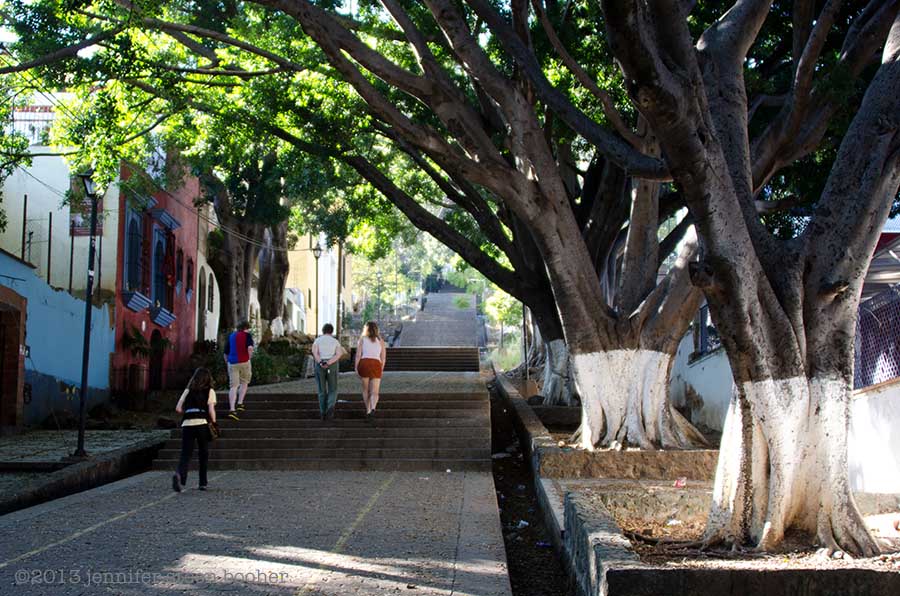
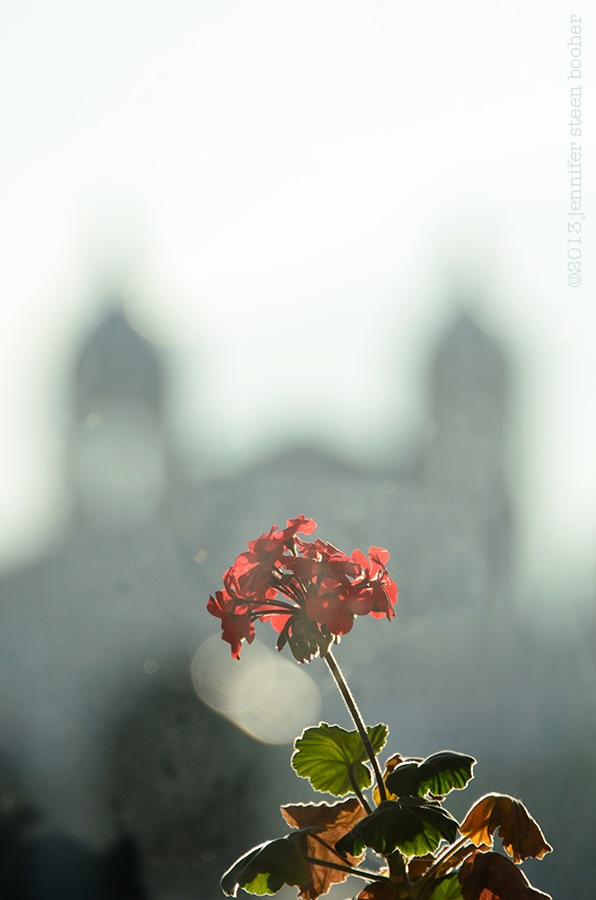
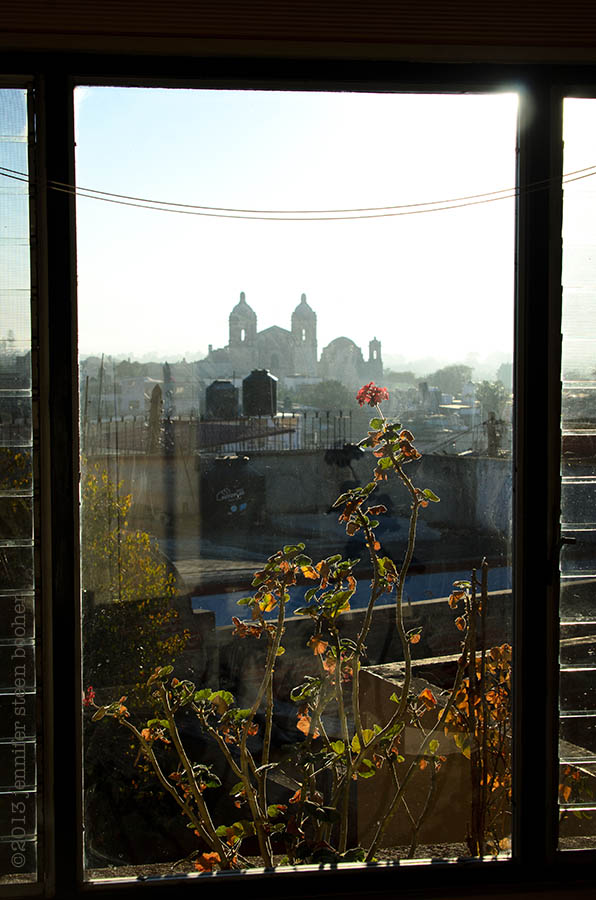
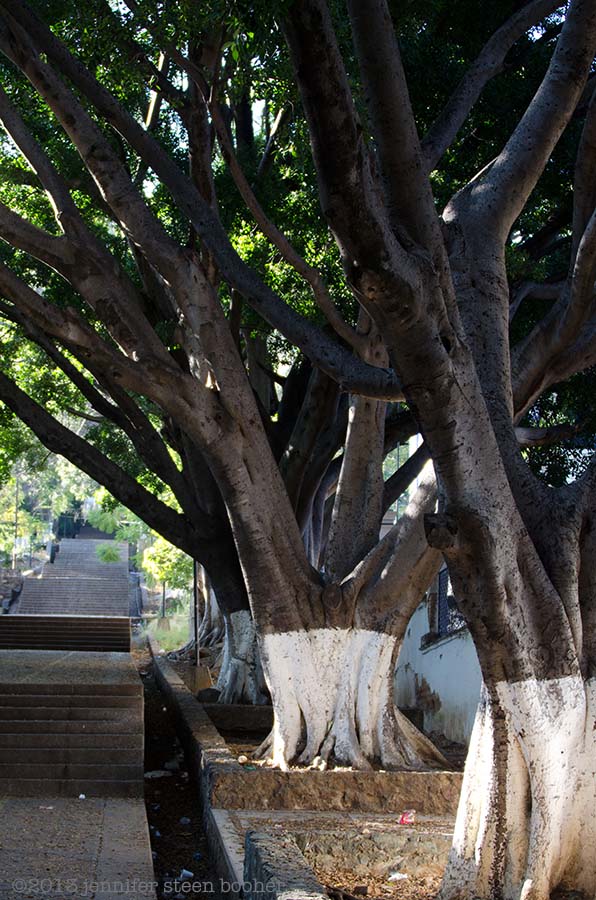
This is the morning view from our living room window, looking out over Santo Domingo church to the mountains. After breakfast and presents, we set out for our annual Christmas Walk. Usually this is along the Shore Path in Bar Harbor, and bitterly cold. No large bodies of water here in Oaxaca, so we wandered up the hill near our house and found this amazing neighborhood built along a staircase.
 Several days later, I got a map from the tourist kiosk in the Zócalo that identified this as the Escaleras del Fortín. The map featured not only museums, churches, and other ordinary tourist attractions, but also pointed out special trees within the city. So cool! The map was in Spanish, but I gather that these trees were planted around the turn of the 20th century, making them roughly 100 years old. 
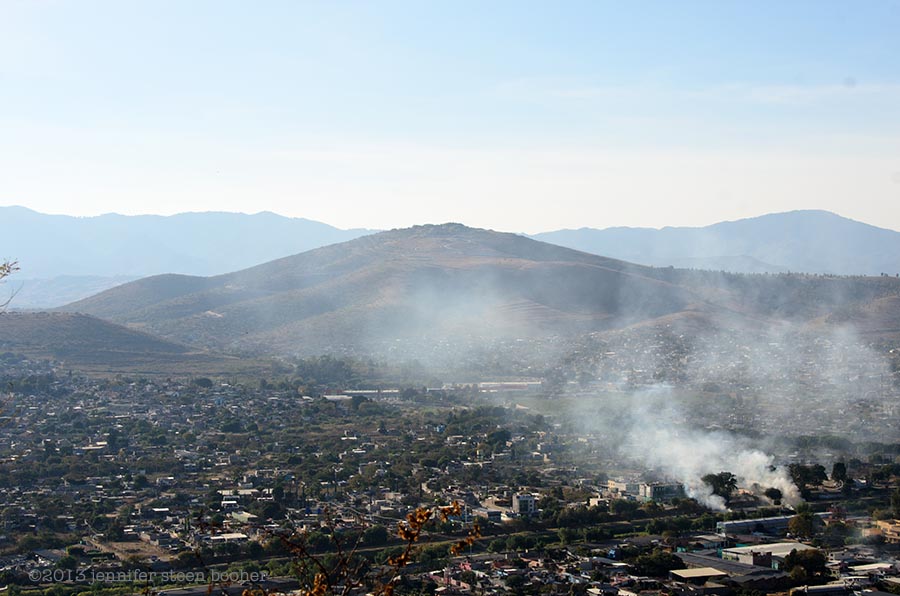
 The stairs lead up to the Guelaguetza amphitheater, and a dirt road goes past that to the Planetarium at the top of the hill, where there is an overlook with a panoramic view of the valley. We’re pretty sure that’s Monte Albán at the top of the hill in the photo below. (More about Monte Albán in the next post.)
 Local friends told us later that this is a good spot for muggings, so if you go, bring lots of friends (there were nine of us!) It’s definitely not a tourist area, and I can find practically nothing about it in guidebooks or online.
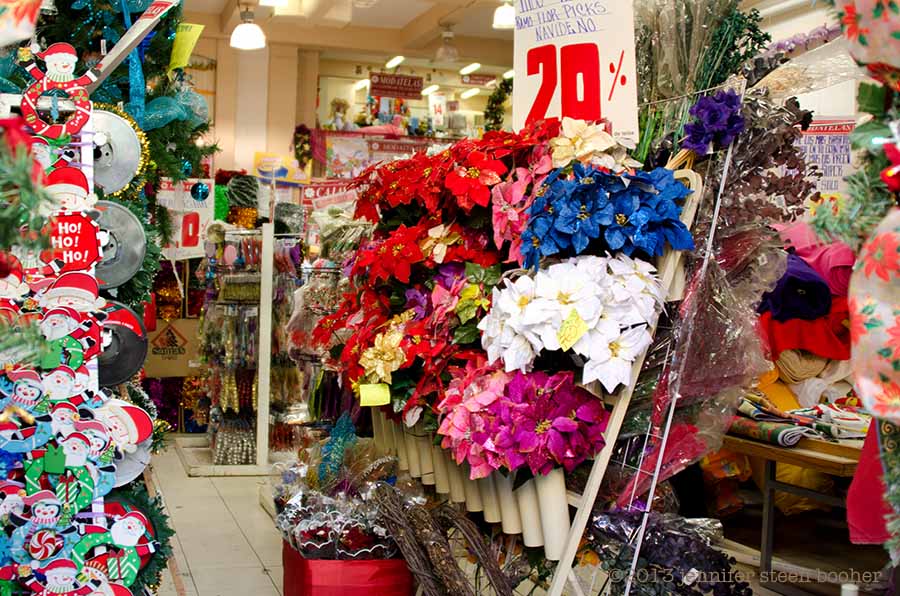
No further adventures on Christmas Day: the afternoon and evening were spent having hot chocolate with friends and playing very loud games of Anomie, so I’ll leave you with photos of Christmas decorations from around the city.
 

Share

Noche Buena; Christmas Eve Posadas in Oaxaca, Mexico

 The day after the Radish Festival was Christmas Eve, which in Oaxaca was called Noche Buena. We had a slow day, sleeping late, going to the market for groceries, finding a newspaper to wrap presents in (I had brought ribbon but not wrapping paper) and generally resting after a rough month and a long trip. I had read that the local posadas ended their routes at the square, and didn’t want to miss the party, so in the evening we went down to the Zócalo for dinner. By 8pm the square was completely packed with balloon-sellers, inflatable-toy-sellers, light-up-toy-sellers, pastry-sellers, popcorn-sellers, couples, families, tourists, and hundreds of very young children shrieking with excitement:
“What’s a posada?” you might ask. Well, it’s sort of a parade. The guidebooks say it represents Mary and Joseph roaming through Bethlehem looking for a place to stay (I think ‘posada’ means ‘inn.’) Apparently there’s a Posada for every neighborhood, and they go on for a week before Christmas, and involve lots of parties and pinatas. On Christmas Eve, they all come together in the main square. Here’s what I saw.
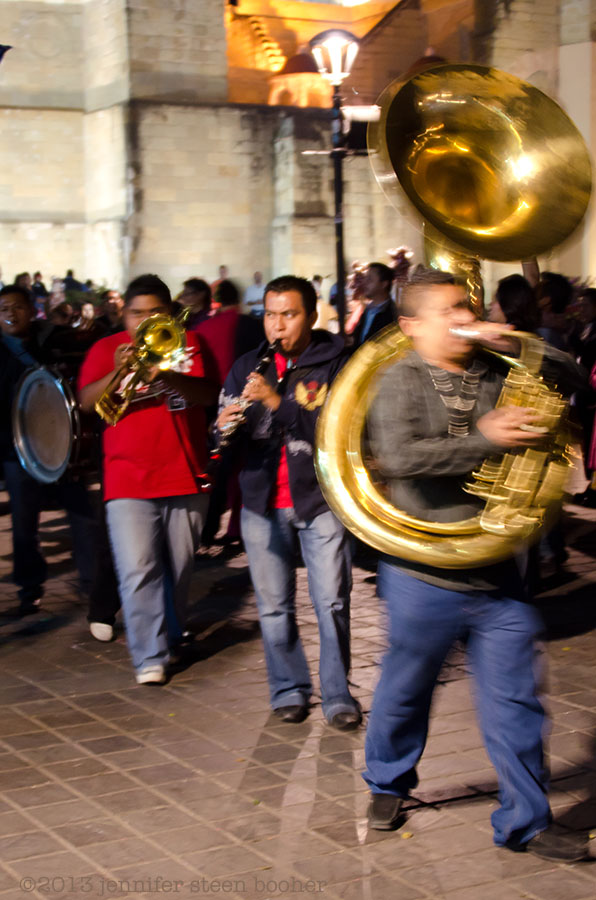
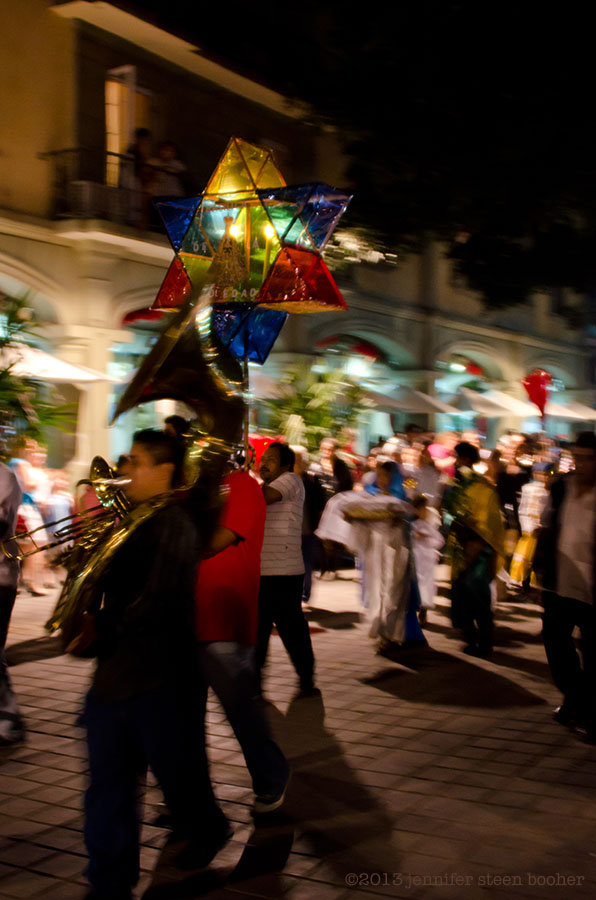
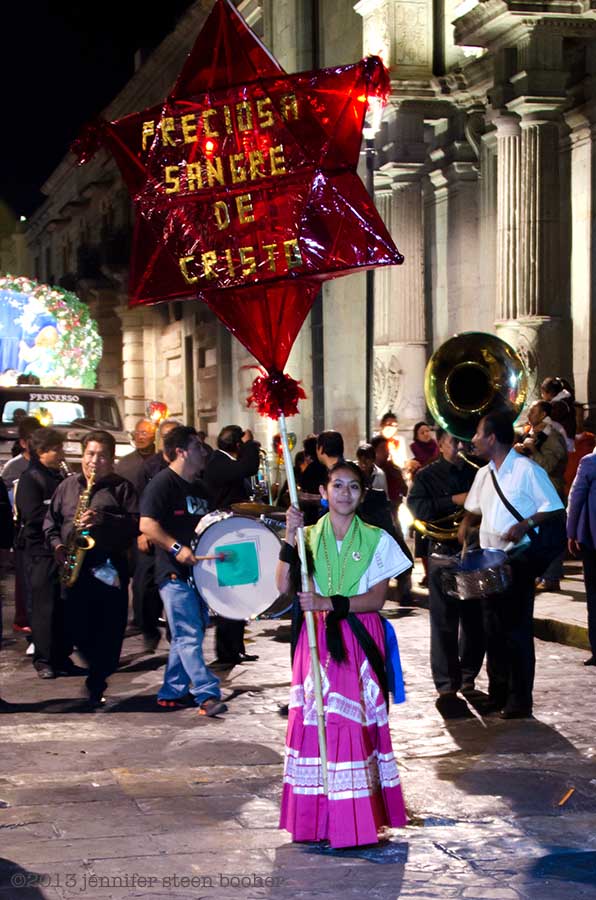
 A posada begins with a band. Mostly brass instruments and drums playing loud, cheerful music – I have never in my life seen so many tubas in one place!
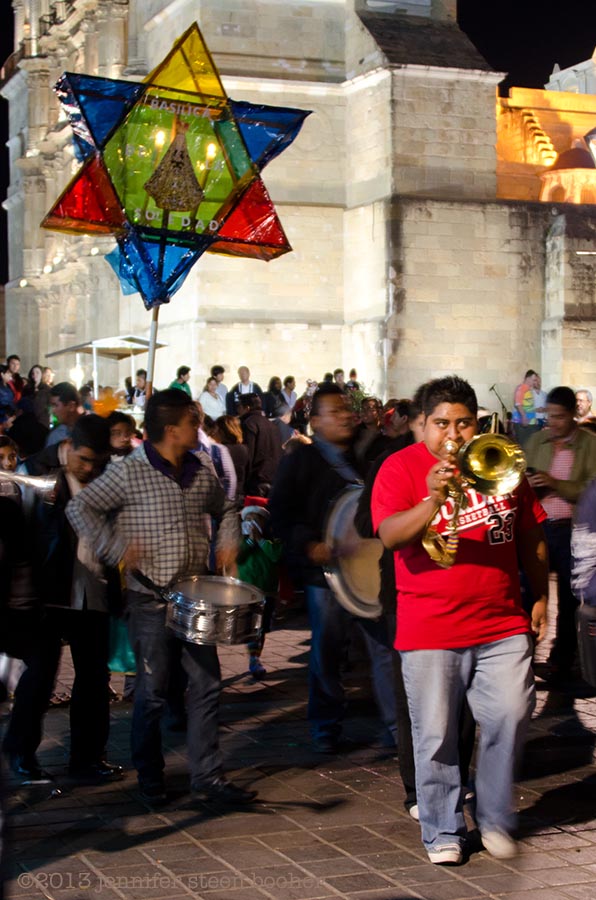
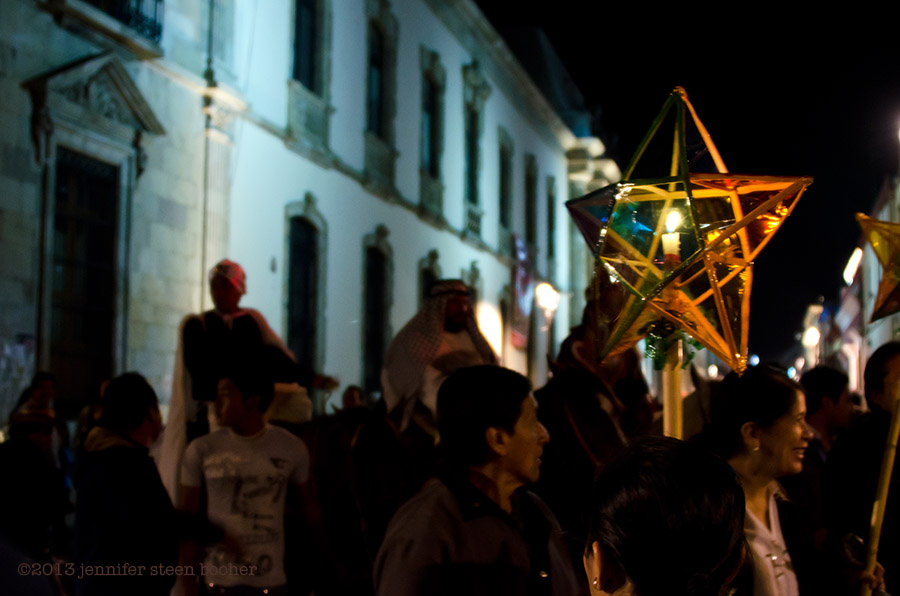
 Then there is usually a large star lit with candles and bearing the name of the church. This one is from La Basilica de la Soledad.
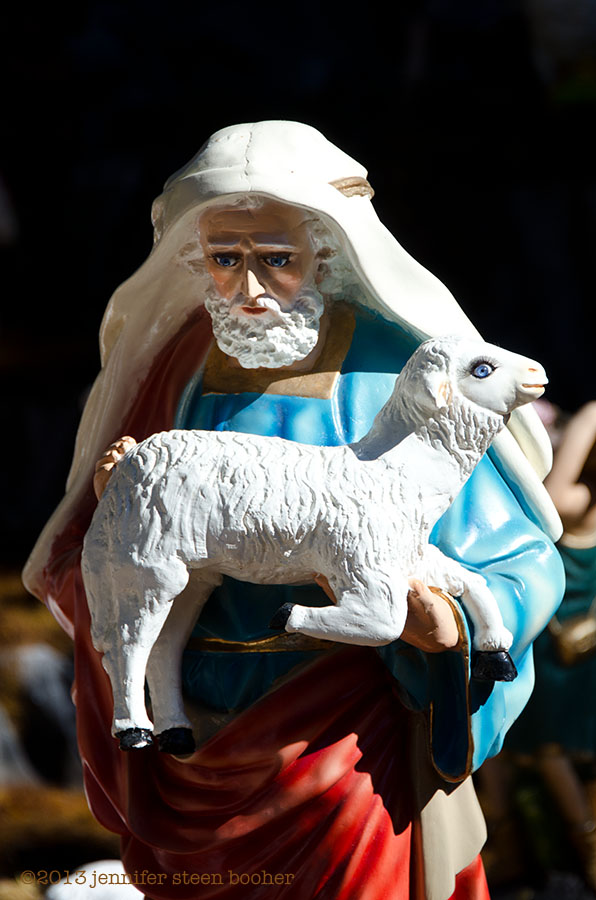
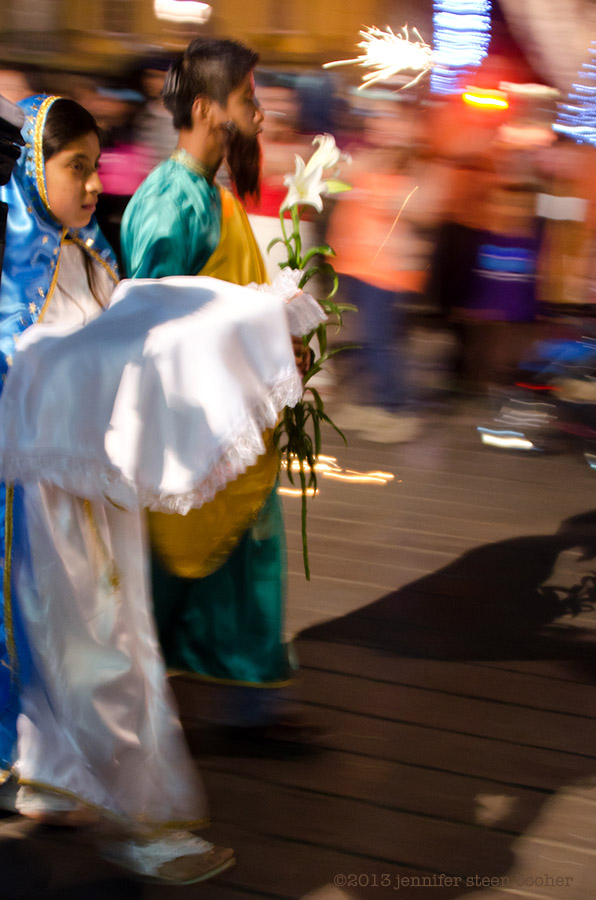
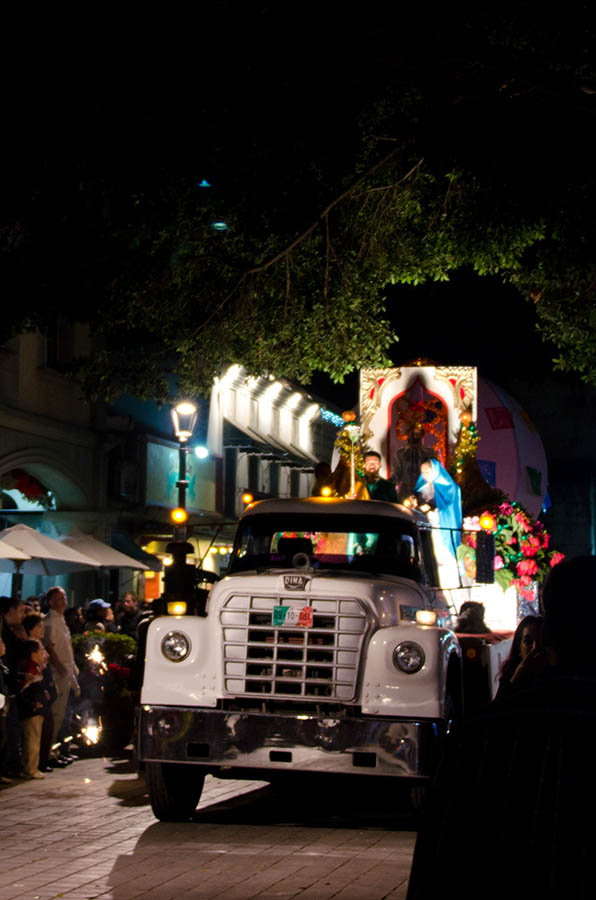
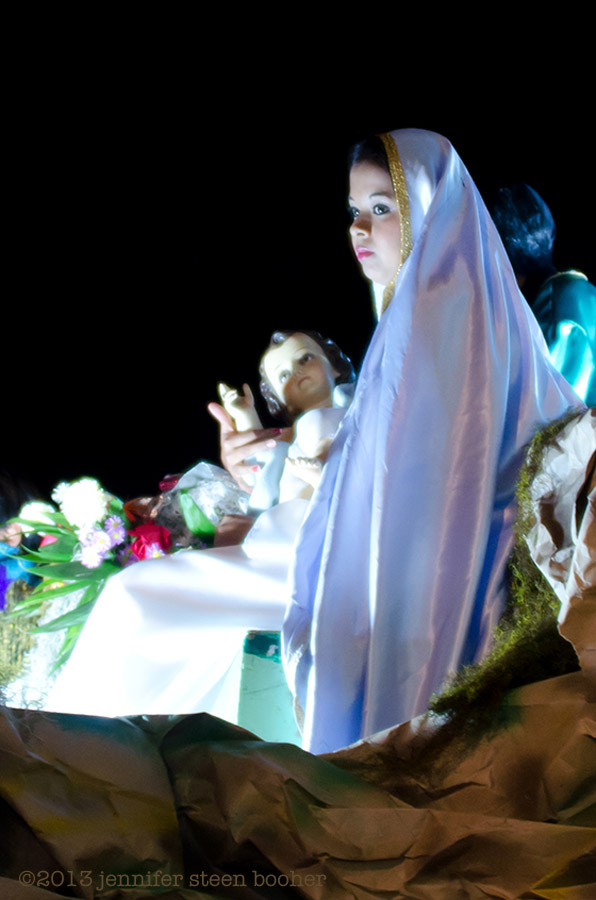
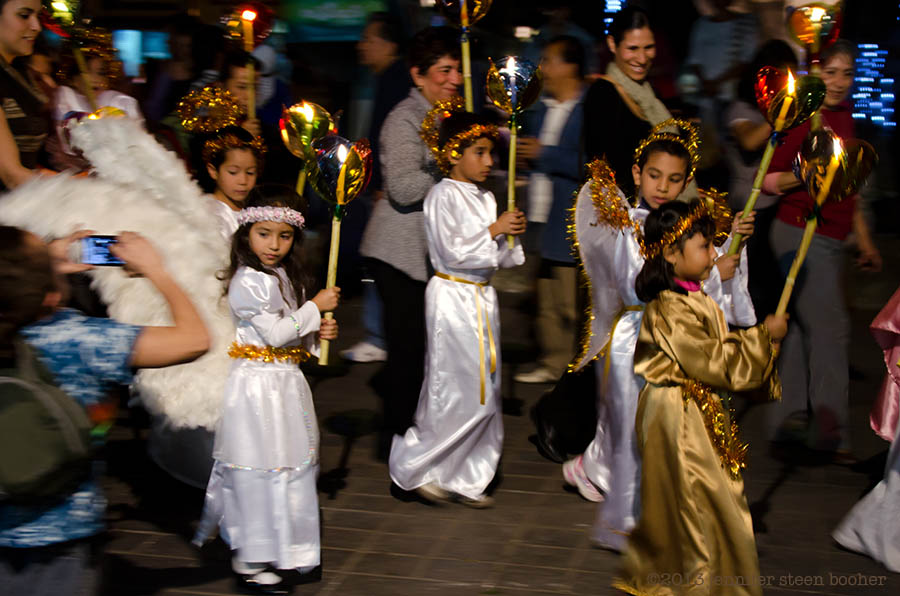
Mary and Joseph follow, bearing the infant Jesus. Joseph always has a large beard, which looks very funny on the young boys playing the part. The smaller posadas let the Holy Family walk, but the larger groups set them up on elaborately decorated trucks,
often with the little angels riding with them, swinging their feet off the sides and throwing candy when they think of it.
 Several extremely enthusiastic groups even had fireworks! One brave soul would carry a sort of wheel set with rockets that spun and threw sparks everywhere. The crowds always stepped back to give them lots of room!
  
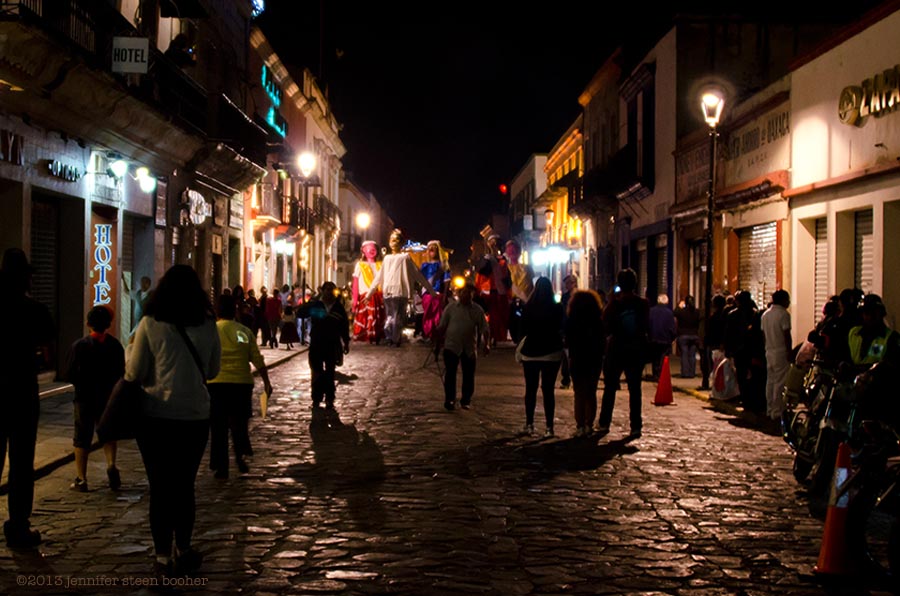
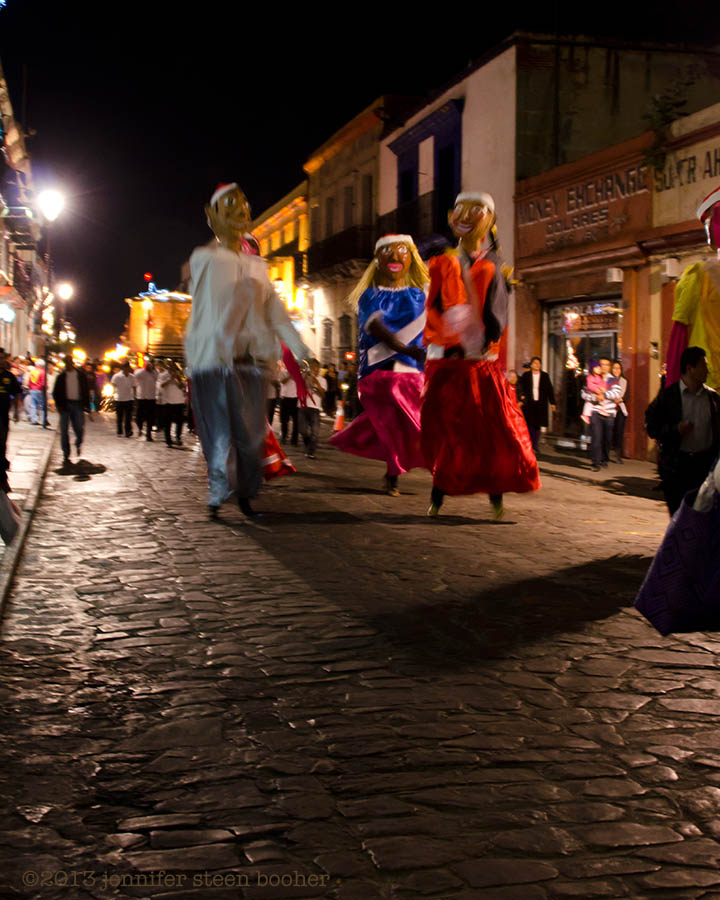
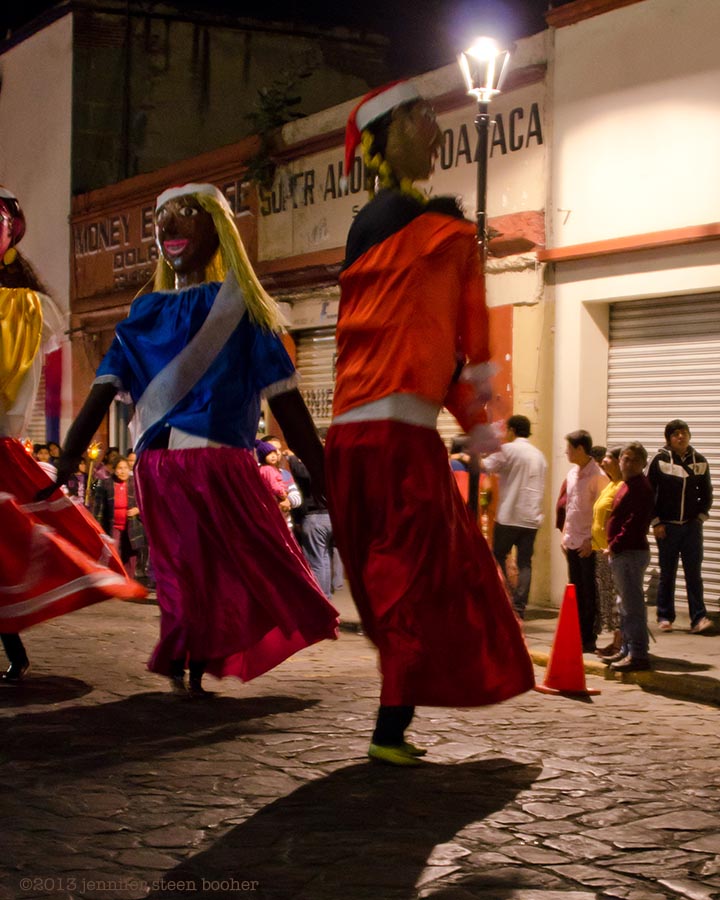
One parade had these fabulous puppets mounted on adults’ shoulders, dancing and spinning in the street.
 So there you have the basics:
music, 

 candles,
Mary, Joseph, and baby Jesus,

and a host of little angels.

When all the posadas reached the Zócalo, they paraded around the square for a long time (we got tired and left before they did) and the noise was astounding, with each band following on the heels of the other, and the State band of Oaxaca giving a concert in the central bandstand and completely drowned out by the raucous marching bands. Very different from our New England tradition of church, carols, and a big dinner with family and friends. Viva la difference! And especially,
 Feliz Navidad!

Photography notes:

All the photos in this post were shot handheld because 
A) I forgot my tripod just inside the front door back home, dammit, and 
B) things were moving too fast to use one anyway.

I cranked the ISO up to 1600, opened the aperture wide (mostly around f4), held my breath a lot while shooting, and cleaned up the noise as best I could in post-processing.

Share

La Noche de Rábanos, Oaxaca: December 23, 2012

La Noche de Rábanos, Night of the Radishes, Oaxaca de Juárez, Mexico
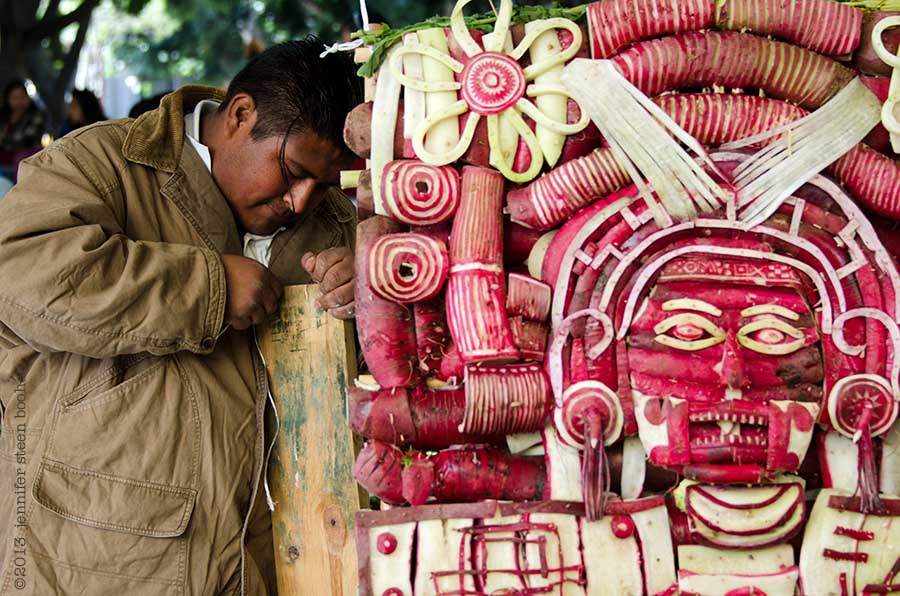
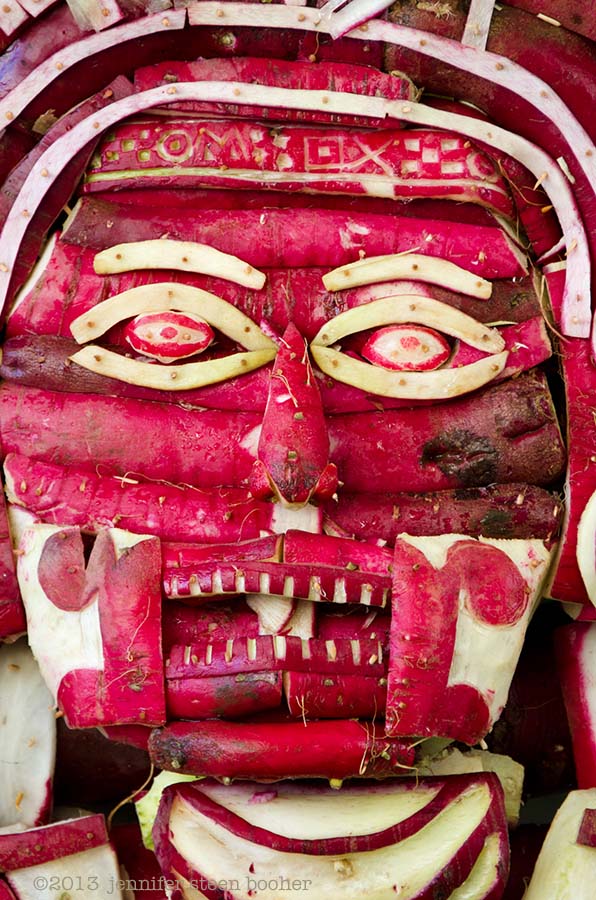
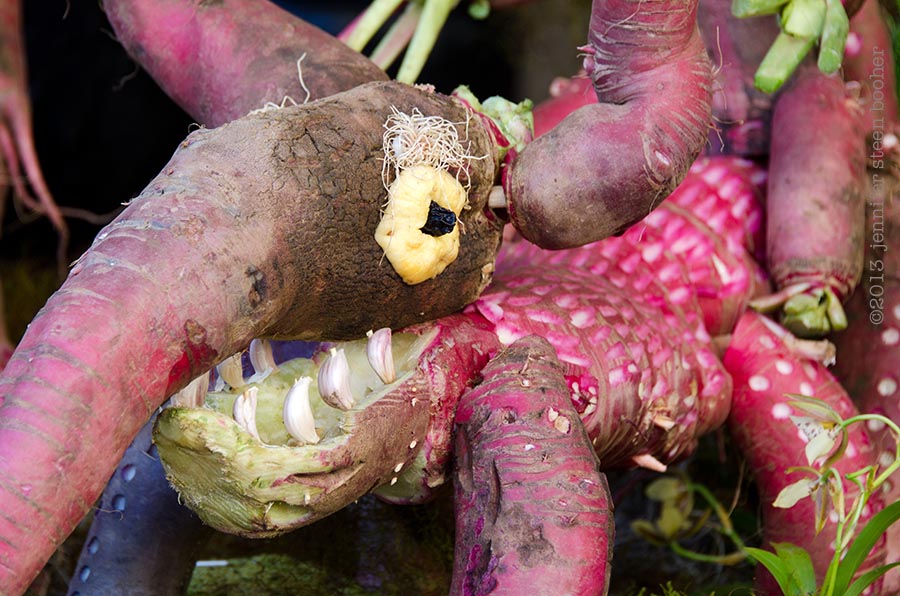
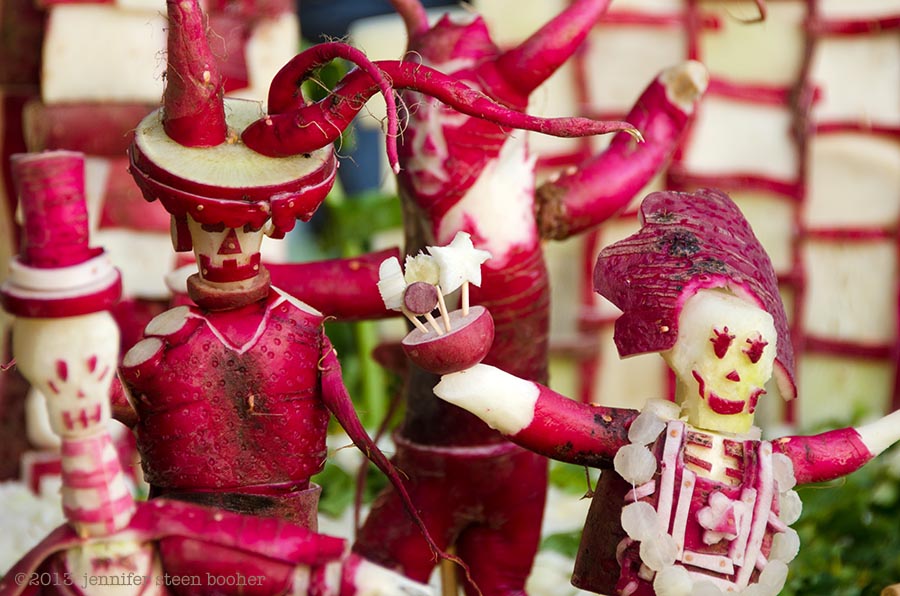
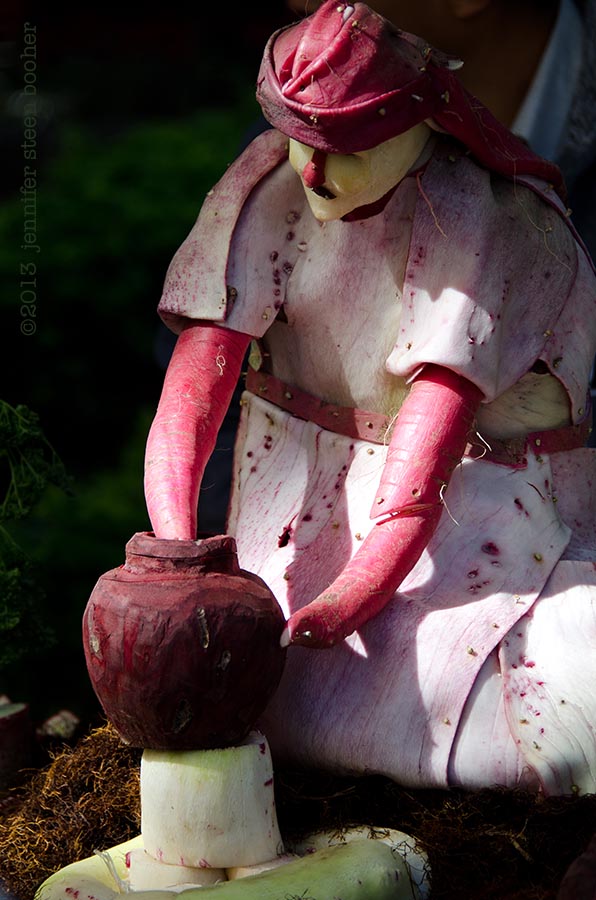
 Our first day in Oaxaca was the day before Christmas Eve, and in Oaxaca, that means radishes. December 23 is La Noche de Rábanos, or Night of the Radishes, and the participants line the main city square (called the Zócalo) with booths displaying elaborately carved scenes built of enormous radishes. The story I heard is that the Spanish introduced radishes in the 16th century, and some priests began carving them to make them more attractive at the market. The festival itself dates from the 19th century, and there is a cash prize for the winner (I think it was about $1000 this year.)
La Noche de Rábanos, Night of the Radishes, Oaxaca de Juárez, Mexico
Although the festival opens at 5 in the evening, my excellent guidebook firmly instructed would-be photographers to go early, so I dutifully trotted down to the Zócalo around 10am to watch the participants assembling their displays.
La Noche de Rábanos, Night of the Radishes, Oaxaca de Juárez, Mexico
The authors were absolutely right, too. Raised viewing platforms surround the display booths, and they are not opened to the public until evening, so with a good telephoto lens you can get clear shots of the work:
La Noche de Rábanos, Night of the Radishes, Oaxaca de Juárez, Mexico
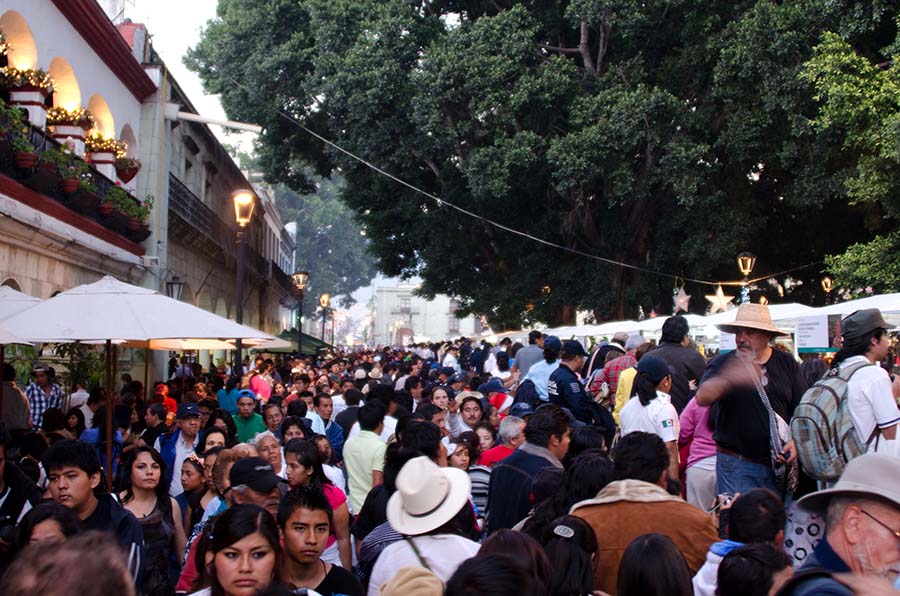
 There were mild crowds watching the work proceed, but later in the evening, the square and the platforms were packed, and the line for the platforms went several times around the block:
 La Noche de Rábanos, Night of the Radishes, Oaxaca de Juárez, Mexico
So thanks for the tip, Viva Oaxaca!
La Noche de Rábanos, Night of the Radishes, Oaxaca de Juárez, Mexico
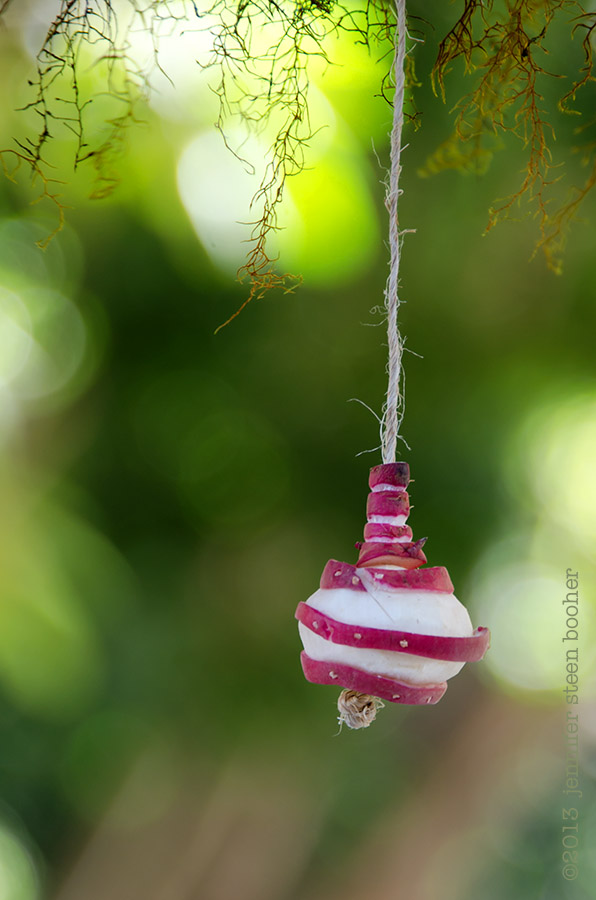
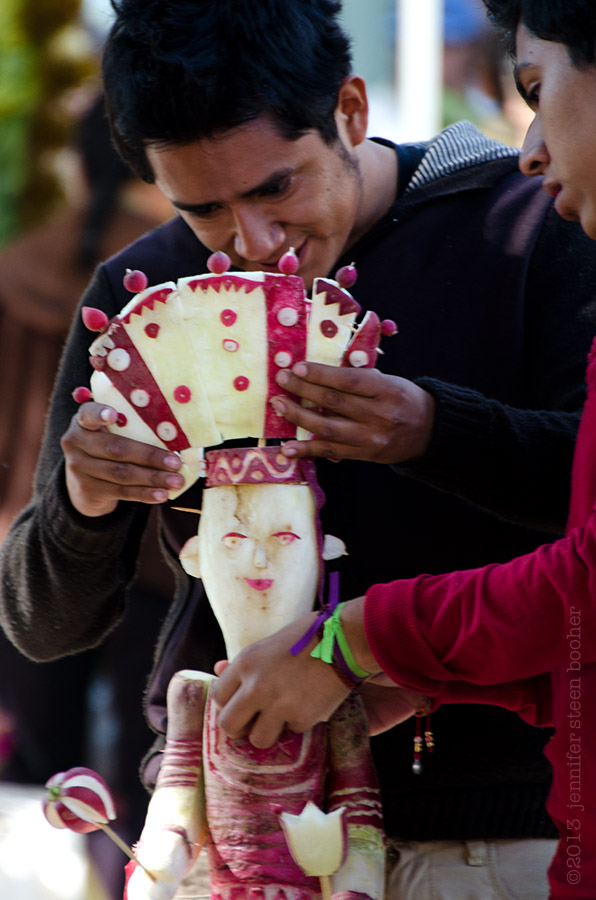
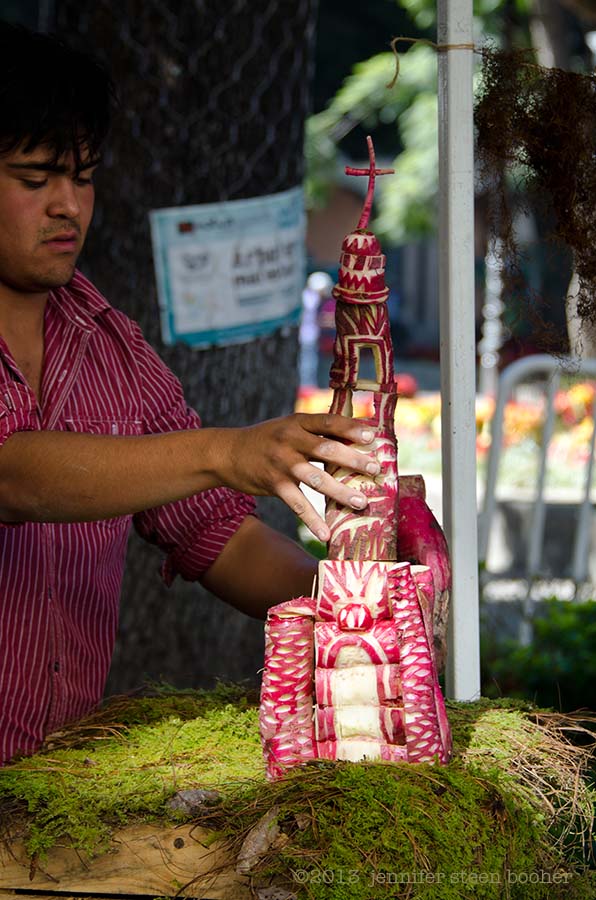
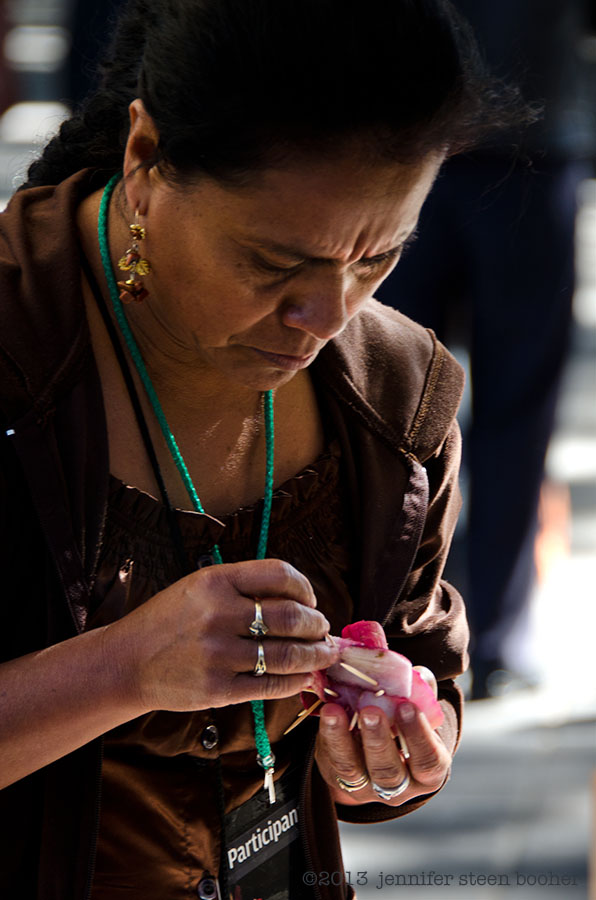
It was fascinating to watch the process of carving the radishes and sticking them together with toothpicks and string.
La Noche de Rábanos, Night of the Radishes, Oaxaca de Juárez, Mexico
The radishes dry out, so the exhibitors spray them frequently with water.
La Noche de Rábanos, Night of the Radishes, Oaxaca de Juárez, Mexico
 I’ll close with a few details from my favorites: La Noche de Rábanos, Night of the Radishes, Oaxaca de Juárez, MexicoLa Noche de Rábanos, Night of the Radishes, Oaxaca de Juárez, Mexico

La Noche de Rábanos, Night of the Radishes, Oaxaca de Juárez, Mexico
I took a couple thousand photos in Mexico, of which I plan to throw away all but a couple hundred. Even with that rate of attrition they won’t all fit here on the blog, so if you want to see more, come over to the ‘Mexico’ set on my Flickr page.
Share

Smoking Volcanos and Crystal Chandeliers: December 22, 2012

crystal chandelier

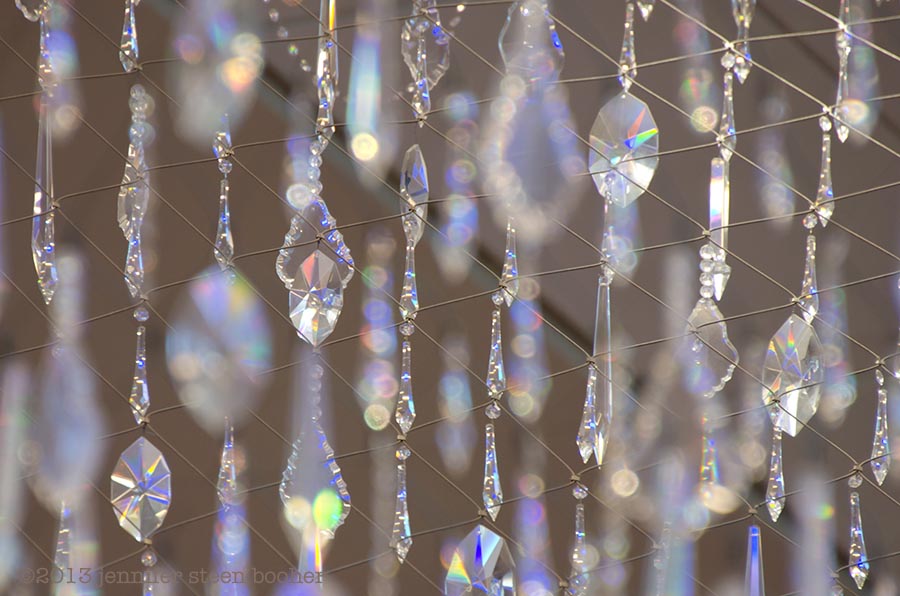
We spent our Christmas holidays visiting family in Oaxaca de Juárez, Mexico. I’ve got all kinds of amazing things to show you, starting from the very first day, when we transferred planes in Atlanta, Georgia, and saw this enormous crystal net glittering overhead.

crystal chandelier

 After some digging around on the airport website, it turns out to be a piece called “Rebilace” by Donald Lipski.

crystal chandelier

 Then, as we were landing in Mexico City, a volcano appeared out the eastern windows!

eruption

This is Popocatépetl, an ancient volcano only 70 kilometers from Mexico City which woke from dormancy in 1994. It certainly woke up everyone on our plane!

I’ve been looking for news reports about the eruption and it seems to have produced only steam and ash this time. Phew.

Share