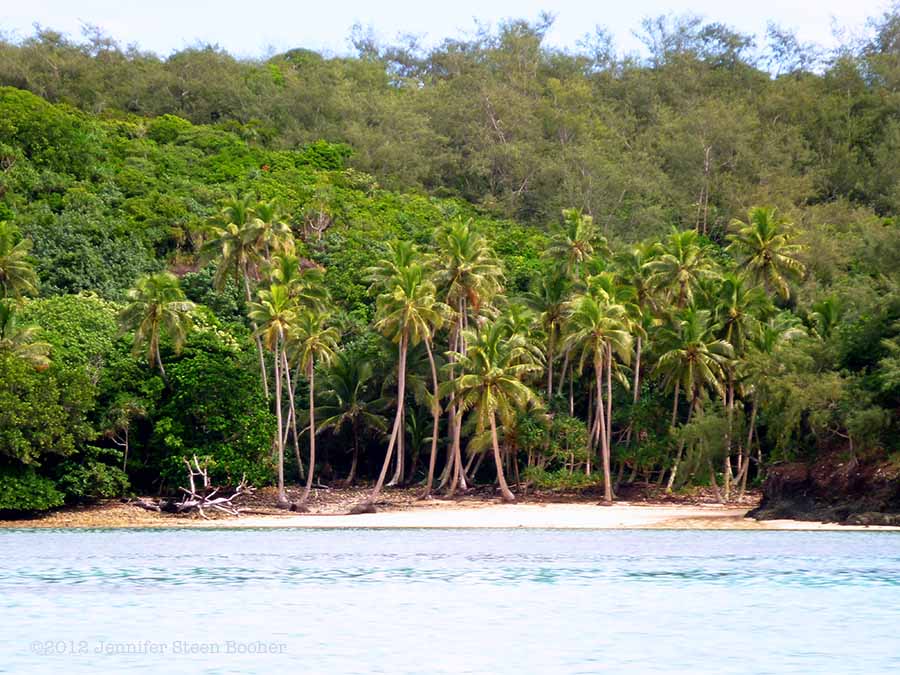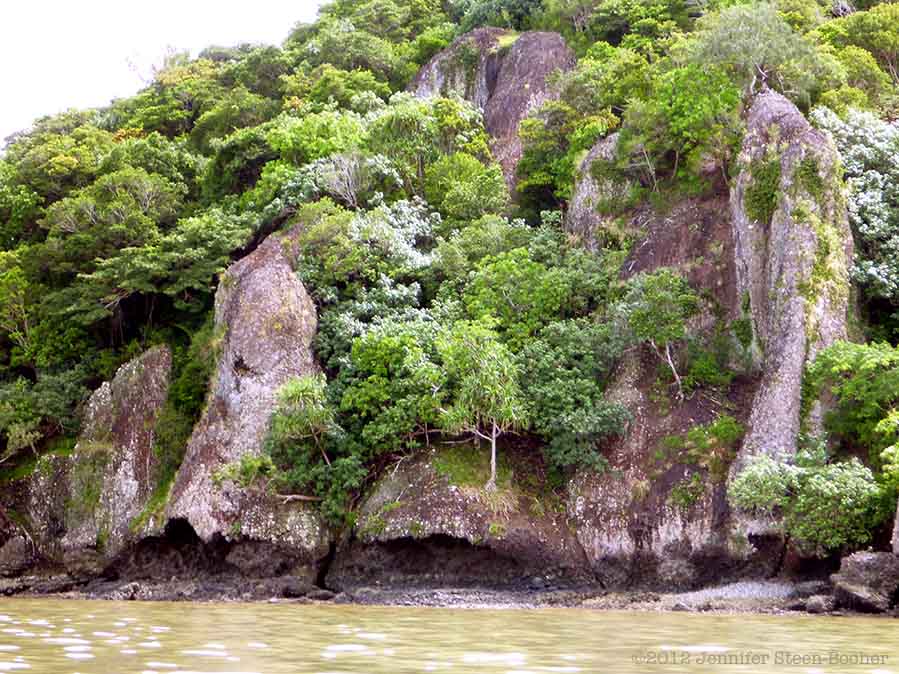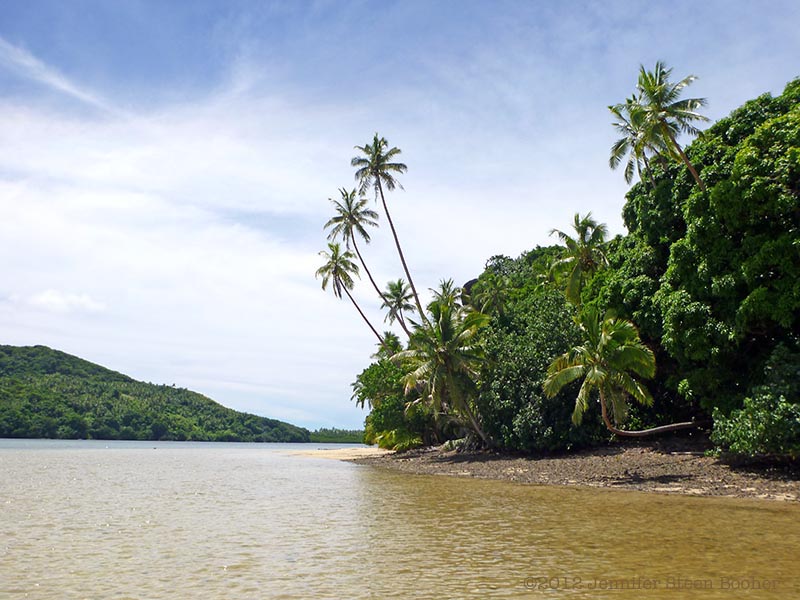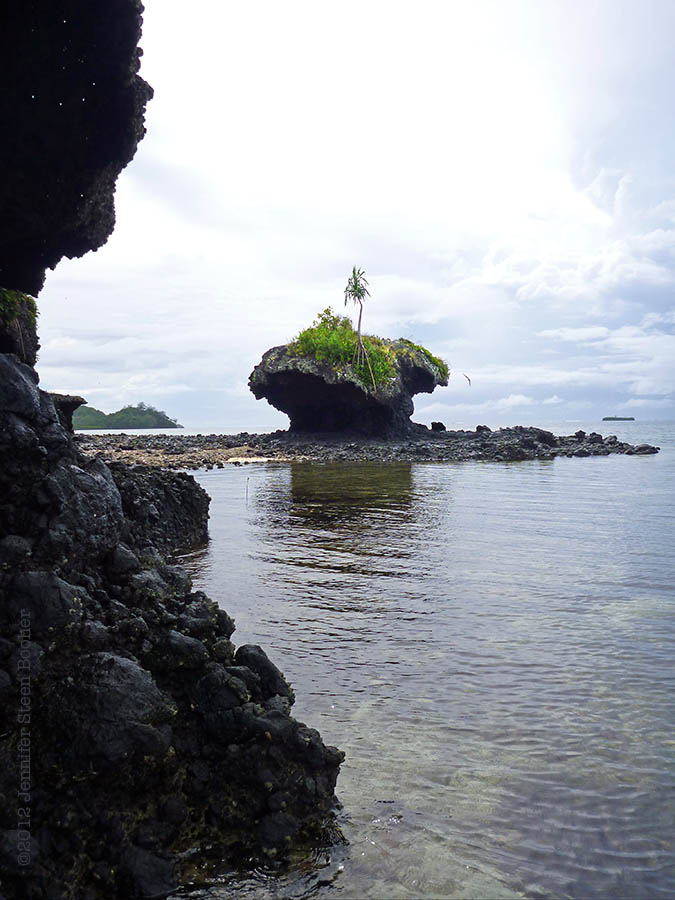
Jennifer Steen Booher

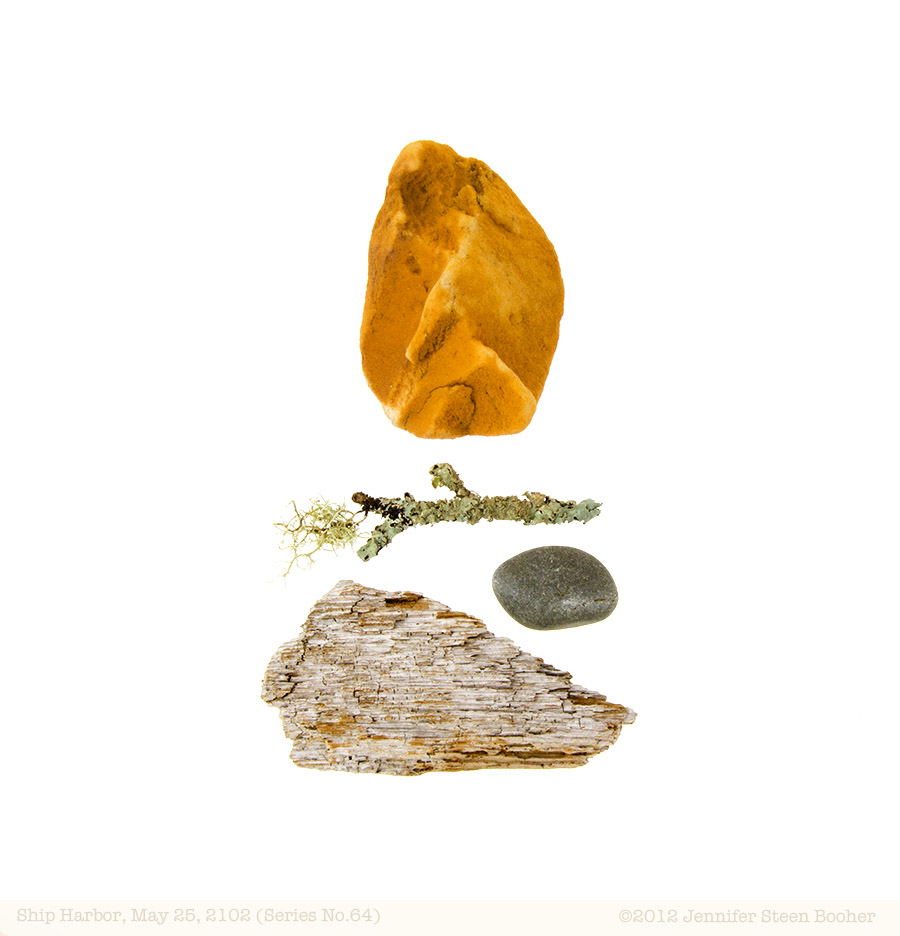
Ship Harbor, May 25, 2012 (Beachcombing series No.64)

Beachcombing series No. 64
 Last Friday I chaperoned the 5th grade field trip to the Ship Harbor Nature Trail over in Bass Harbor.
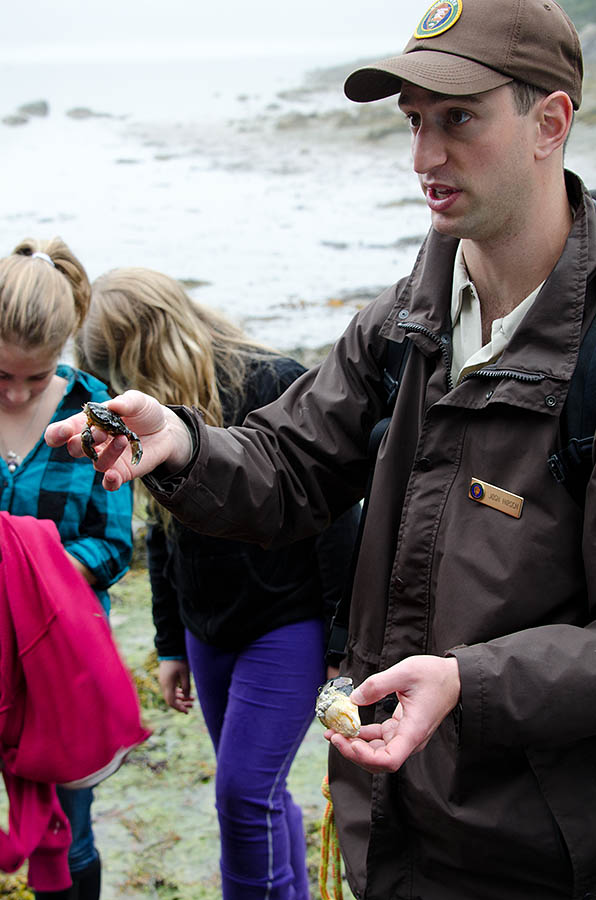
One of the many wonderful things about living in a national park is that honest-to-goodness Park Rangers lead your class field trips.
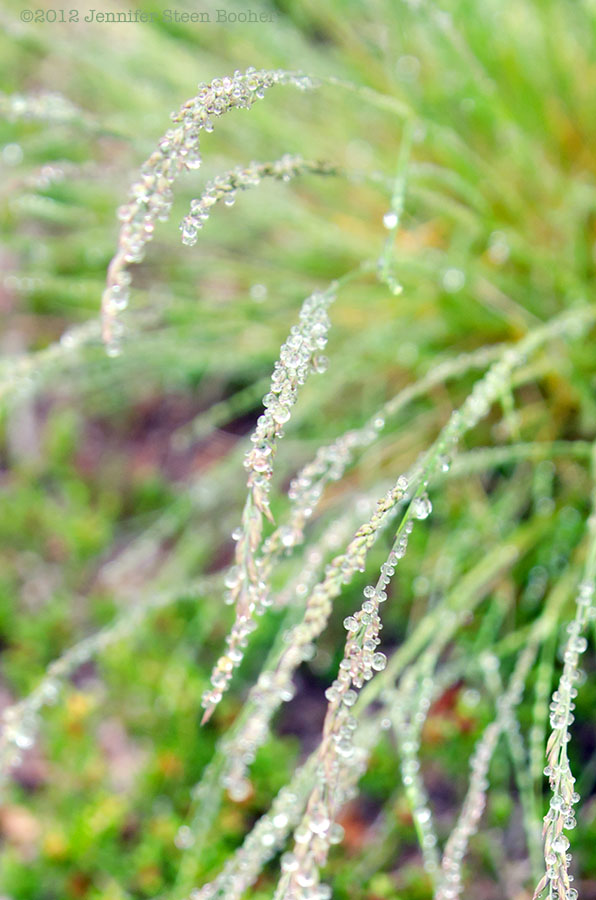
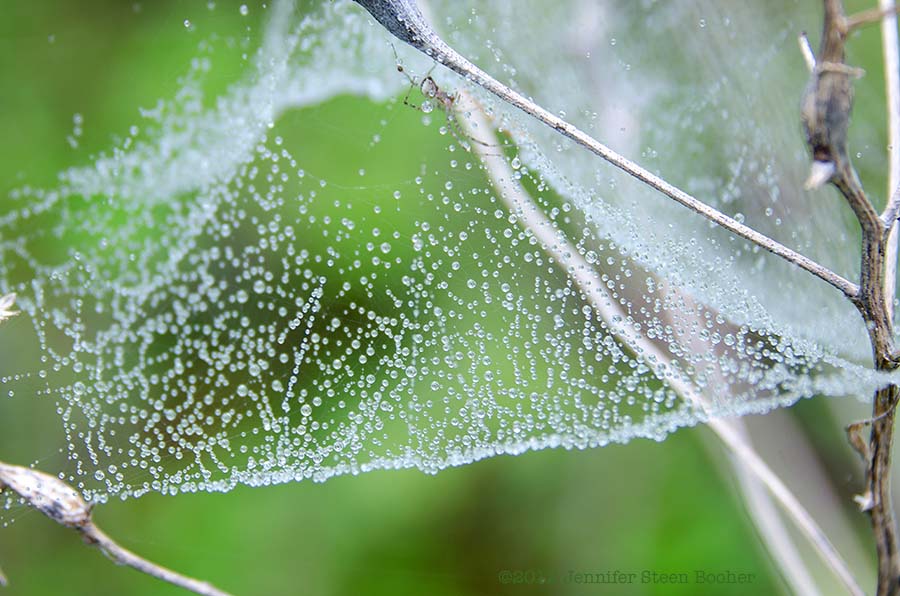
It was a drizzly day, somewhere between light rain and wet fog, so everything in the woods was spangled with droplets.


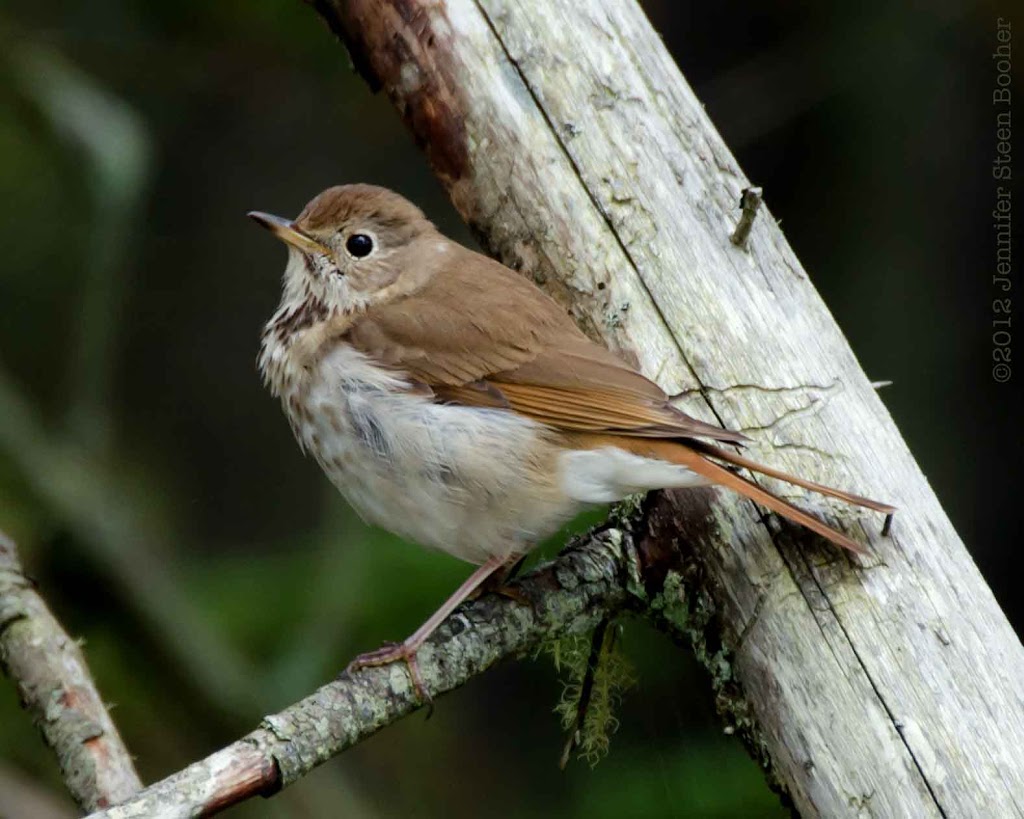
A hermit thrush perched near us for a little while, maybe listening to the ranger, maybe trying to decide if we had food.
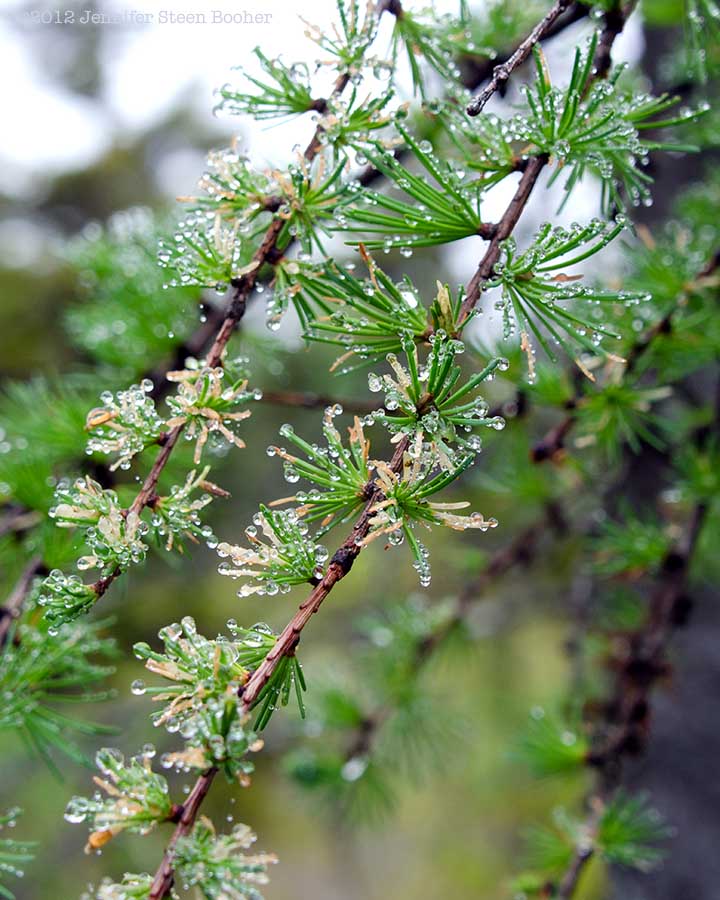
Larches are my favorite trees in the spring. They are deciduous conifers and the fresh growth is so soft to pat, more like grass than needles.
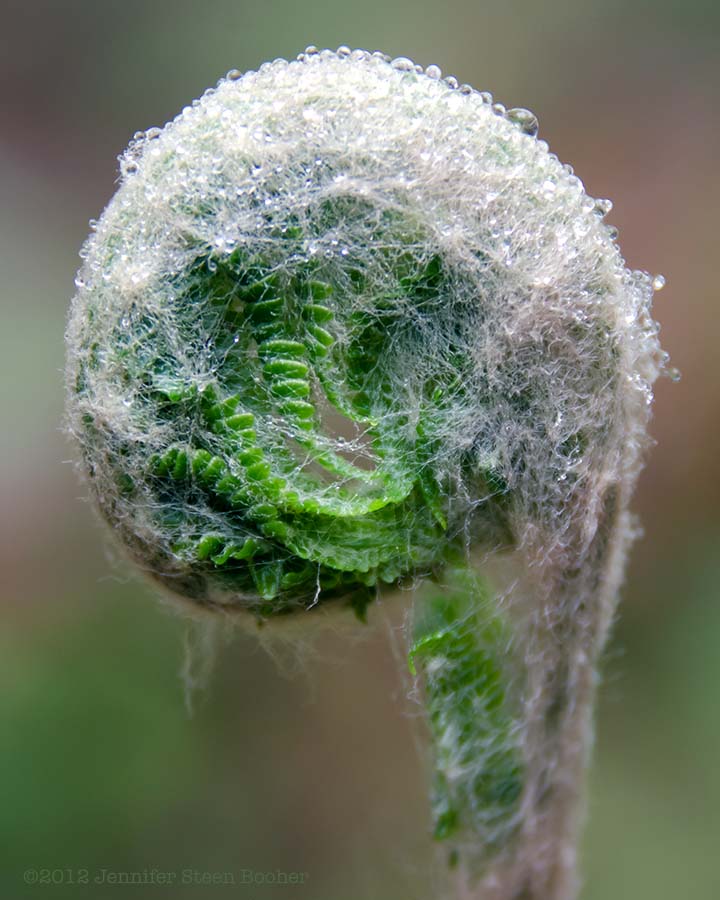
The ferns seem to be a bit later here than elsewhere on the island. I’m not good at identifying fiddleheads, so can only guess that this might be Cinnamon Fern, but then again it could be Royal…
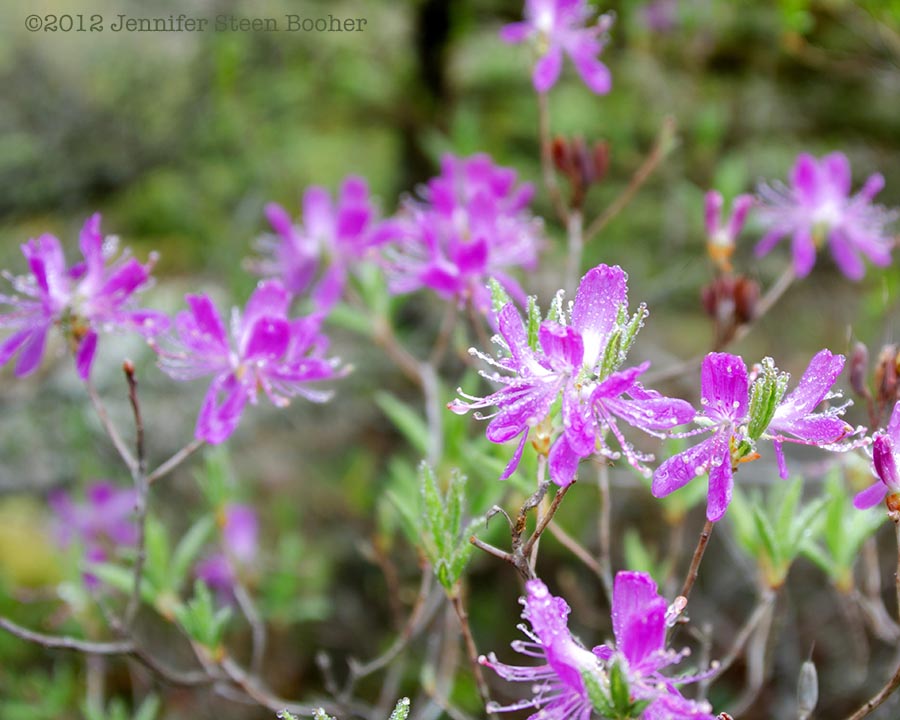
The Rhodora (Rhododendron canadense) was coming into full bloom. This is a great place to see it, with beautiful thickets right next to the path.
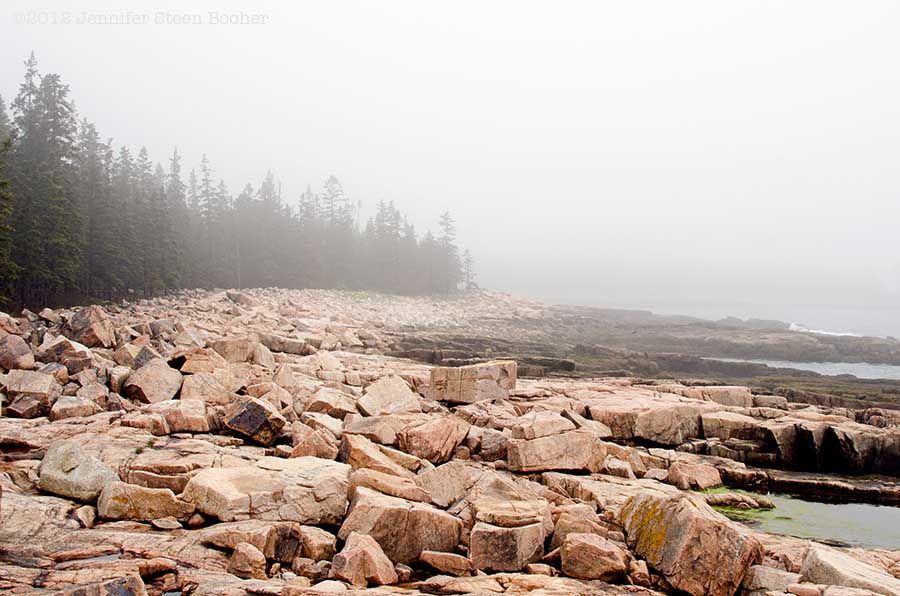
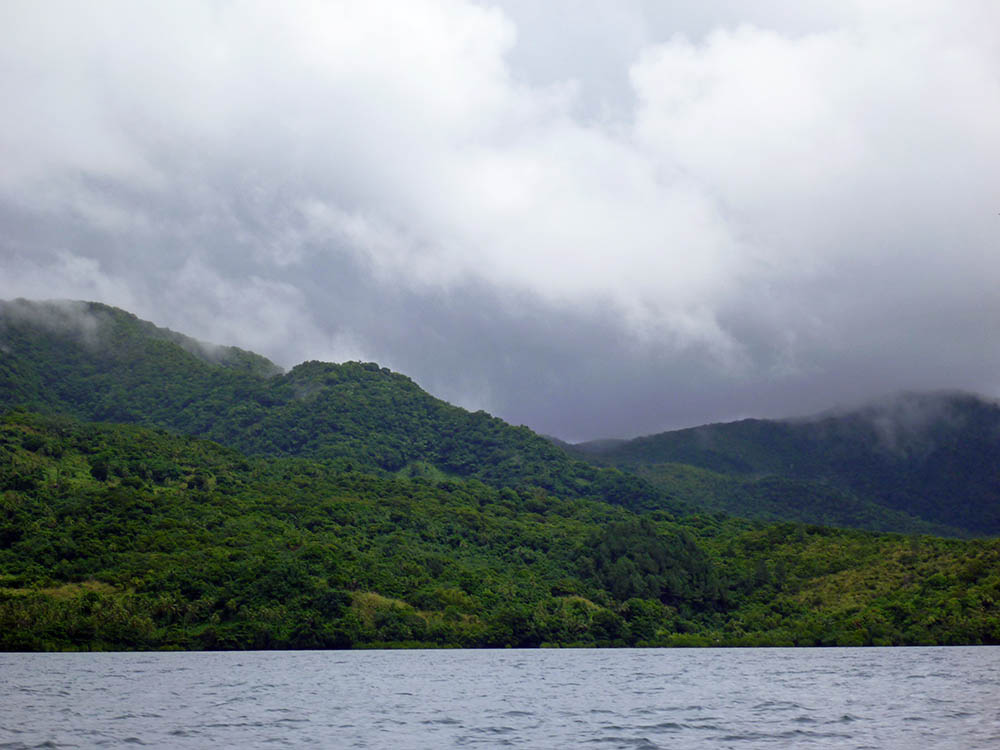
Eventually we came out of the woods onto a classic stretch of Maine coastline.
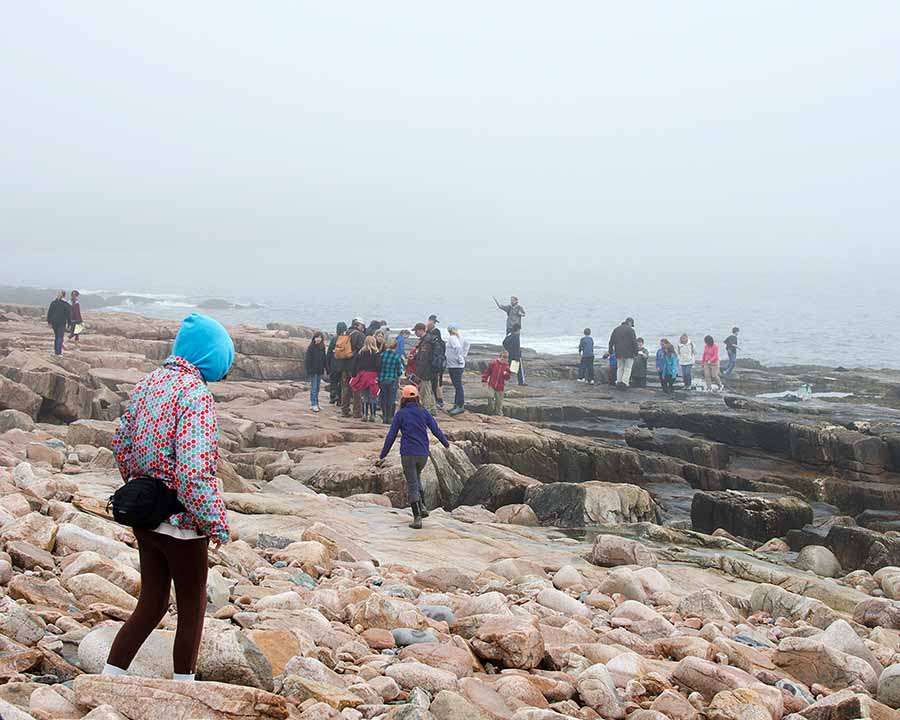
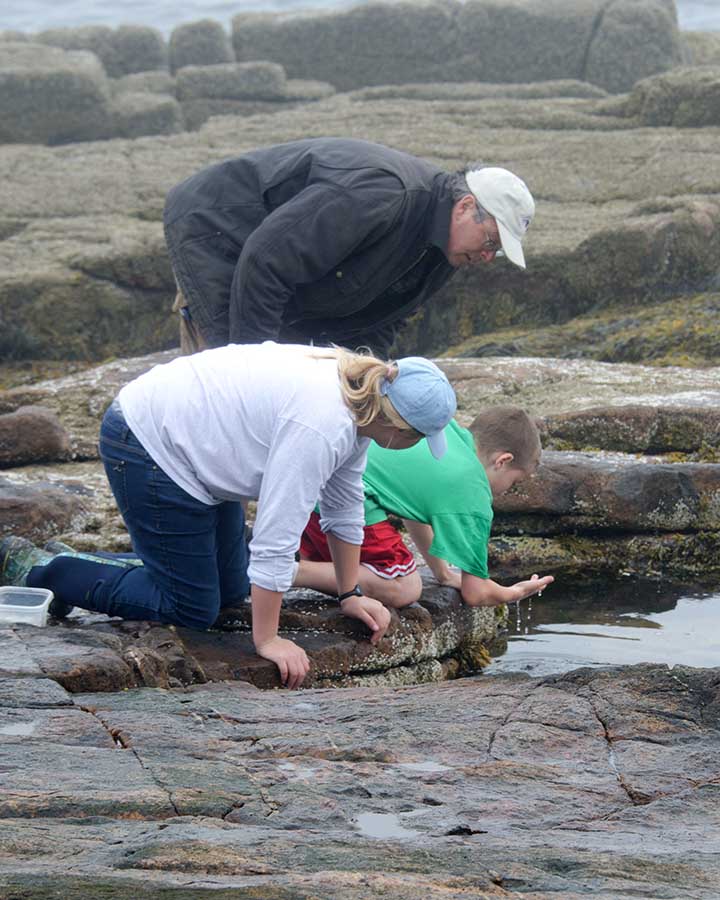
The kids headed straight for the tidepools,
and within minutes everyone looked like this,
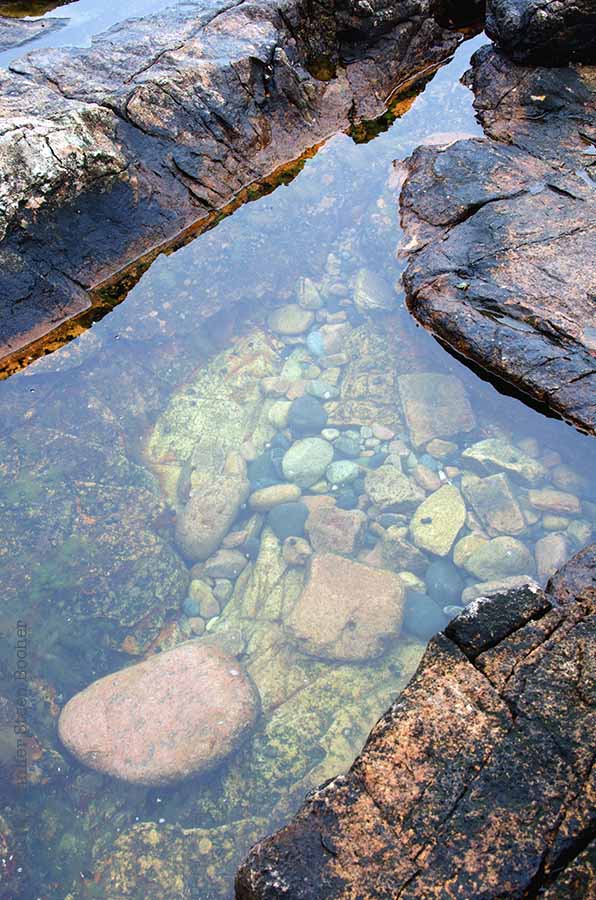
tidepool peering into this. 
And what did we see there?
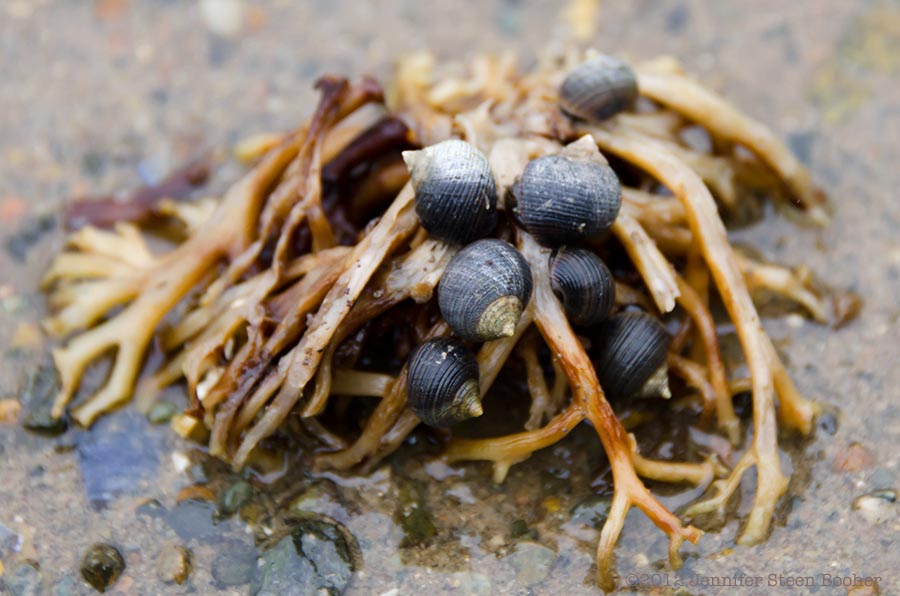
Periwinkles,
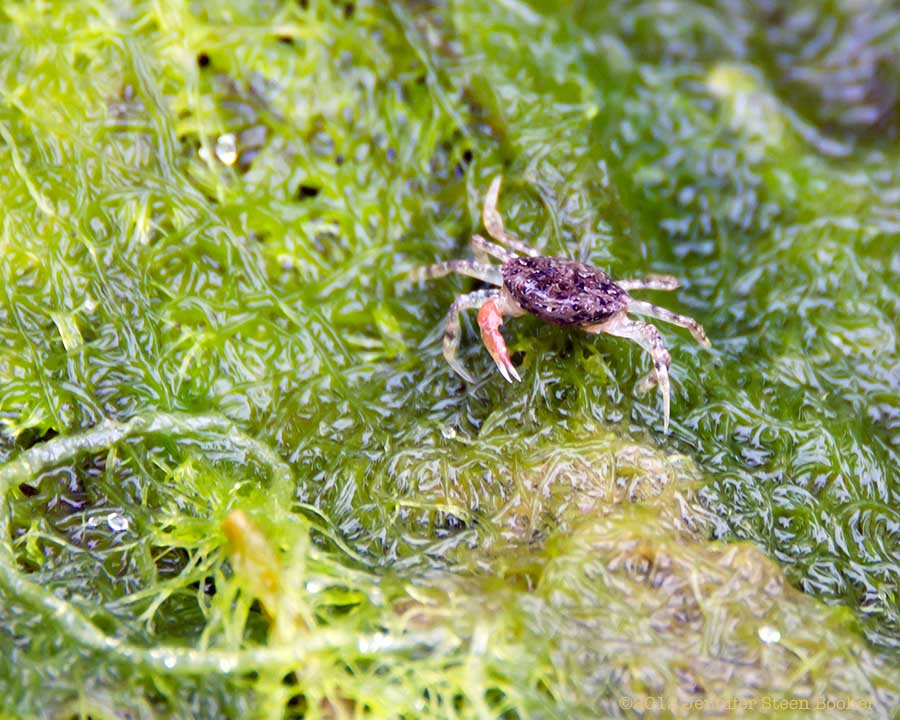
lots of teeny tiny baby crabs,
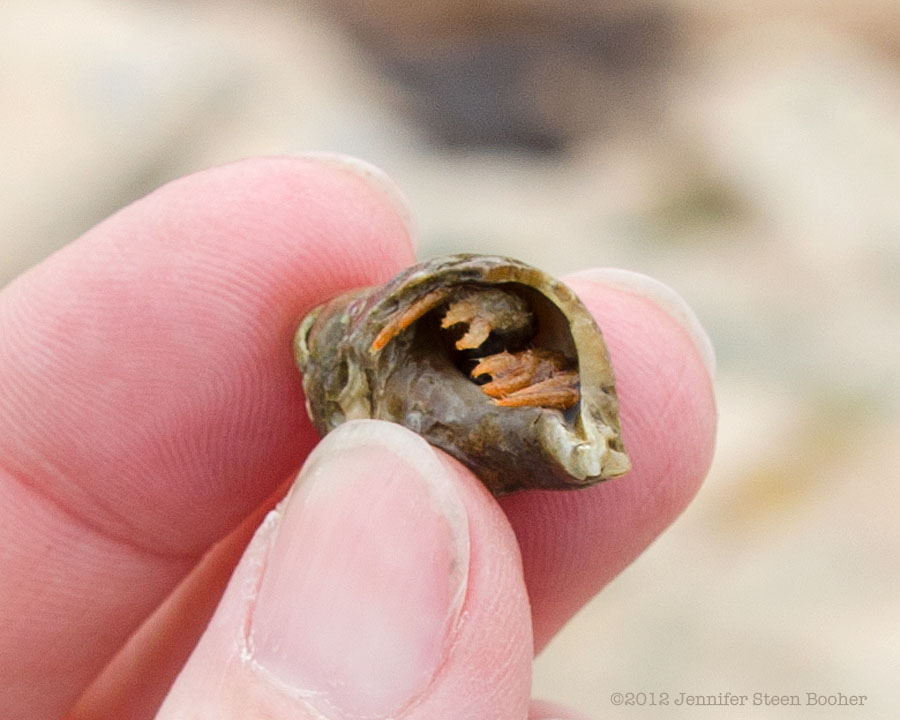
hermit crabs,
sea urchins,
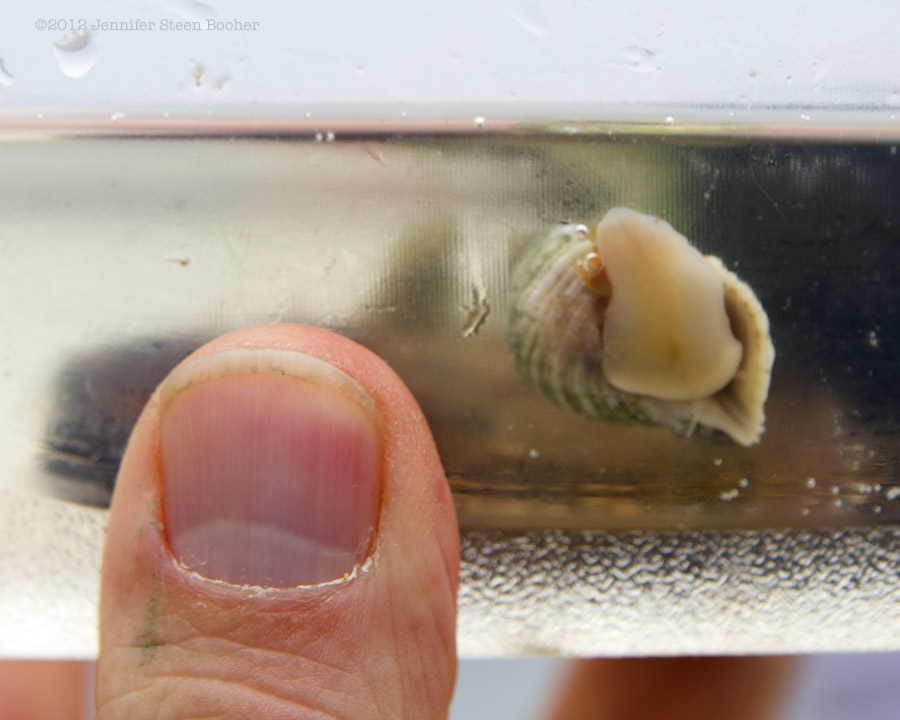
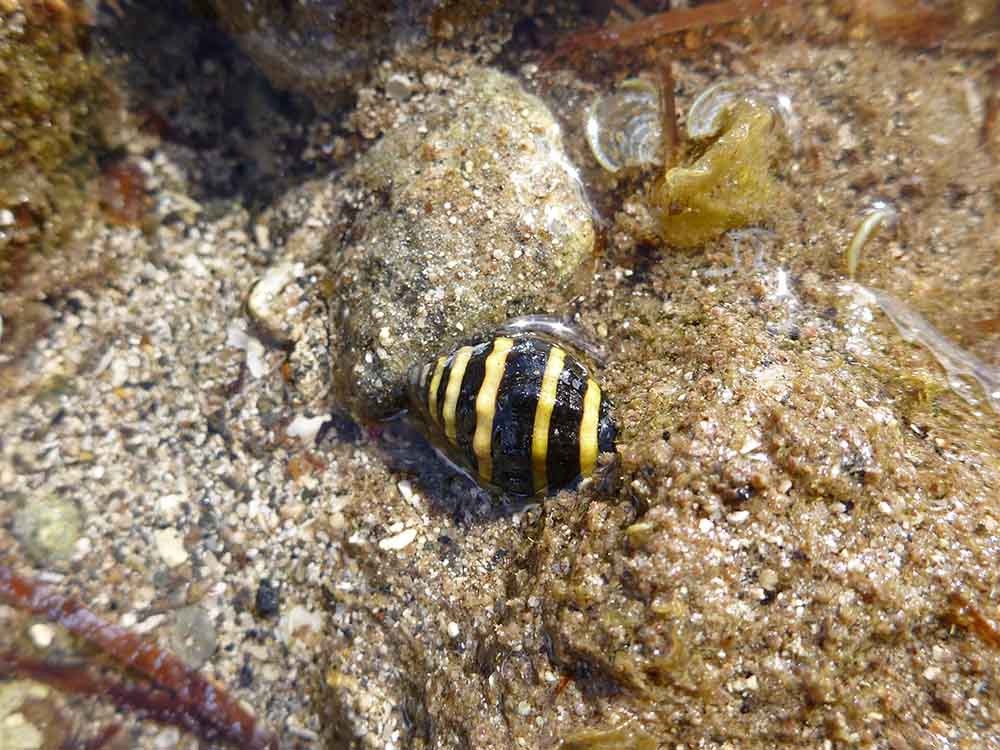
whelks,
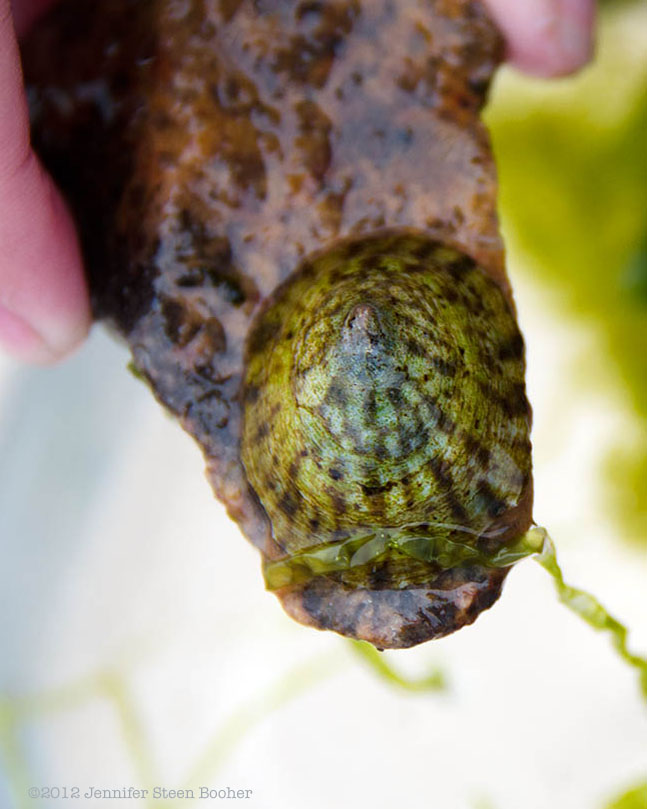
limpets,
sponges,
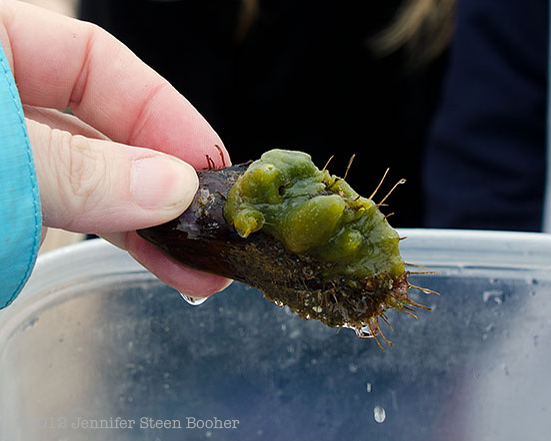
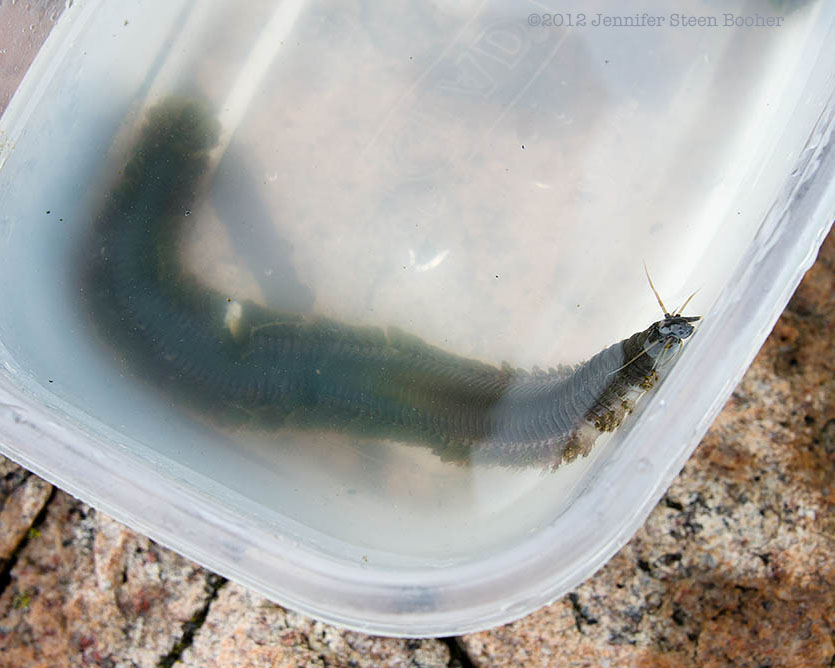
and this impressive beastie. I’ve called these rockworms for years (where on earth did I pick that up?), but when I set out to find more information on it for this post I ran into a world of taxonomic complications. Apparently nobody else on the internet calls it a rockworm – but that is why we have Latin names for things, isn’t it? I spent a ridiculously long time tracking this guy through various Google searches (starting with “rockworm,” which was obviously a dead end, then “marine centipede,” which led to “brushworm,” which was totally the wrong species but eventually led to the right family, the Nereididae) and finally decided it must be Nereis virens (which also seems to be called Alitta virens or Neanthes virens – apparently there have been a lot of recent changes in marine worm taxonomy. Who knew?) Then I emailed my-friend-the science-teacher who said she calls them ‘clamworms.’ She also sent me this link to the work of Sara Lindsay, who photographs the worms on various electron microscopes. Some of the photos are creepy, others are amazingly gorgeous. Check it out!
Share

Fiji: March 19, Kadavu Koro

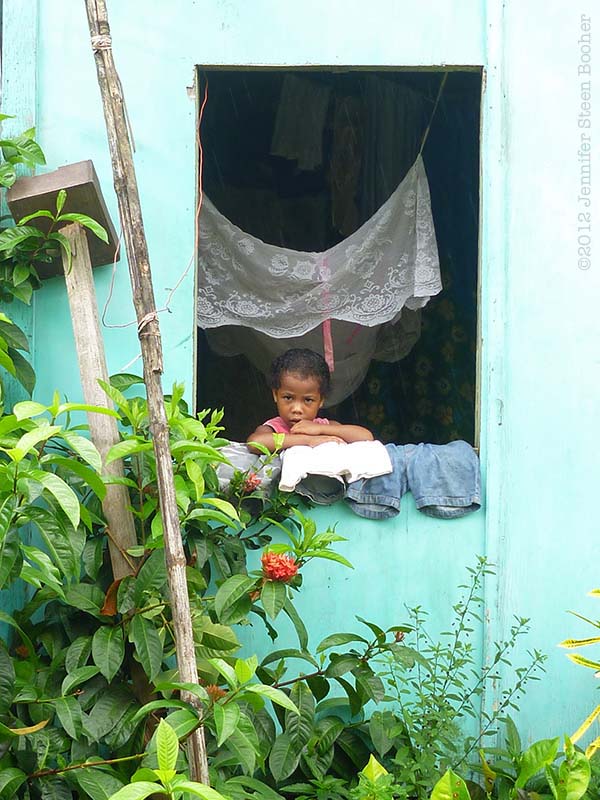
little girl, Kadavu Koro, Kadavu, Fiji
Our last day on Kadavu we visited the local school and the village of Kadavu Koro (I think Koro means village, so that must be kind of like saying we visited the city of New York City.)
Our first stop was the Ratu Varani school. ‘Ratu’ means ‘chief’ or something like it. The ratus seem to be both cultural and political VIPs. Ratu Varani was a famous Fijian leader. Same idea as  ‘President Washington Elementary School.’
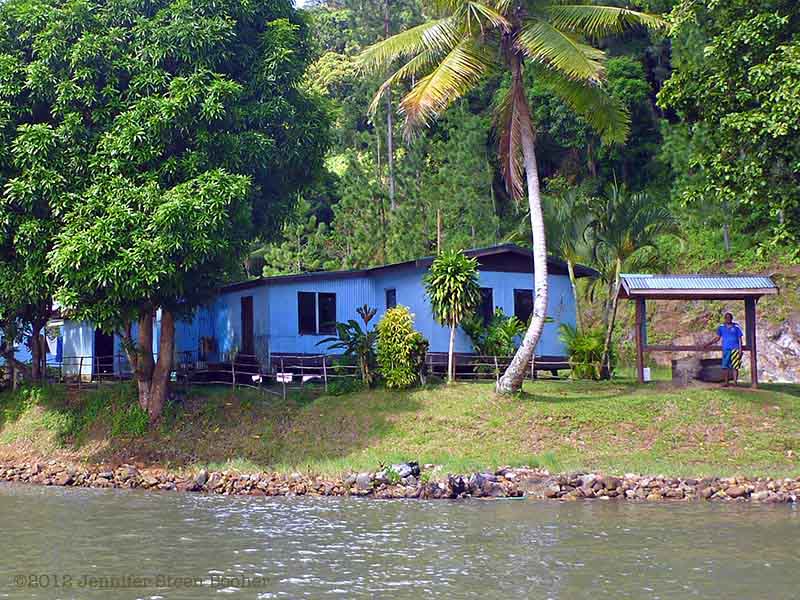
 The landing area at the school. Many of the children are boarders, which is typical for schools on Kadavu. They spend the week at school and go home on Friday afternoon. There appeared to be about a hundred children at the school, but that’s just me eyeballing the size of the school assembly. The youngest looked like first-graders, and the oldest might have been high-school age, but I found the older  Fijians were the harder it was to guess their ages. Partly because I stink at guessing ages, and partly because they seem to age very quickly by my standards. People who looked to me like they were in their 60s and 70s turned out to be in their 40s and 50s. Always assuming that I understood everyone’s answers correctly! Traveling to a country where you don’t speak the language is always a bit like falling into Wonderland.
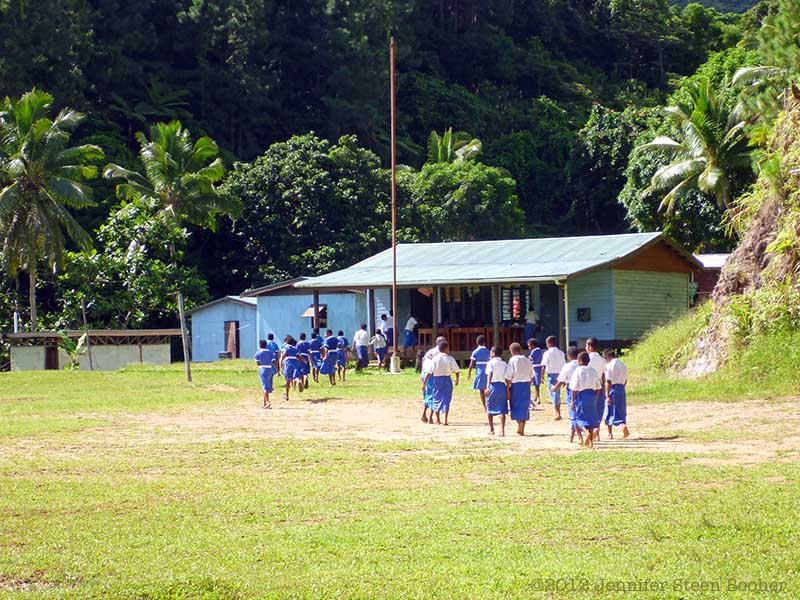
School, Kadavu, Fiji
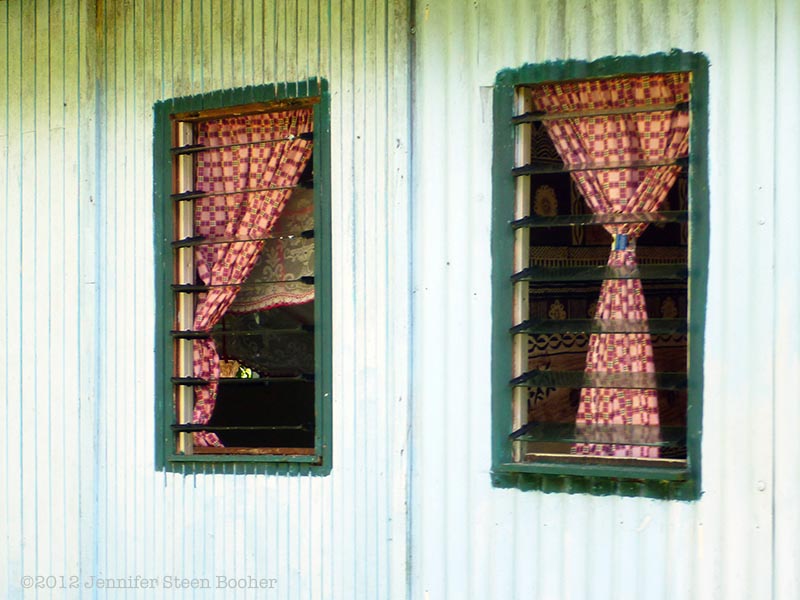
 A classroom building.
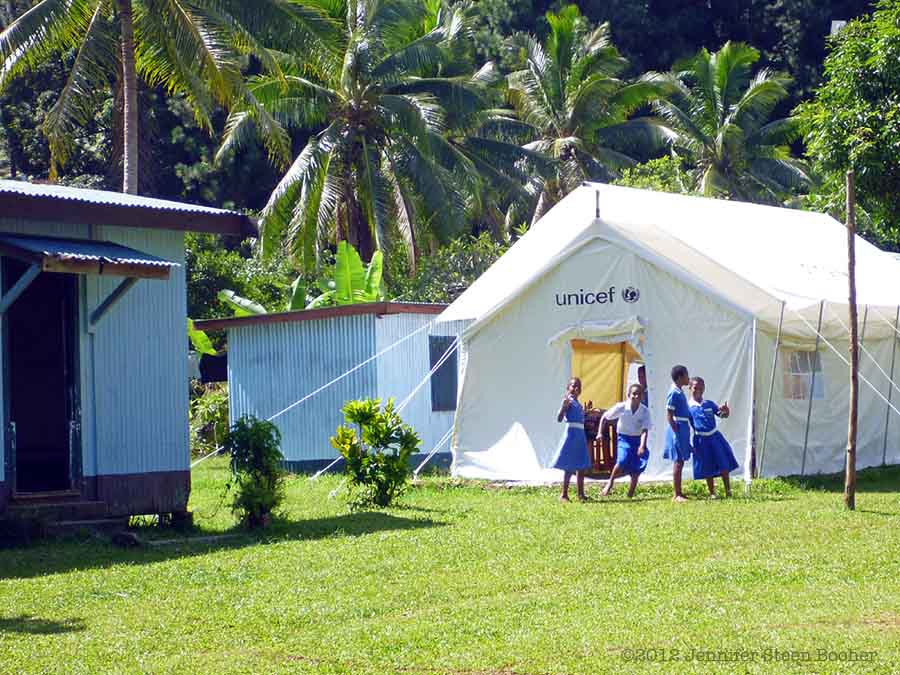
UNICEF tent, Kadavu, Fiji
 Another classroom in a UNICEF tent. I think the double-layer roof must help keep the heat down.
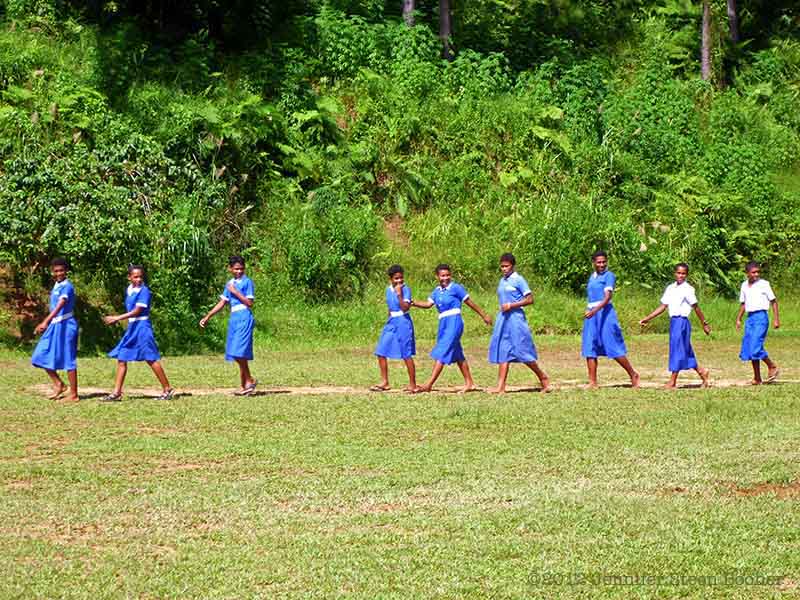
students at Ratu Varani school, Kadavu, Fiji
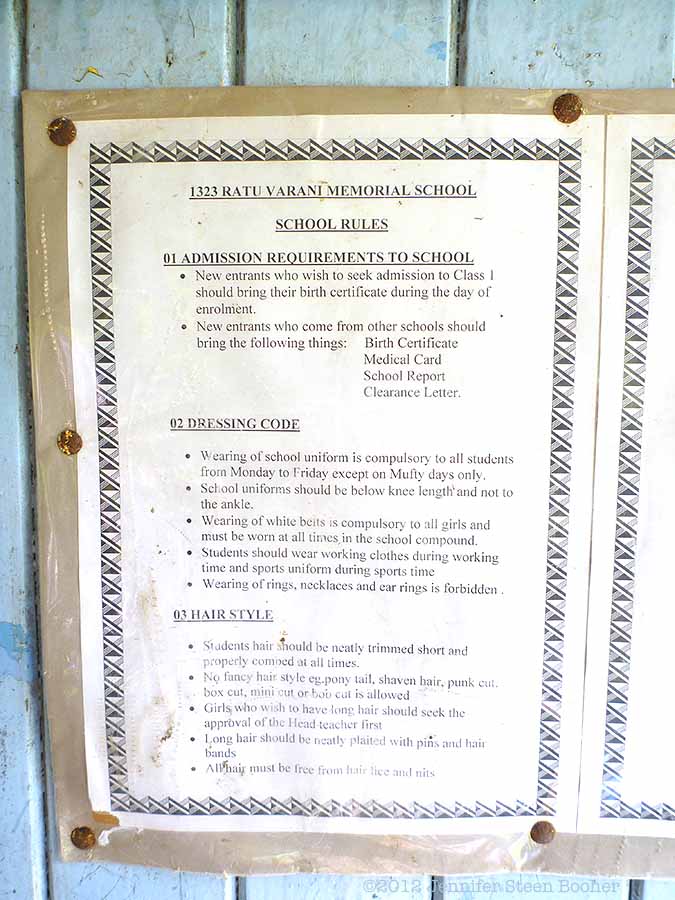
The girls’ uniform was a blue dress with white belt, and the short haircuts are required by the school (check out the rules in the photo above.) The boys wear a white shirt and the traditional sulu, which is sort of like a tailored wrap-around skirt with pockets.
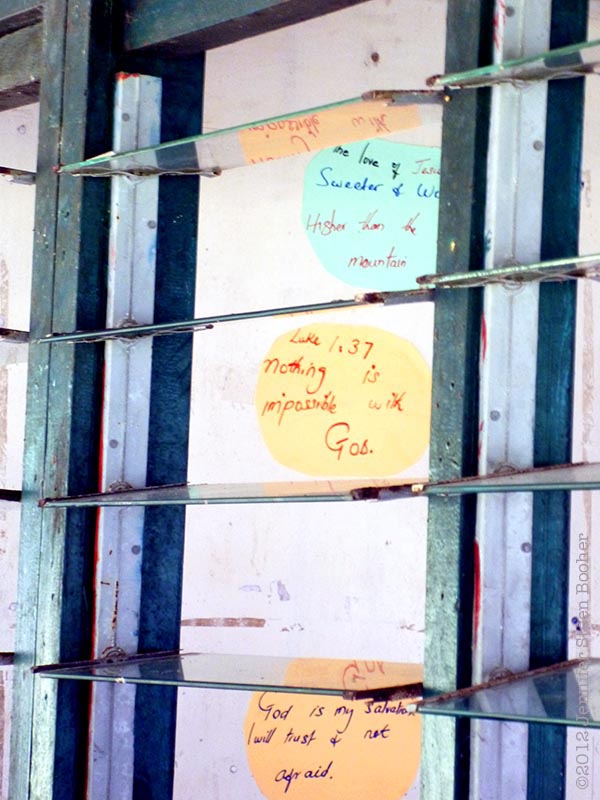
Peeking into a classroom.
Peeking into a dormitory. Those are bunkbeds.
 
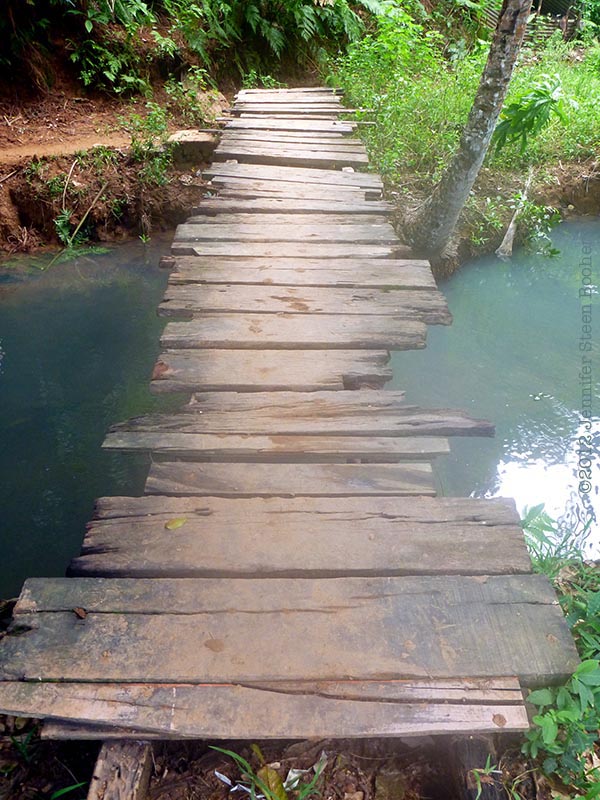
The bridge on the way to the village.
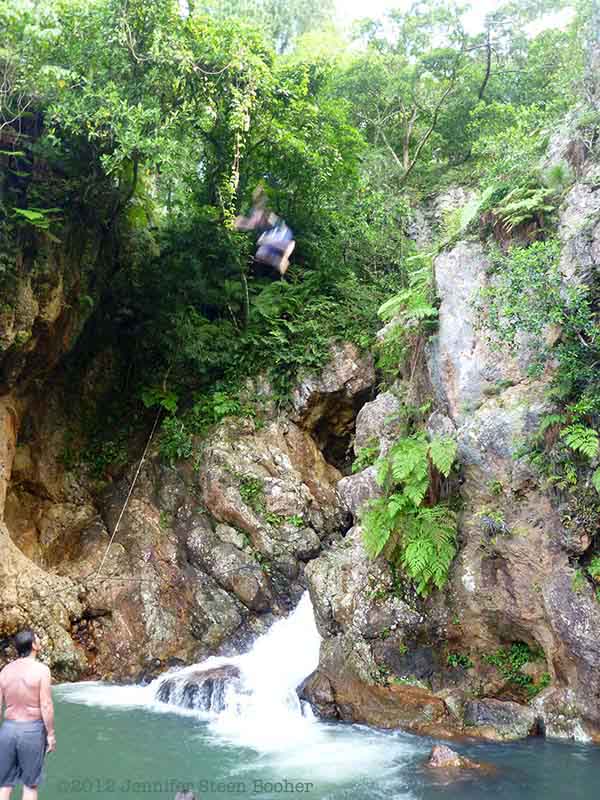
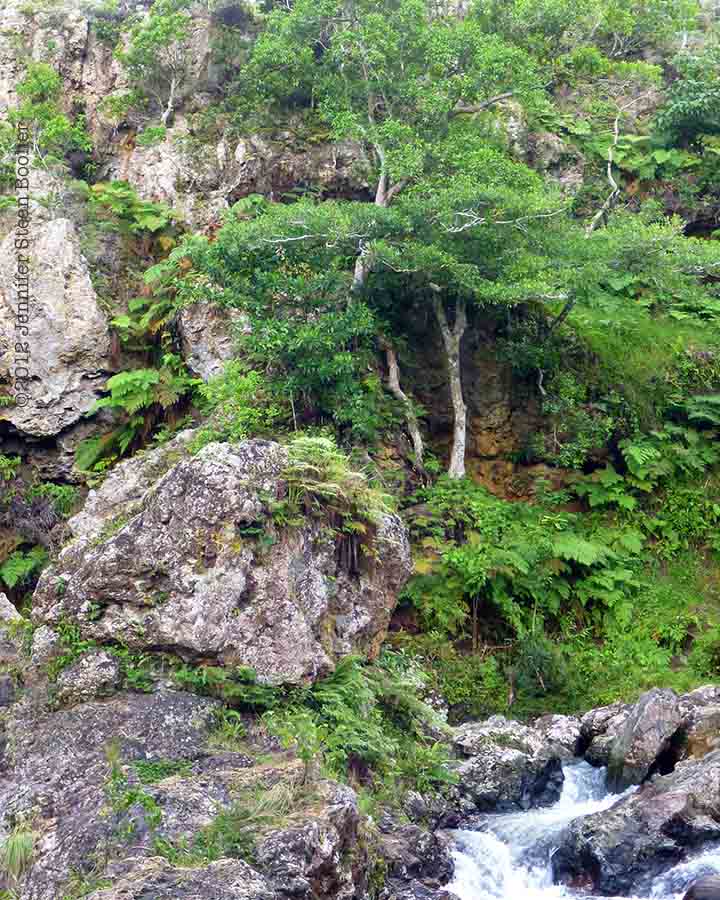
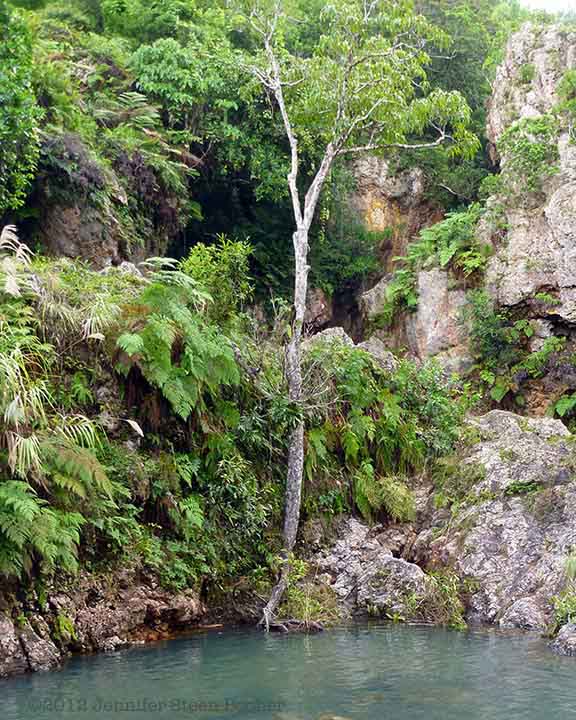
We stopped at an enormous waterfall to cool off. Some of the boys from the village jumped off the cliffs to astound us. This is only the lower portion of the waterfall.

After we splashed around for a while, most of us climbed up the cliff, where there was a cleft in the stone through which the river ran, then swam about two hundred feet back to another waterfall, much taller and more powerful. I couldn’t manage the climb with a camera, so I have no photos of that part! The upper waterfall wasn’t climbable – we just looked, then floated back down stream to the ‘little’ falls.
 After our swim, our guides (some of the crew from Matava) made sure we were properly dressed for village society (shoulders covered, skirts for the women, no bags carried on the shoulders, no hats), and we walked back through the village.
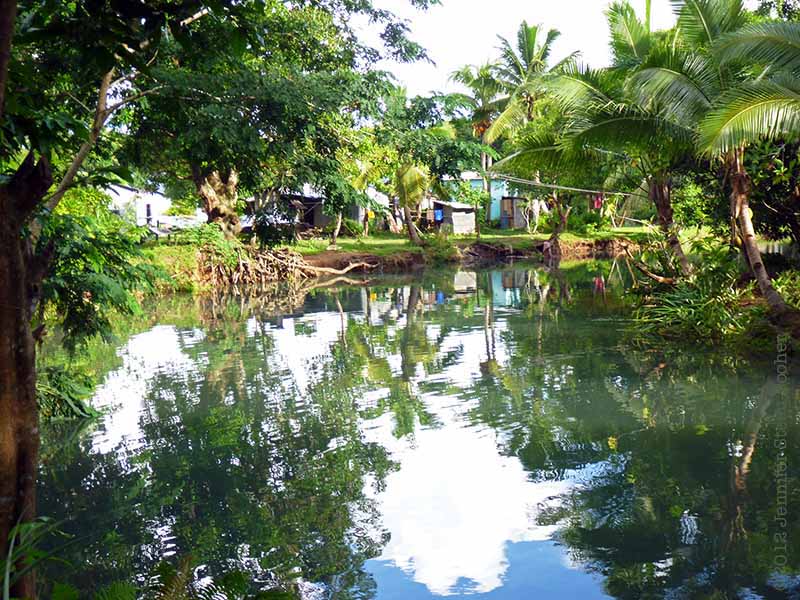
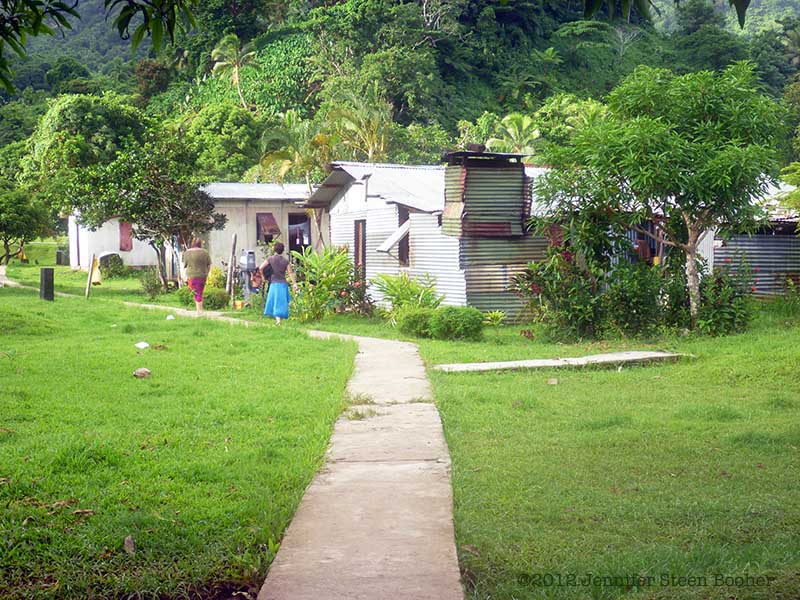
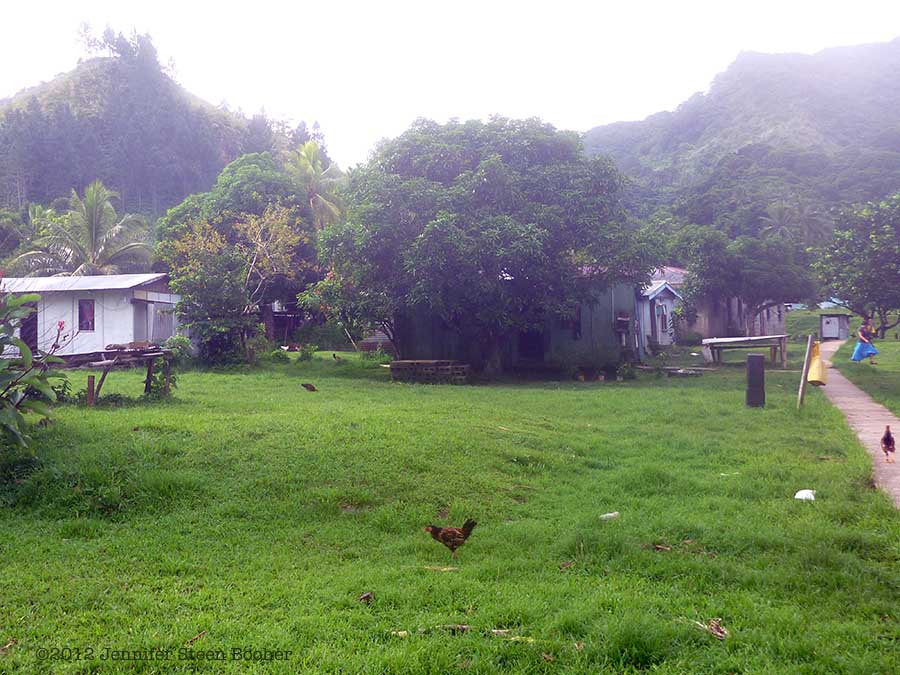
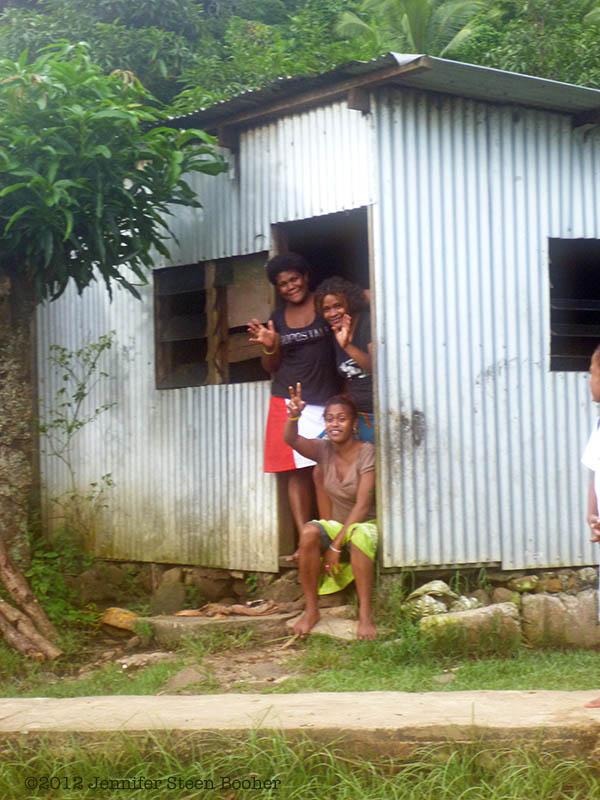
 Again, I found it very hard to assess what I saw. I assume that the village is poor, at least in the way that I understand wealth, and the only industry I saw was drying kava. It was much cleaner than villages I’ve seen in other parts of the world, though. There was a little trash blowing around, but no visible piles of rotting garbage. The houses were built of bits and pieces, but they seemed to be neatly kept, and the owners came to the door to wave and smile as we went by.
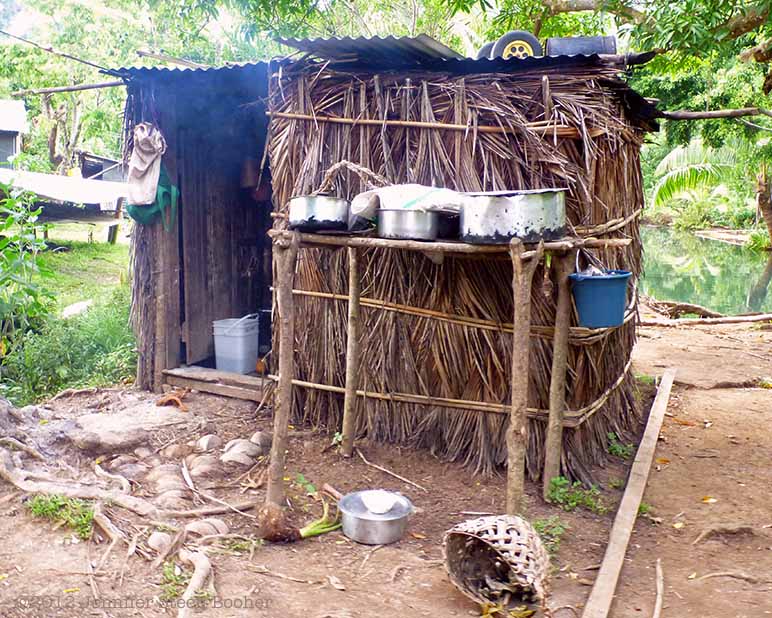
I think this was a kitchen, but there wasn’t an architectural ‘type’ that I could decipher, at least not on such a short visit. I couldn’t tell, for example, if every house had a separate kitchen, or even in fact which were houses, which were workshops, and which were outbuildings. Again that feeling of topsy-turvy disorientation, like trying to navigate in a language you don’t speak. Not an unfriendly feeling, just a strong sense of not understanding what I saw.
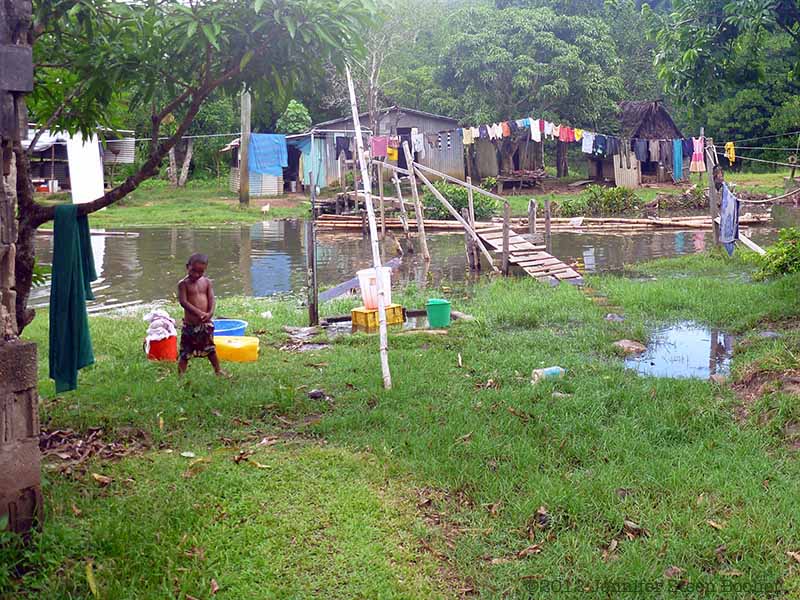
 Laundry was done in the river.
 There were flowers everywhere. Orchids grew in the main lawns, and they seemed to be grown on purpose. Another sign that I didn’t understand life here. Most of the poverty-stricken places I’ve visited were dirty, crowded, and very interested in getting money from visitors. They don’t typically have flowers in public areas. They have more pressing issues. So I just didn’t know what to make of Kadavu Koro. Subsistence farmers who get plenty to eat and are content with that? Poor but happy? What American stereotype would apply here? It’s so hard to read a culture through my own biases, many of which I only notice when I travel. I came away humbled by my ignorance, reminding myself that I shouldn’t be quick to judge even in my own country.
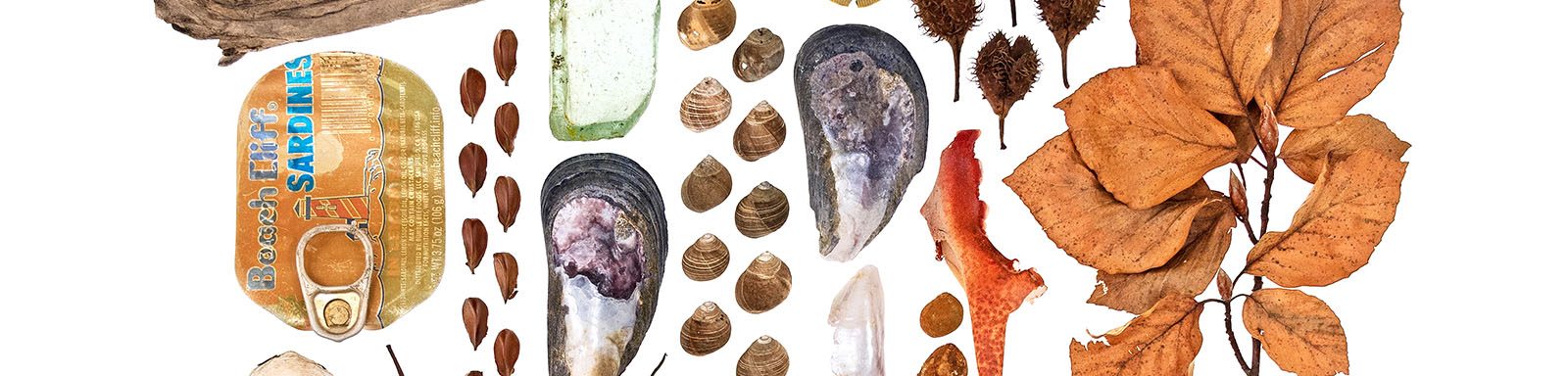
The only things I’m pretty sure I read correctly were welcoming smiles on every side, and plenty of pride.
 Like this.
Share

Fiji: March 18, Underwater at Two Trees Island

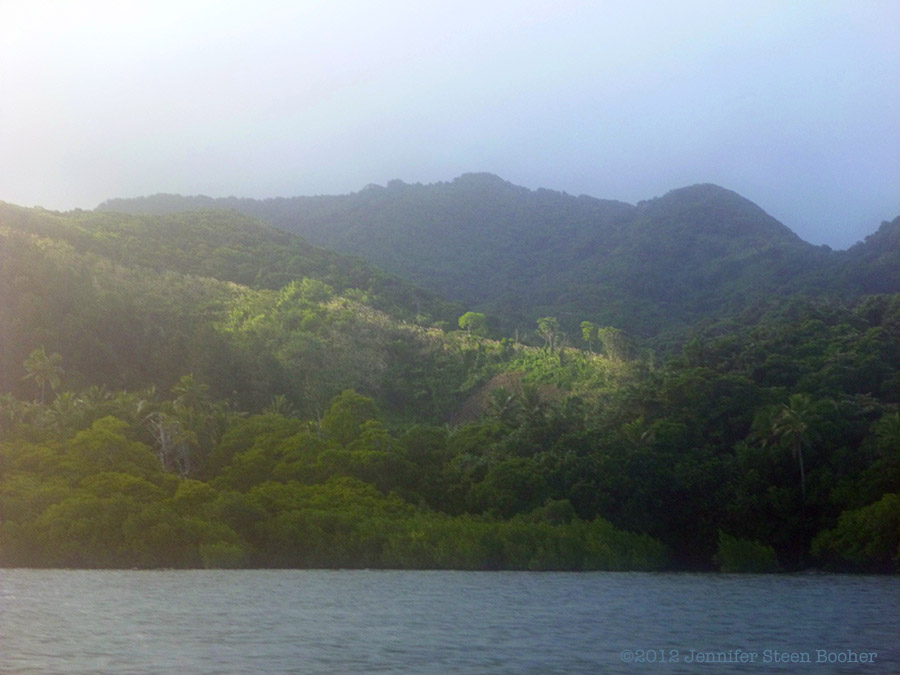
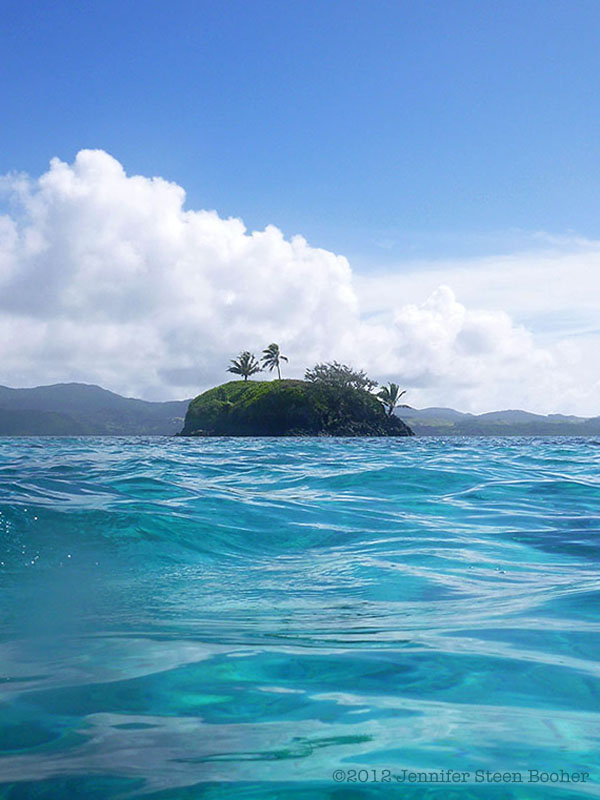
Two Trees Island, Kadavu, Fiji
This is Two Trees Island. The reason for the name is more obvious from the landward view.
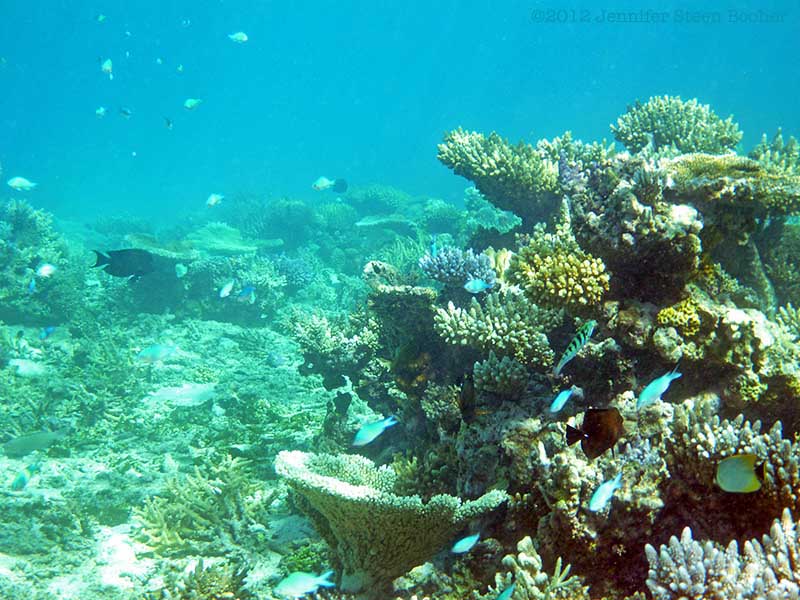
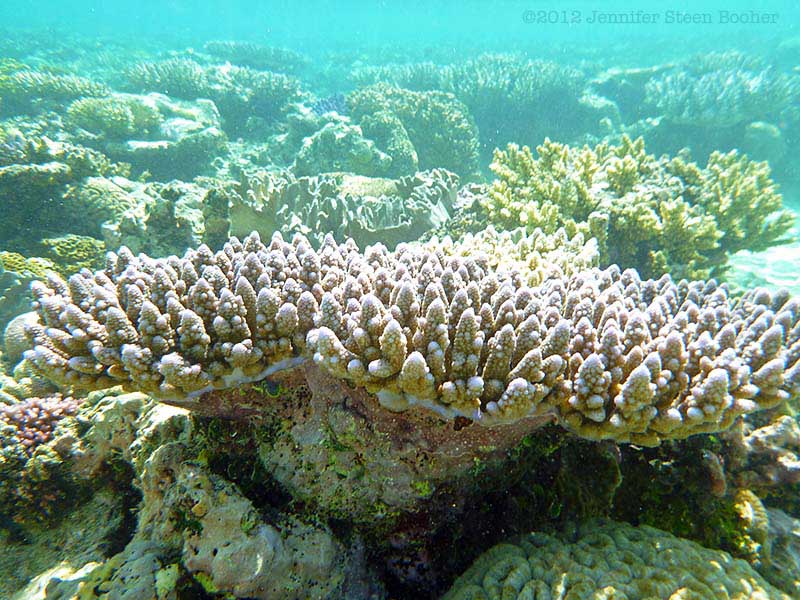
Underwater photo of coral reef near Two Trees Island, Kadavu, Fiji
I’d gone snorkeling a couple of times, and it was beautiful, but the reef was so far down there was no point in trying to take photos. 
At Two Trees, though, the reef came right up to the waves at low tide, so I finally gave my little Lumix a good workout. 
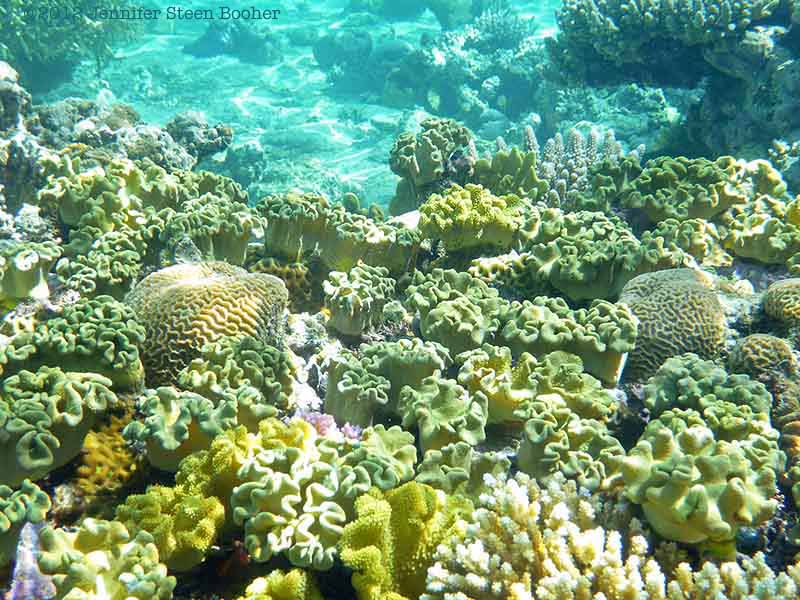
Cabbage coral, Kadavu, Fiji
A lush cabbage patch! This wavy green stuff is called Cabbage Coral. It really is lime green, even brighter and greener than these photos.
Our fearless leader, Diver Ed.
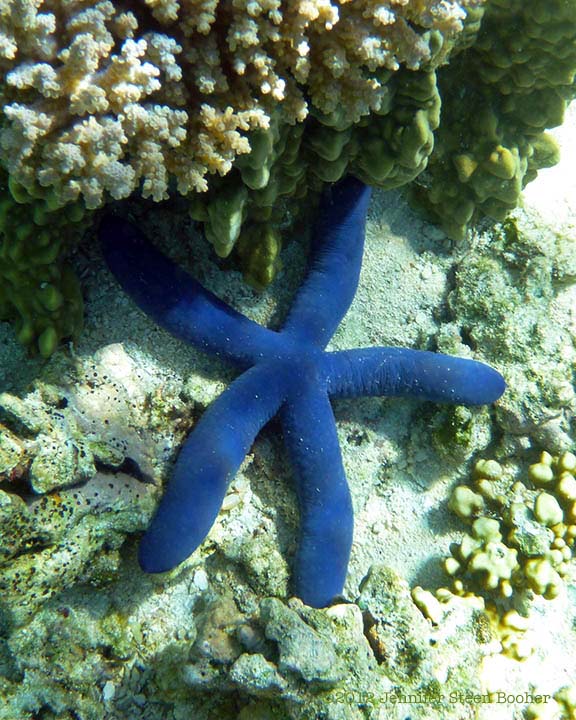
The starfish – oops, I mean sea stars – were gorgeous, deep, ultramarine blue. They are Linckia laevigata, the Blue Star. The last time I saw a blue like this was at the Jardin Majorelle in Marrakesh.
This is a White Bumpy Coral. I don’t know the names of most of the things I saw on the reef. If you know, chime in please!
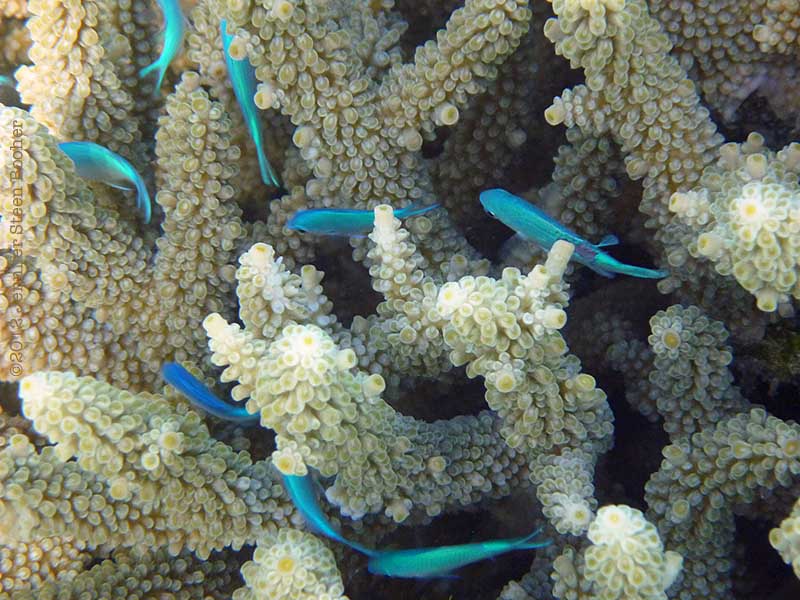
Look at the marvelous gold pinstripe around the eye.
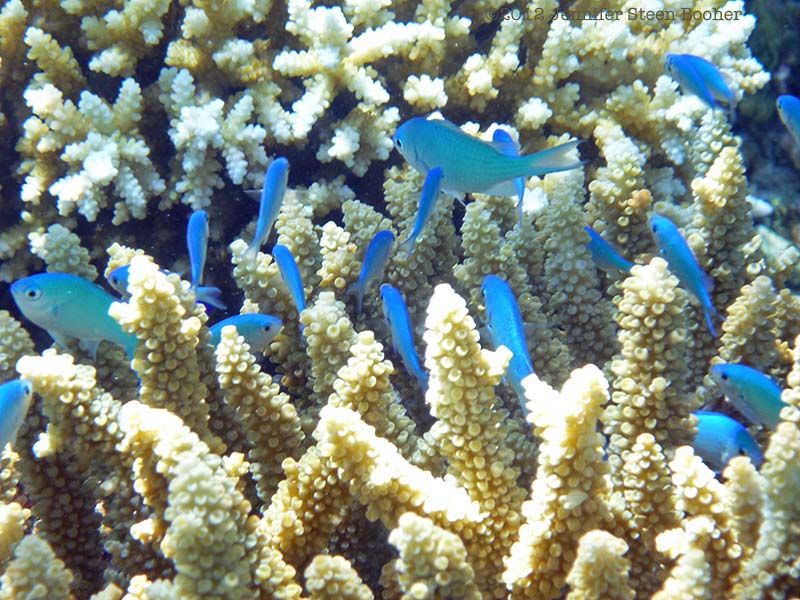
I spent a long time hovering over a coral head these little blue fish had staked out as their territory. When a predator (or photographer) gets too close, they dart back into the coral arms.  It was hard to stay in position because the waves and the tide kept pushing me away. I had to swim ahead fast, and then take photos as quickly as I could while being floated past the coral head!
Share

Fiji, March 17; Circumambulating Waya Island

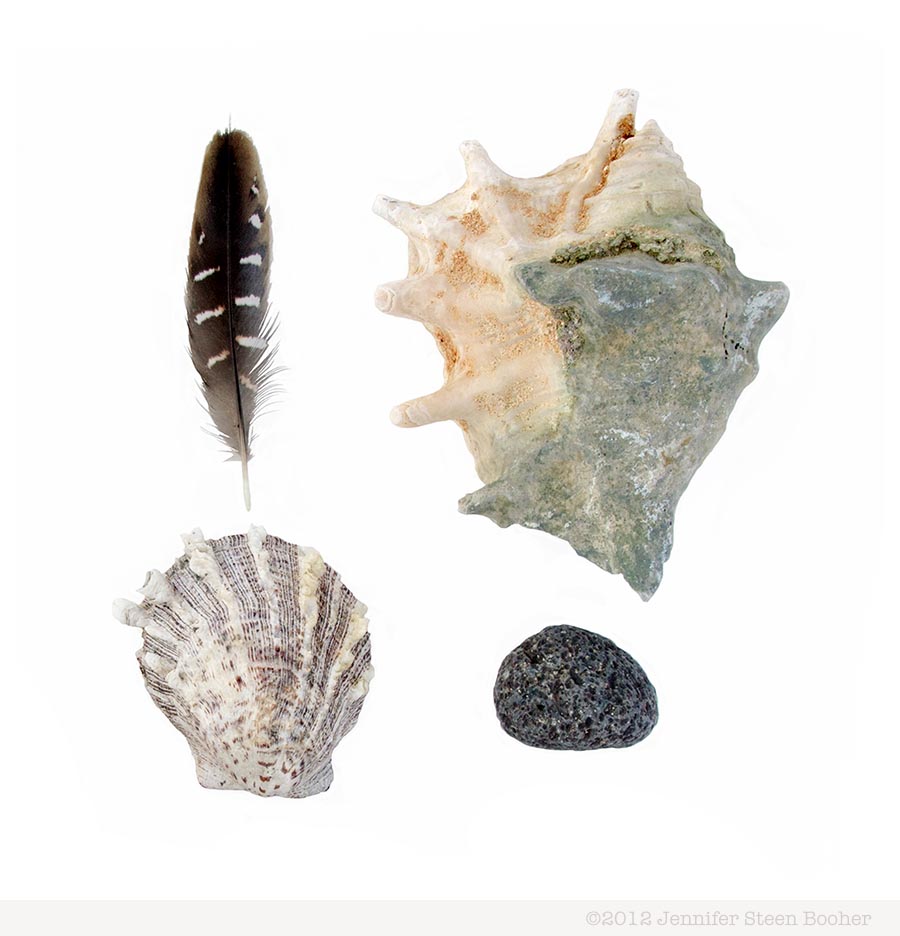
(Fiji Beachcombing series No.8):   Fluted Giant Clam shell (Tridacna squamosa), Spider Conch (Lambis sp.), Top Shell (Trochus sp.), sea glass, pumice, and several species I couldn’t identify, including a cowrie, coral branches, scallop, and Cone Snail.
The stars of today’s still life are a (small) Fluted Giant Clam (Tridacna squamosa) and some sort of Spider Conch (Lambis spp.) There were lots of the clams in our area, and their lips have the most psychedelic patterns:
Video by Marine Life Europe via YouTube.
Here’s where we found these beauties:
My daughter and I headed back to Waya Island. This time, having learned the difficulty of navigating a strong tide through a deep and narrow channel in a two-person kayak with one adult, I asked George to drop us off in the skiff. Wimpy, but I planned to beachcomb all the way around the island, so I needed to save a little energy.
It was hot, humid, and sporadically rainy, which did my hair no favors but made for some beautiful clouds.
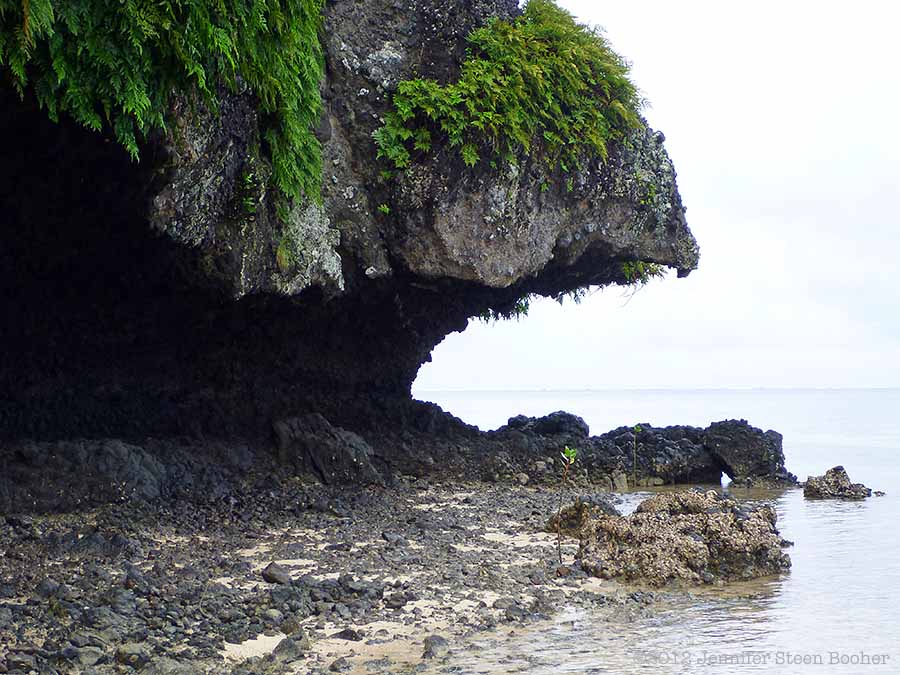
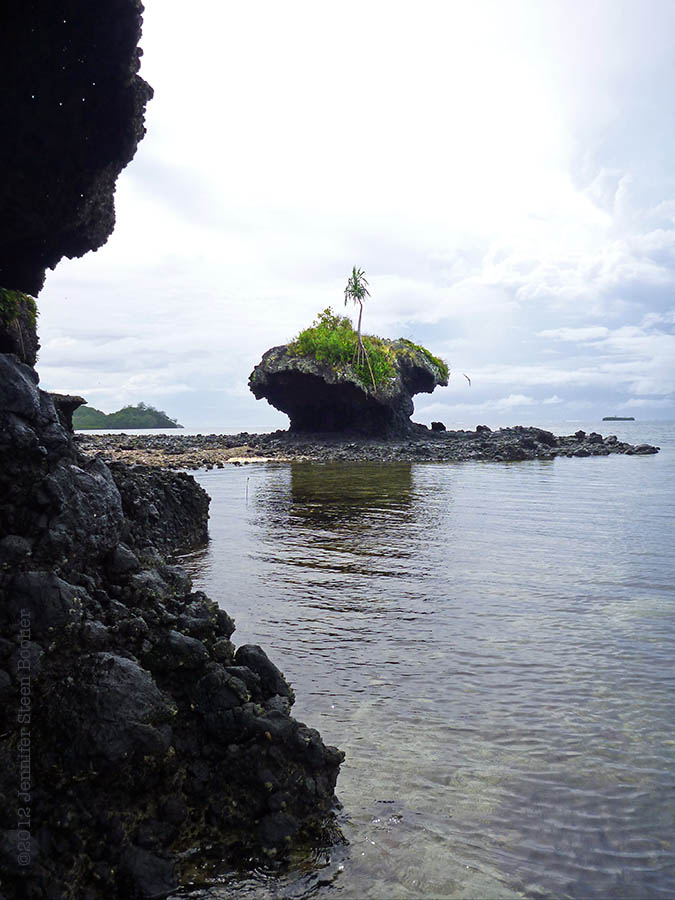
This time I got to study the unfamiliar geology a little closer.  I wish I had a way to show you the scale here. See the carved-out tip of the island?
Here it is a little closer. It’s roughly 8′ tall. The ferns seem to be clinging to bare rock.
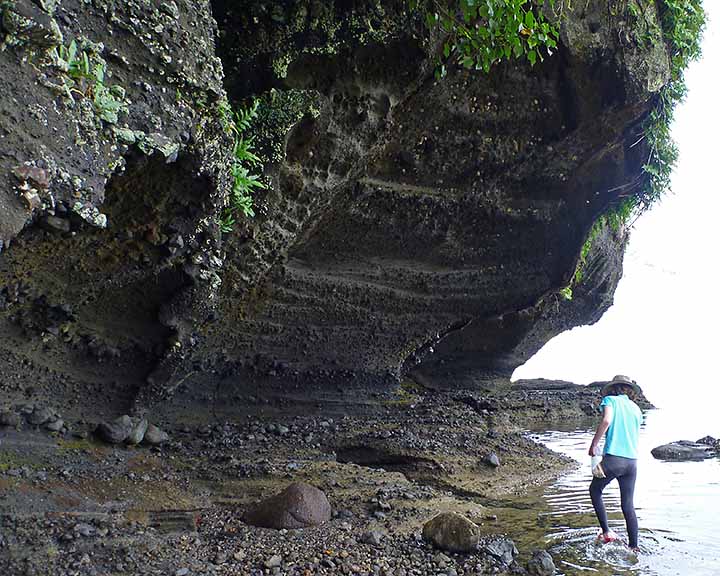
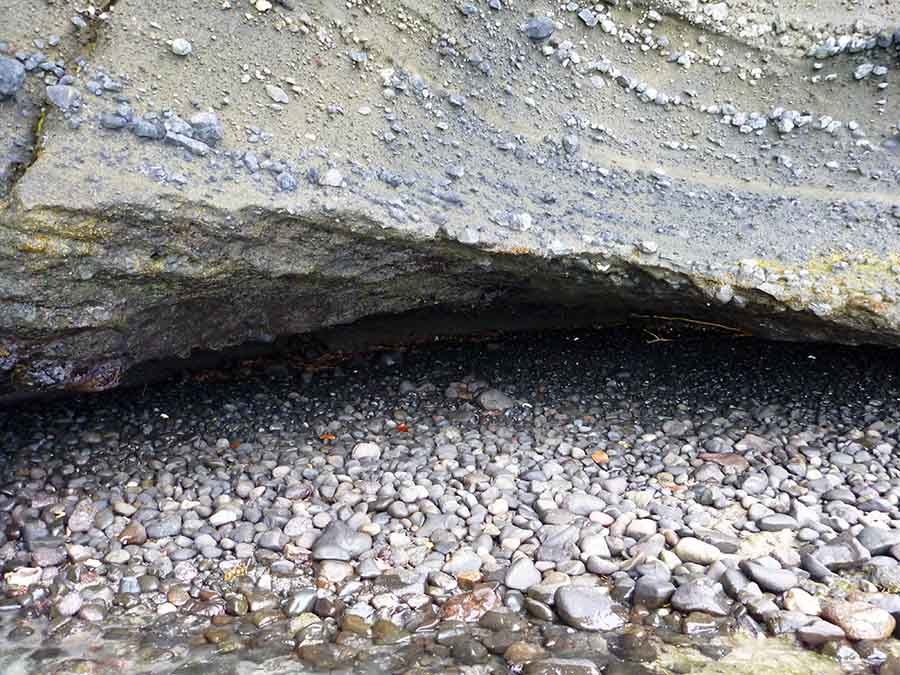
This is just a little past that point. The cliff is layered like a sedimentary stone, but the layers are made of a volcanic-type stone set in what looks like mud.
Doesn’t it look like you could just pull one of those stones right out of the mud? It’s more like concrete, though. We actually had to climb over a bit at the other end of the island, and we used these like handholds on a climbing wall. They are quite solid.
And yet that muddy-looking matrix must be pretty soft, because the whole coastline is sculpted like this, with the volcanic stone lying loose on the beach.  Doesn’t that island look like something Dr. Seuss would have drawn?
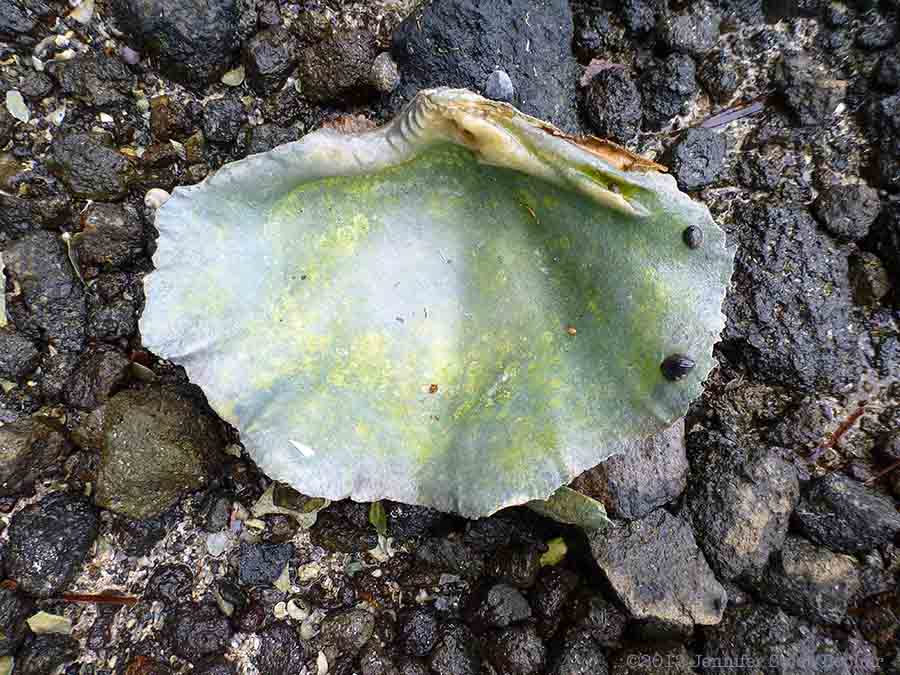
 The patina on this giant clam was so beautiful…
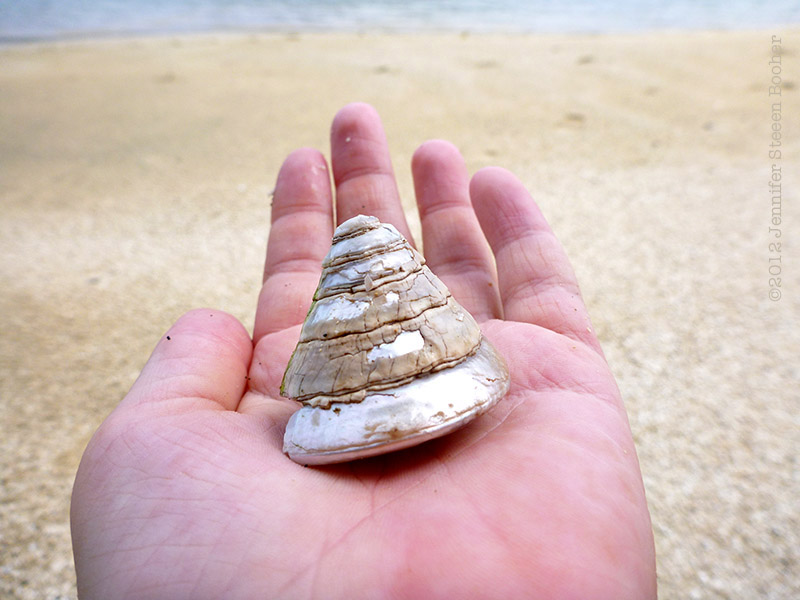
A small Trochus. I think these are called Top Shells. The outer covering had been eroded off, and the nacre looked like silvery pearl.
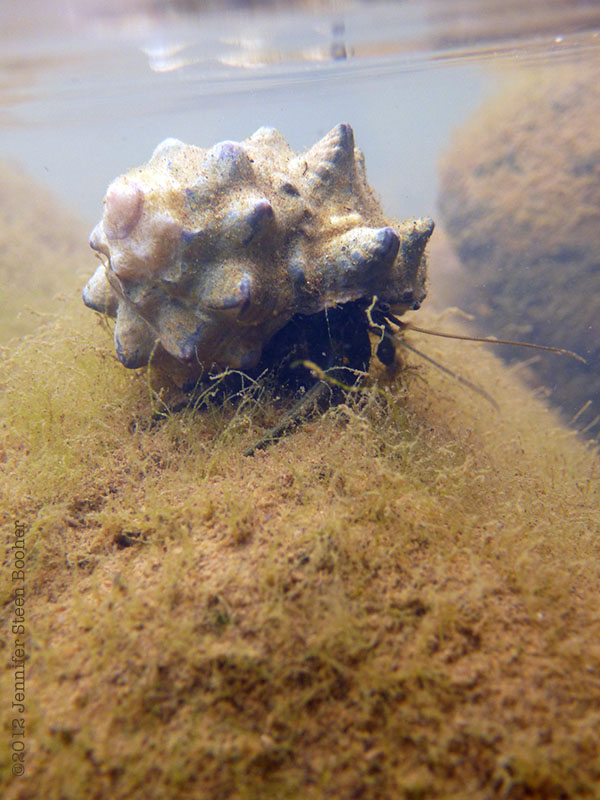
This beauty had a hermit crab inside, so I photographed it underwater and left it alone. Can you see the tip of a claw peeking out?
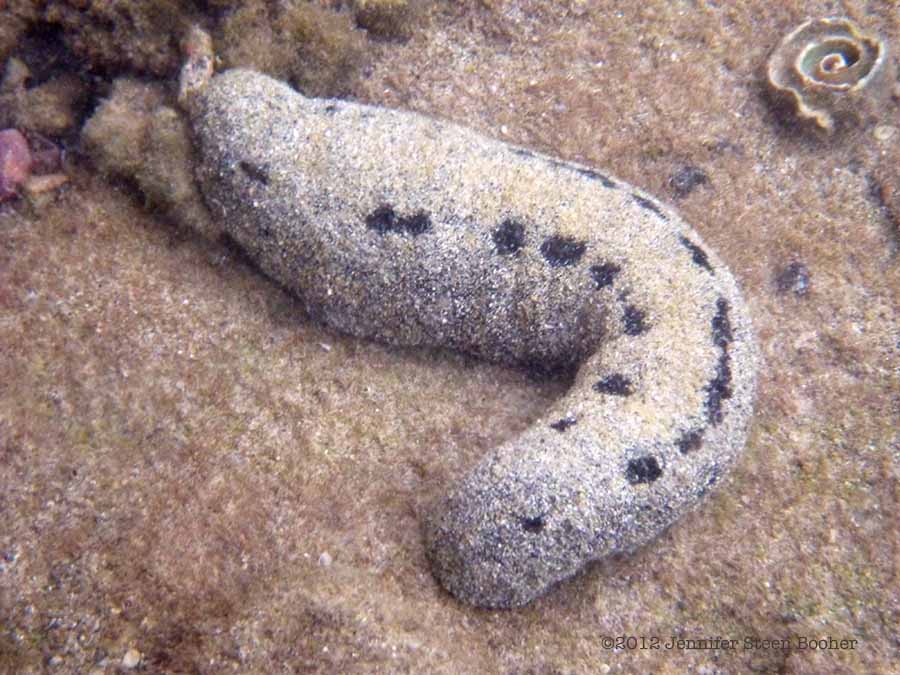
Big fat sea cucumber in the shallows!
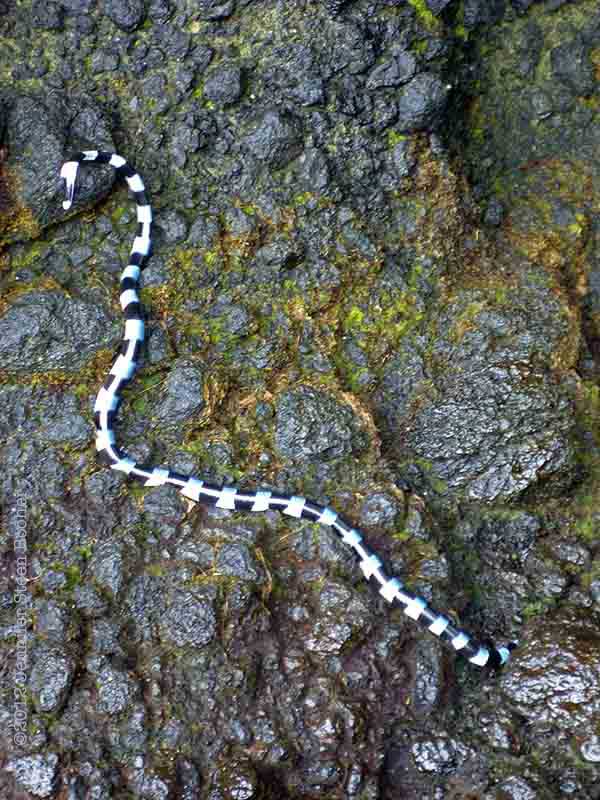
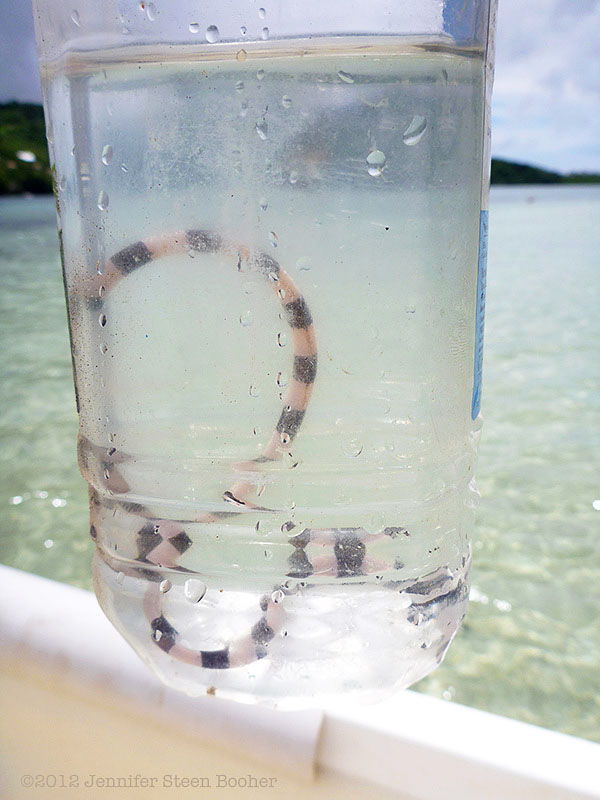
My second Banded Sea Krait! Not bad for a non-diver. We’d been in Fiji long enough to become relatively cavalier about sighting dangerous creatures. Like the wasps in our bure, they just don’t seem interested in us, so we felt free to watch them (from a safe distance.)
A plethora of kraits! When he came to pick us up in the skiff, George brought a baby water snake in a Fiji Water bottle. He let it go after I took the photo.
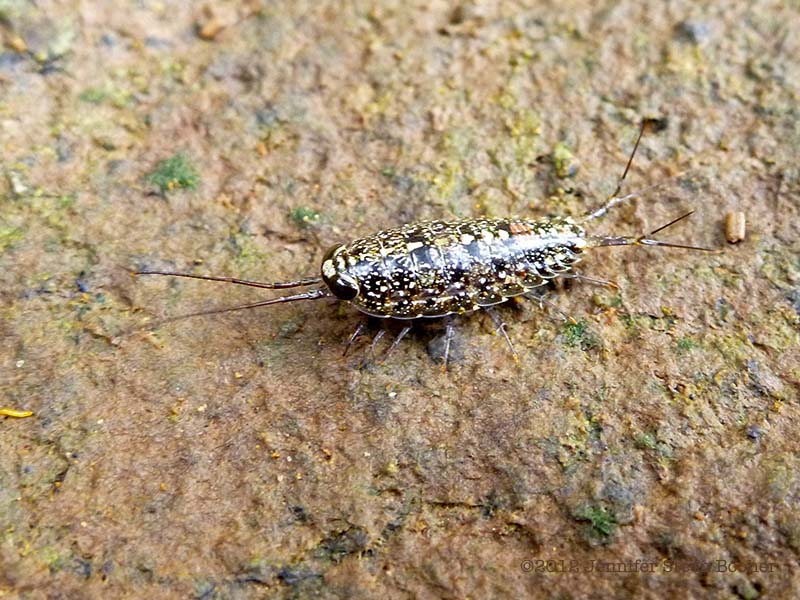
What do you think – crustacean or not? It’s on a mudflat and looks like a trilobite, so I’m leaning toward crustacean, but it could be some other kind of insecty arthropod… I don’t even know where to begin looking for IDs.
 This beautiful beetle landed on my leg during cocktail hour. Such amazing iridescent greens! I have a dozen photos of it because the colors shifted with the angle.
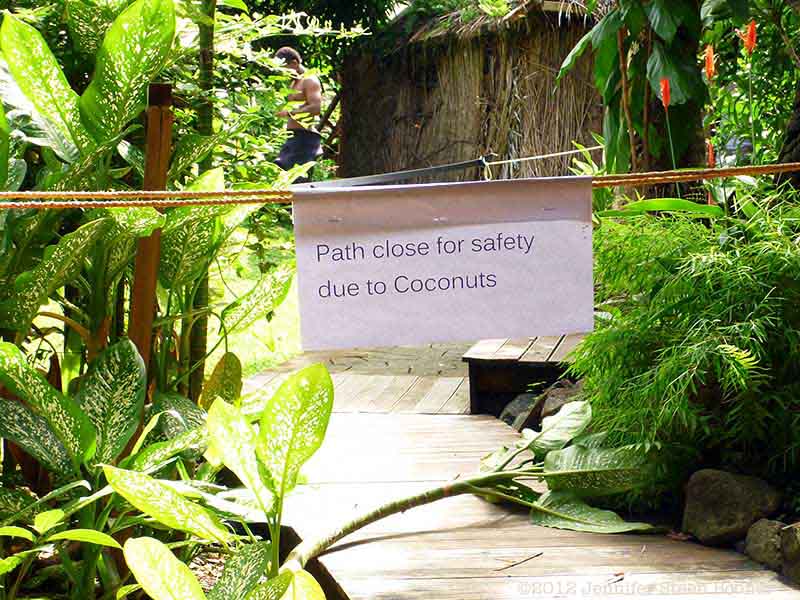
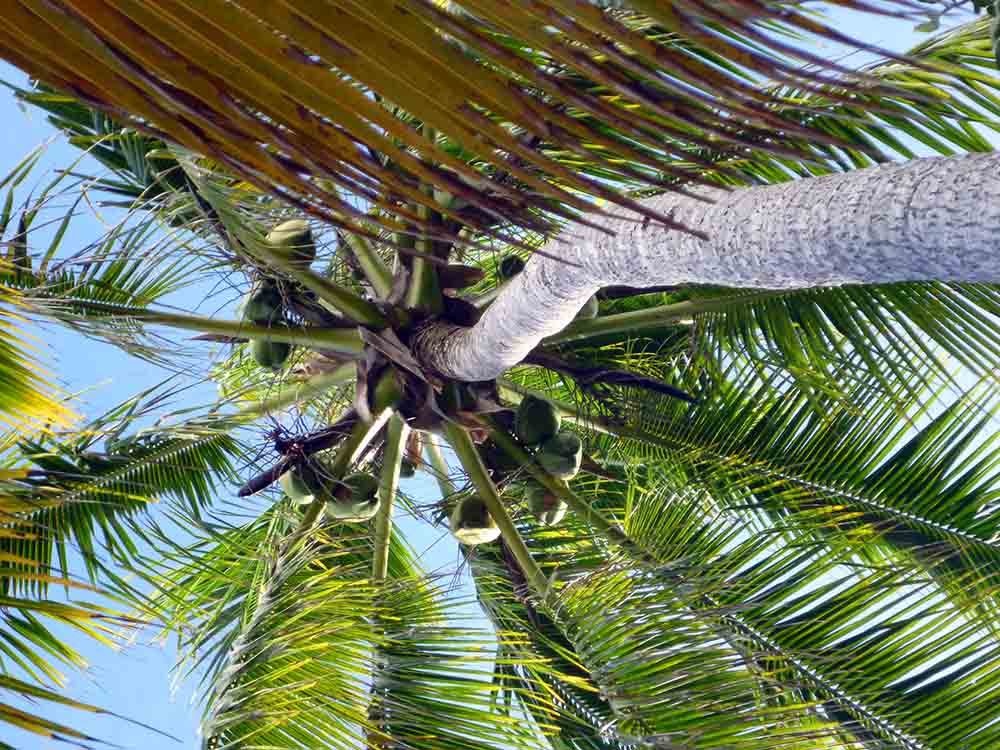
 One last bit of cultural education – don’t walk under the coconut trees when the nuts are almost ripe. Bonk!
(Fiji Beachcombing series No.9)
Share

Fiji, March 18; Waya on my own

Waya Island, Kadavu; March 18, 2012 (Fiji Beachcombing series No.10) :   Unidentified seeds, Cone Snail (unidentified sp.), Cowrie (Cypraea sp.), coconut seed (Cocos nucifera), unidentified Ark Clam species, Walai vine seed (Entada phaseoloides), unidentified limpet, Nerite (Nerita sp.), pumice
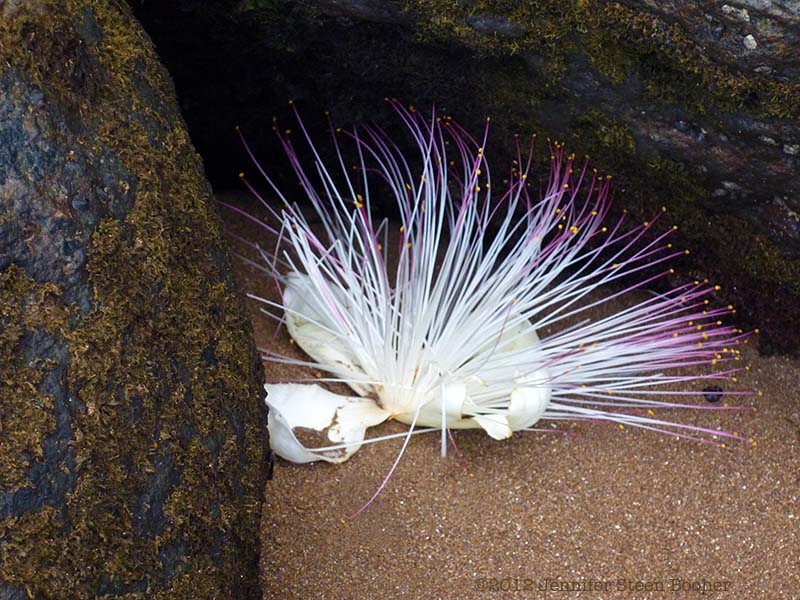
The flowers of the Vutu tree (Barringtonia asiatica)  bloomed every night, and in the morning were scattered on the path as we went down the hill to breakfast.
 Mid-morning, my daughter and I rode out to the dive boat in the skiff bringing tanks for the second dive of the day. On the way out, Tomas drove very sedately through the calm water inside the reef.
 Once the dainty little eleven-year-old had been dropped off at the dive boat (to dive with 14′ manta rays), he took us back through the big waves outside the reef at top speed. Now I know how a stone feels when it’s being skipped!
I was busy hanging on to my seat, whooping as we crested the waves, so I have no photos from the trip back – not even of the school of flying fish that hovered beside us for a while like enormous silver dragonflies. I did get a few one-handed shots of the side of the boat next to the fish, and several of the air above them.
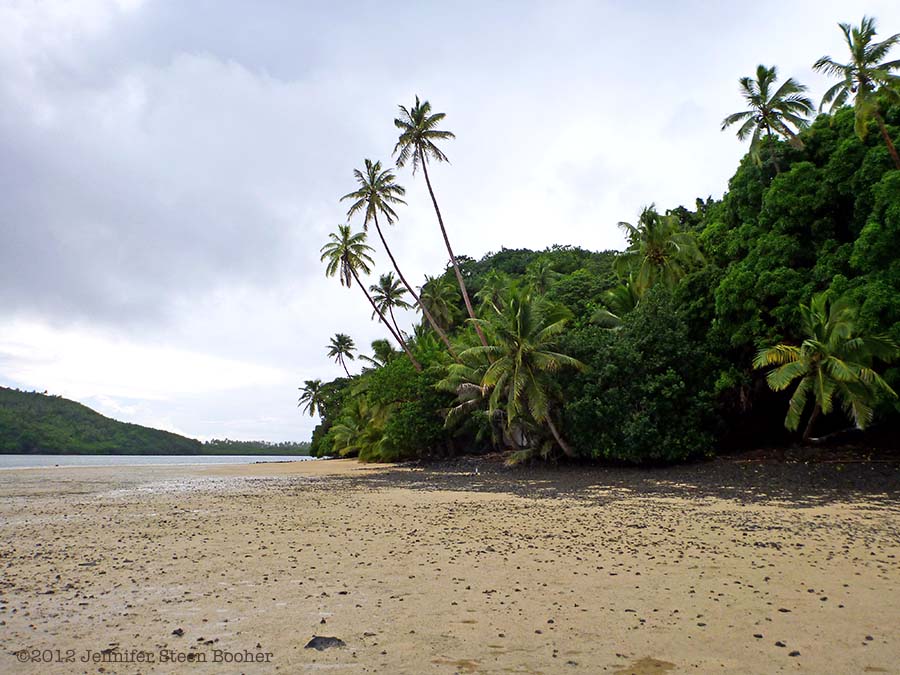
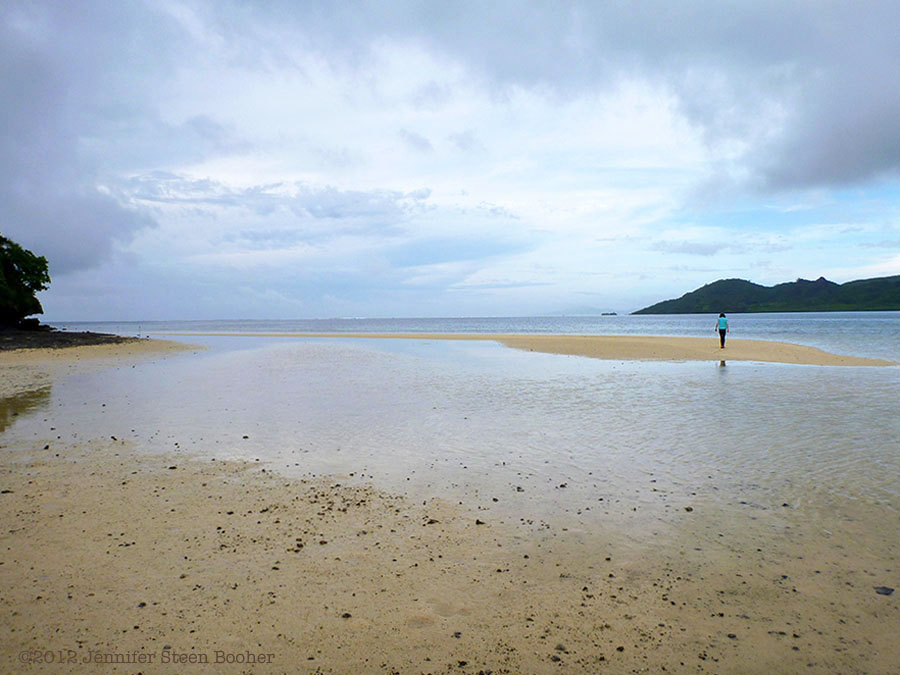
 Tomas dropped me off at Waya Island on our way back – my first time alone there! This is the best “tropical beach” photo I got during the whole trip. I kept trying to line up white sand, green palms, turquoise water, and blue sky, but never did get more than two of them to cooperate at a time.
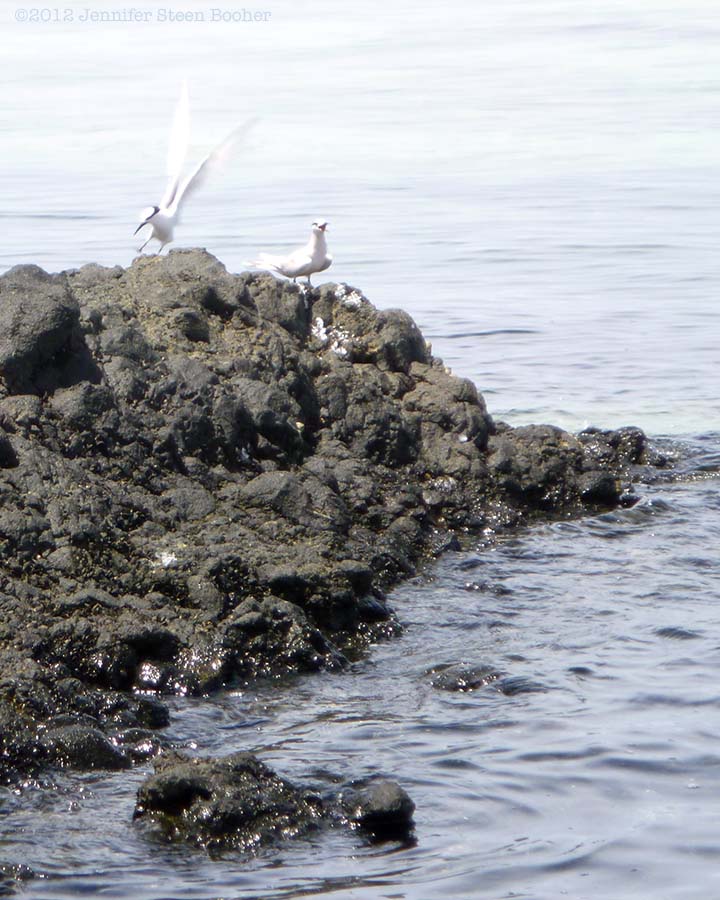
 Since I was by myself with no one to bore or embarass, I spent some time stalking the birds that nested on this funky islet. By ‘stalking,’ I mean trying hard to catch in a telephoto lens.
This really pissed them off, and  you can see in this photo they are telling me where I can put my camera. 
I think they were Fairy Terns (Sterna nereis). I don’t know what this group is saying, but it’s probably not flattering. 

And here’s a video of Fairy Terns, courtesy of YouTube.
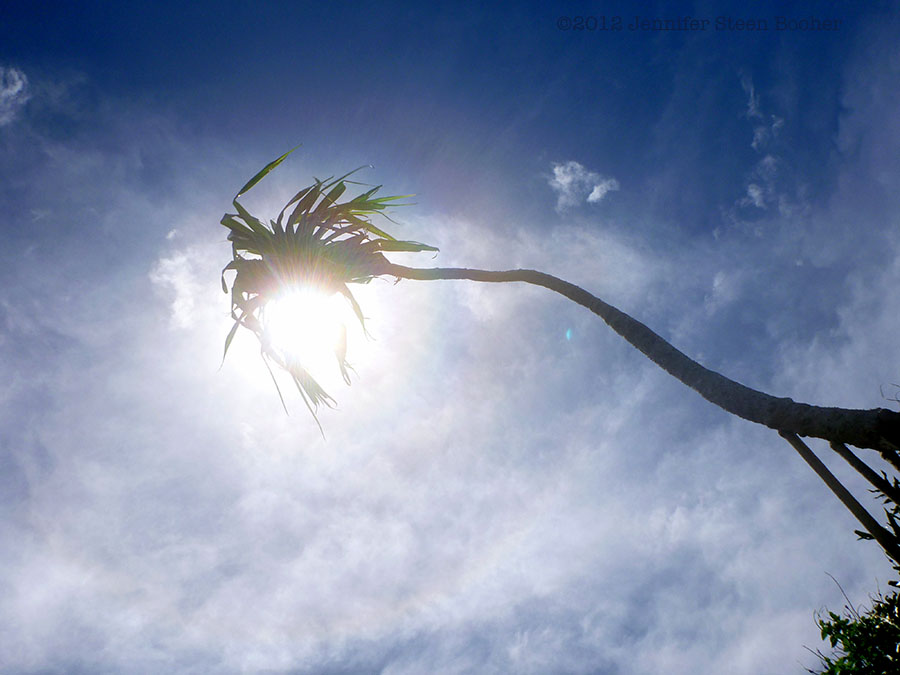
 I’ll leave you with one last photo of a palm tree from my last day of beachcombing. Tomorrow, we visit the village of Kadavu Koro and swim in a mountain waterfall.
Share

Fiji, March 16; Crab Habits

West of Matava, Kadavu; March 16, 2012 (Fiji Beachcombing series No.7) :    Metal lid labelled “Tokin Mathematical Instrument Box,” clam, coral, crab claw, Nerites (Nerita sp.), ‘mudstone,’ unidentified shell, coconut seed (Cocos nucifera).
This is the post where you finally get to hear all about the fiddler crabs!  I know you’ve been waiting for it, but first, a pretty picture:

 OK, let’s start walking…

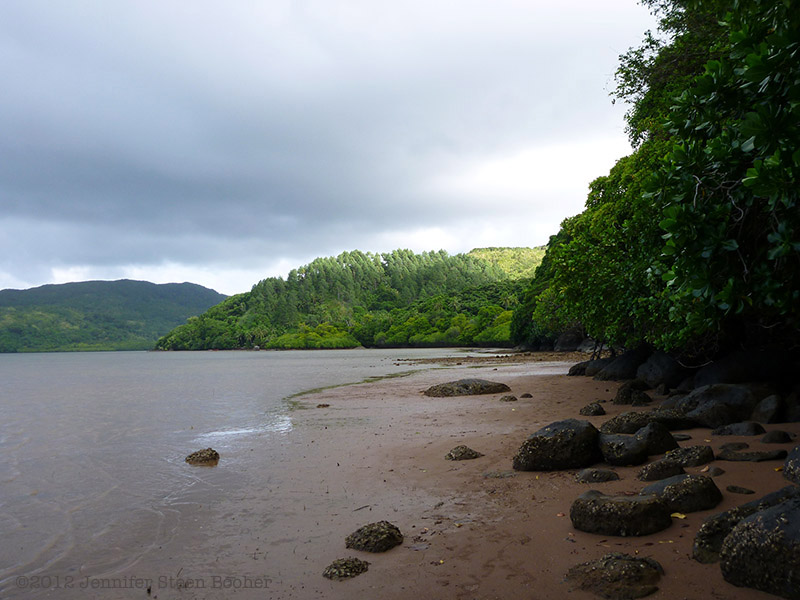
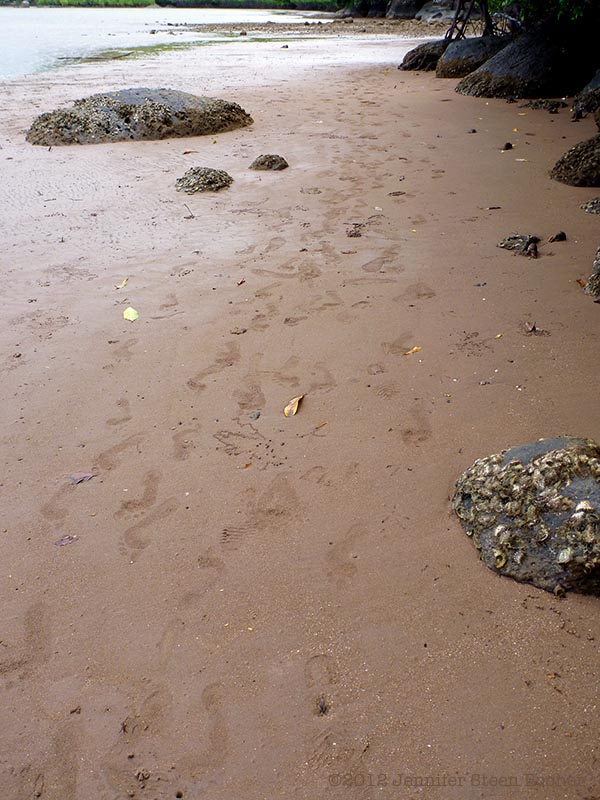
This morning I set off to explore the shore to the west of Matava. Off on the other side of that point is the village of Kadavu Koro, where many of the people who work at Matava live. Look closely at the shore in the photo above.
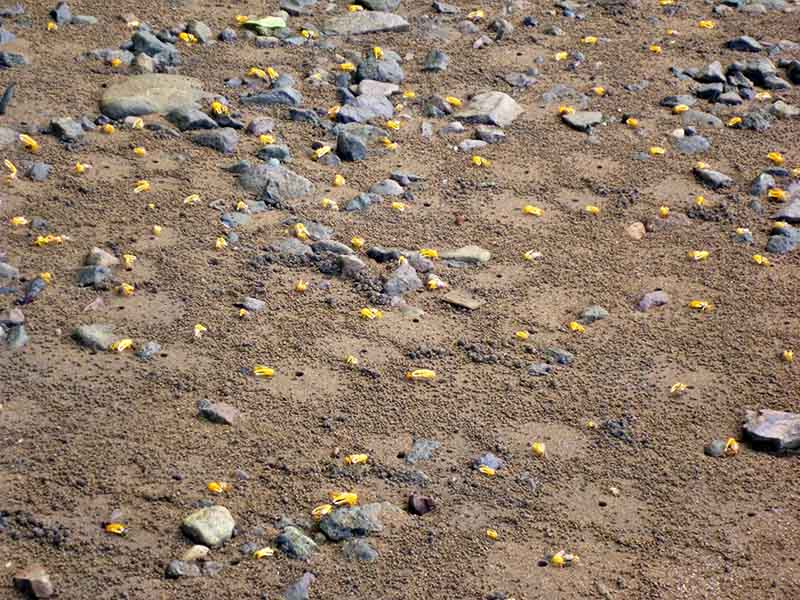
At low tide, this is the local highway. There’s a path through the forest, too, but this one must be easier to travel. Especially barefoot (there’s only one set of prints with shoes on.) Now look a little closer. Can you see all the holes, and maybe a few bright yellow dots?
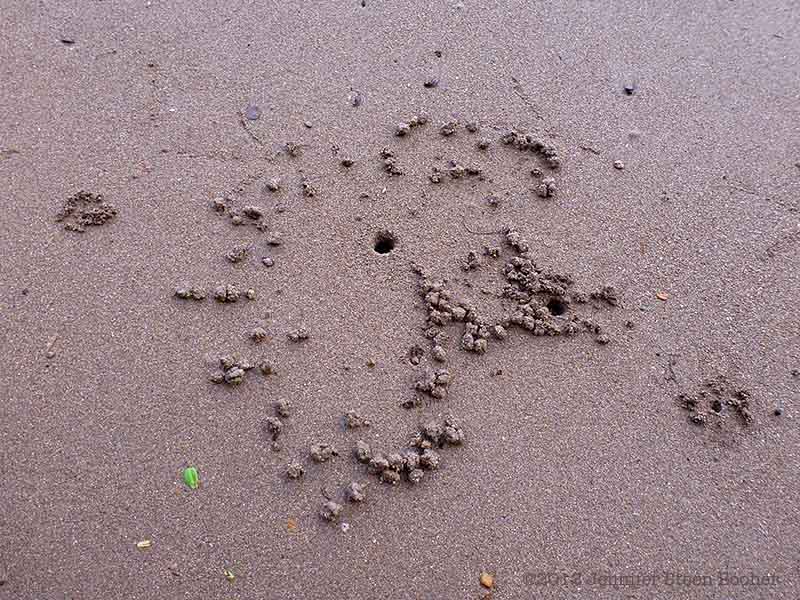
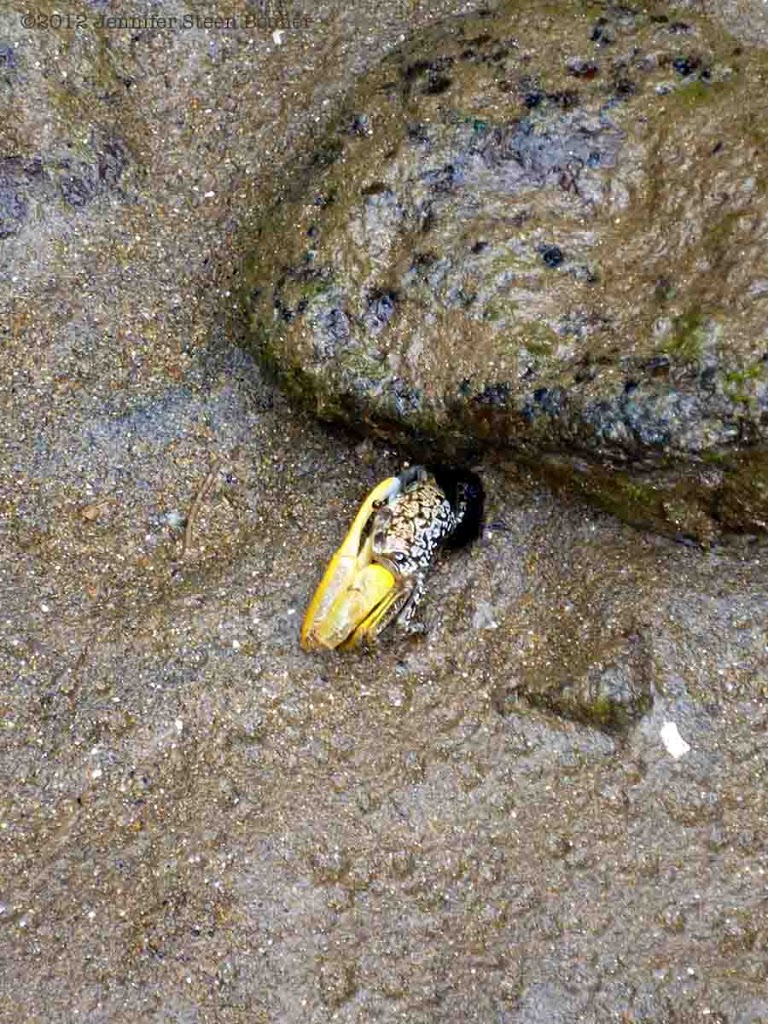
This is Uca perplexa (or it might be Uca lactea), a type of fiddler crab. There are hundreds of them concentrated in patches like this, and hundreds more scattered more thinly across the mudflats. When you see a big patch like this, their behavior is even more dramatic. They stand in one place waving their claws something like this:

(GIF courtesy of Wikipedia – not my work!)
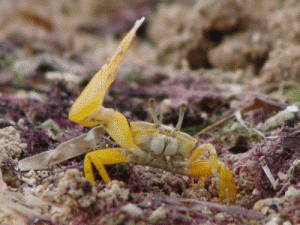
Except that the guys I saw (yeah, they’re guys; the females don’t have the big claw) usually hovered halfway out of their holes, like this…  

 …to do their dance. Some of the locals would sit on the seawall watching them. It was hypnotic. One of the guys said that it always seemed about to resolve into a pattern, but never did. You could never tell what the next step in the dance would be.

  
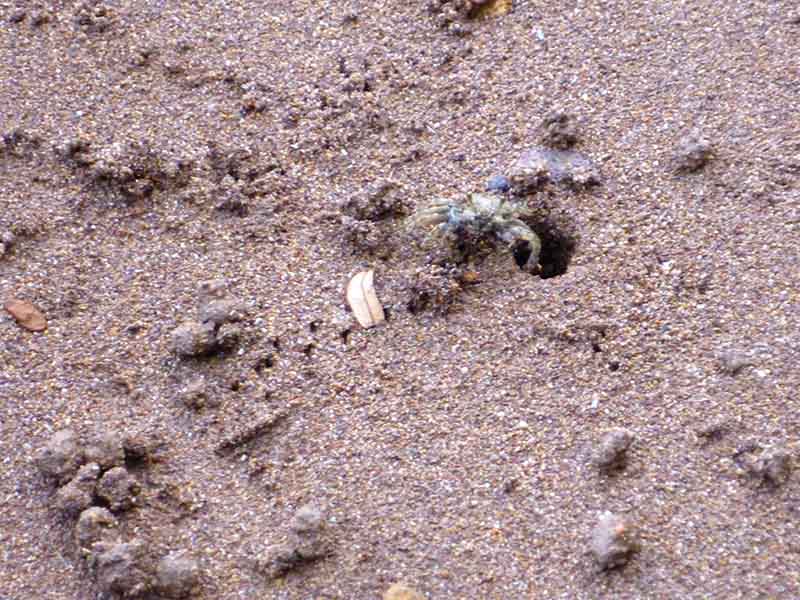
This one’s a female.

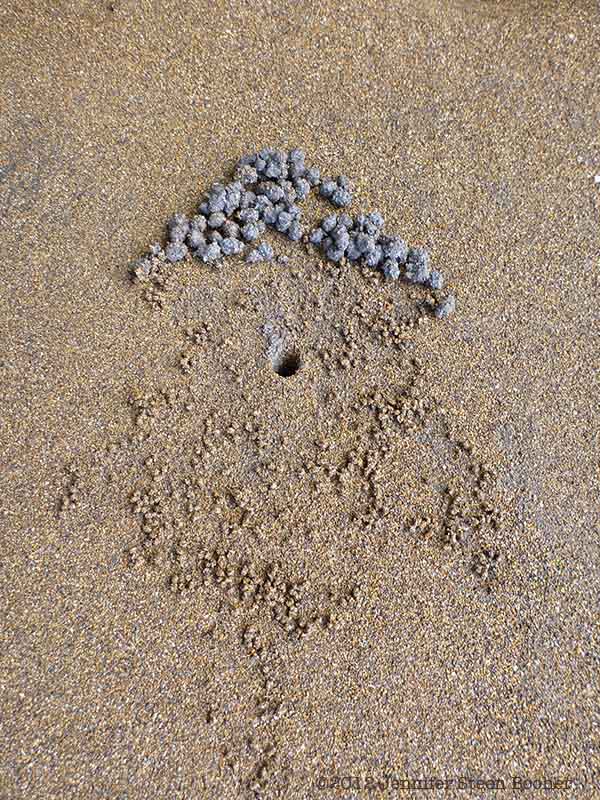
 I was fascinated by the patterns they formed with balls of sand. Fortunately, I follow a fascinating blog called “Through the Sand Glass,” where I read about this type of crab behavior just a few months ago. The crab scoops up a bit of sand, eats anything it finds tasty, and then balls up the used sand so it doesn’t sift the same sand twice. Very efficient.

 And very beautiful. Some of the designs looked like cryptic writing or maze designs.
It took me a while to figure this one out. I think the grey balls are sediment dug out from the lower layers of sand, while the brown balls are the top layer. Further deductions: the grey sand is probably anaerobic (or less aerobic, at any rate) and was probably excavated when the crab dug the tunnel. So let me ask you – when you go beachcombing, do you find yourself squatting in unbecoming postures with your chin propped on your hand as you stare at small holes and try to decipher unfamiliar patterns? To think I used to just hunt for sea glass!
One last bit abut the fiddler crabs: a video showing sand-bubbler crabs making these sand balls (different species of crab, same basic strategy.) The video isn’t mine, it’s by Matthew Davidson, courtesy of YouTube.
Other cool critters I saw:  
 Hermit crabs, mudskippers, a rooster,
this weird thing that probably opens up like an anemone when under water,
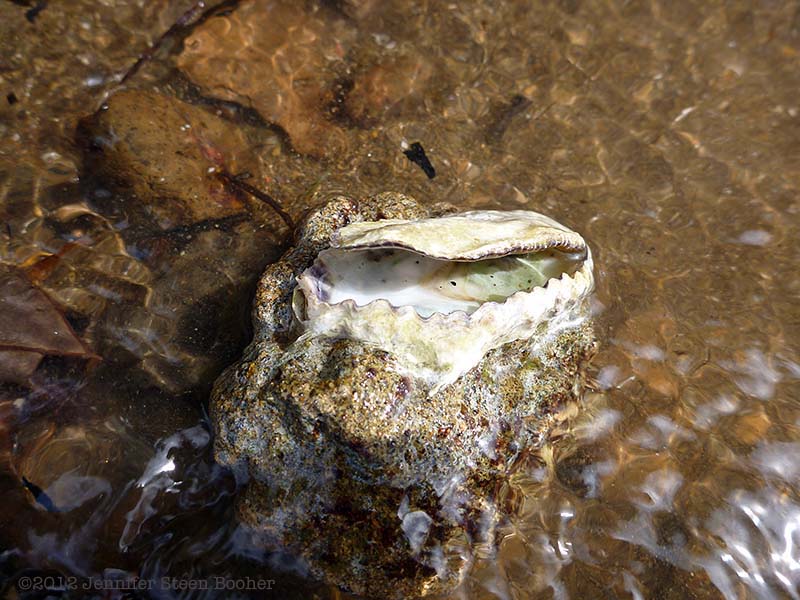
 and molluscs that glue themselves rather thoroughly to the rocks (many rocks are completely encrusted with these, like barnacles. They are sharp like barnacles, too. Ow.) There were also small black biting bugs, very like blackflies but neither so plentiful nor so aggressive.
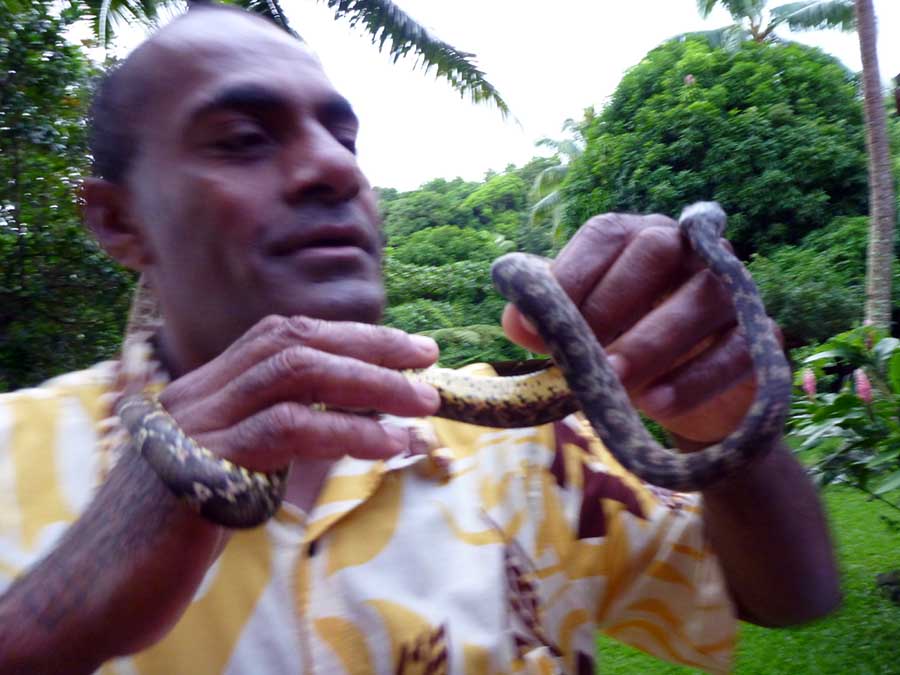
And when I got back, George had brought a small boa constrictor to visit. George is very thoughtful that way.
This is Candoia bibroni, the Pacific Boa
Isn’t she cute?
Share

Fiji, March 15; Two Quick Trips to Waya Island

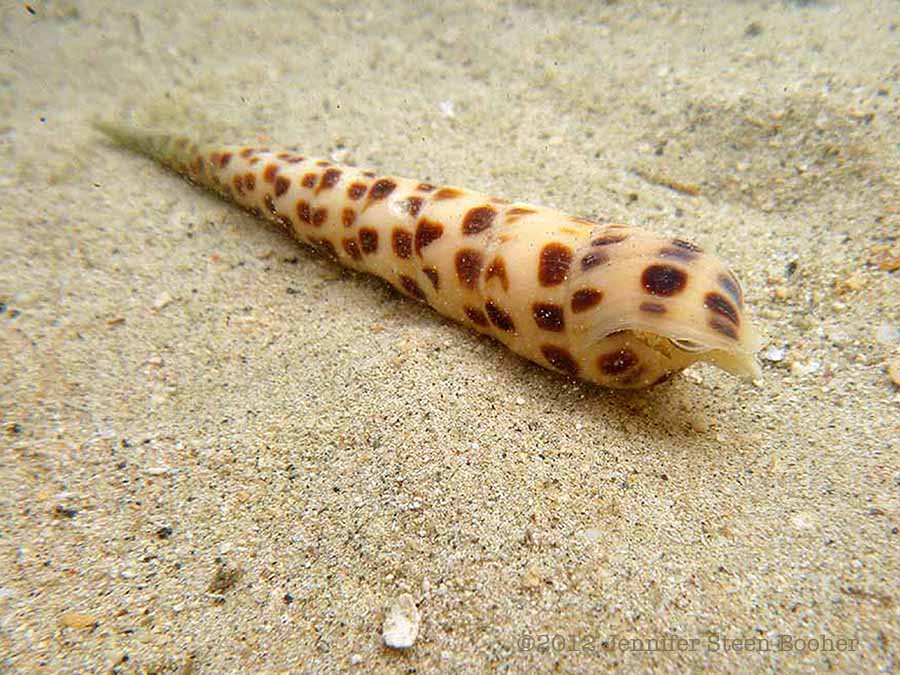
Waya Island, Kadavu; March 15, 2012 (Fiji Beachcombing series No.6):   Unidentified corals, coconut seed (Cocos nucifera), scallop, cone snail, and clam shells (all unidentified species), aluminum aerosol bottle, and a mysterious gastropod shell
Just offshore from Matava is Waya Island. Matava has mudflats and mangroves, Waya has white sand and volcanic rocks. It’s a little father away than it looks though – there’s a serious reef between us! It was a bright, sunny day with only an occasional rain shower, so in the morning I kayaked across with my 11 year old daughter for a quick reconnaissance before she went off on the dive boat.
My daughter showing off her beachcombing bucket – half a coconut shell. There were dozens of giant clam shells littering the shore (probably eaten by the island’s caretaker.) Lots of cone shells along the tide line and in the water, too. We’d been warned about their poisonous sting so we had our water shoes on. We only came across a couple of live ones. I’m a cautious beachcomber, anyway – I figure anyplace worth beachcombing is going to have things you don’t want to step on!
Later, while the others dove, I surrendered to the heat and lay around reading Swiss Family Robinson. Seemed appropriate. (Over the course of the trip I also read Robinson Crusoe and 20,000 Leagues Under the Sea.) In the afternoon I went back to Waya with a grownup friend. The kayak was much easier to handle! We only had a short time to explore before she was due back at the dive boat, but we made the best of it. There was a narrow gap at the rocky end of the island – almost a cave – so we went exploring there and found…
…a banded sea krait sleeping in a corner! (Probably Laticauda colubrina.) They are not particularly aggressive, but they are extremely poisonous, so having almost stepped on it in the darkness, we left in a hurry.
We also saw this little crab determinedly prying her dinner off the rocks. Poor Mr. Limpet…
P.S. For those of you concerned about wildlife: all the still lives were taken in Fiji, everything in them was found dead on the shore, and most of the things I photographed went back on the beach when I finished.  Live animals were photographed as they were found and left in place.
Share

Fiji: March 14; Mudflats and the Molaniki

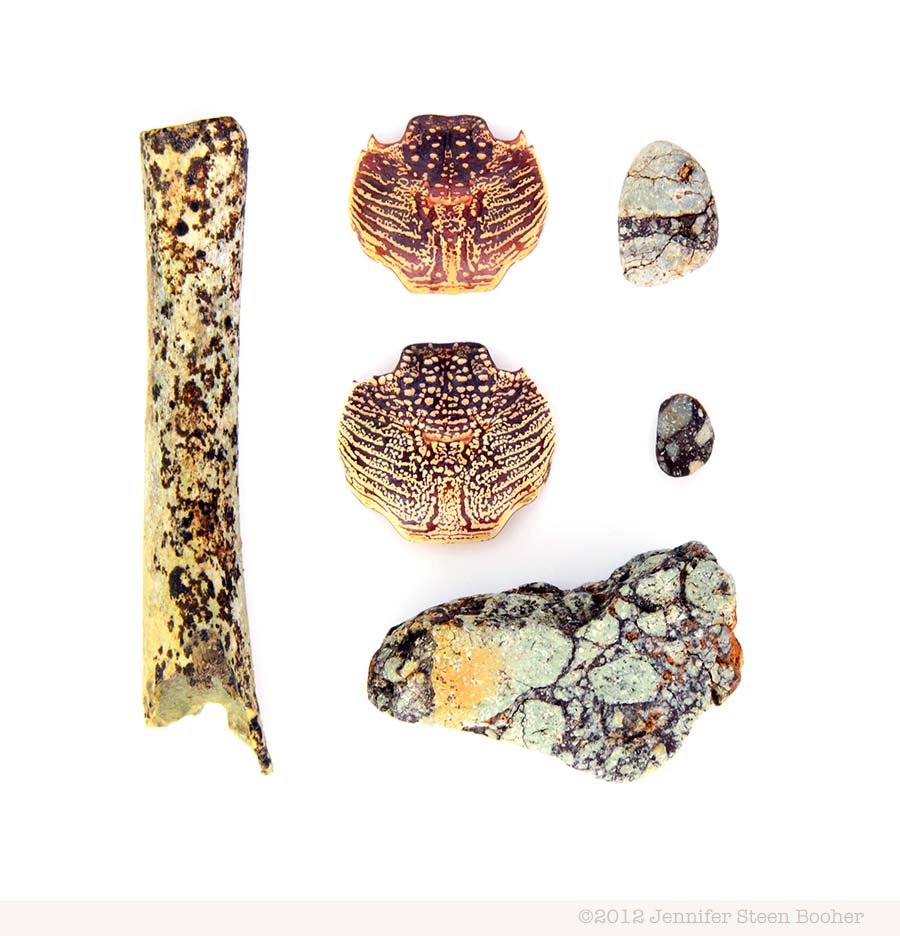
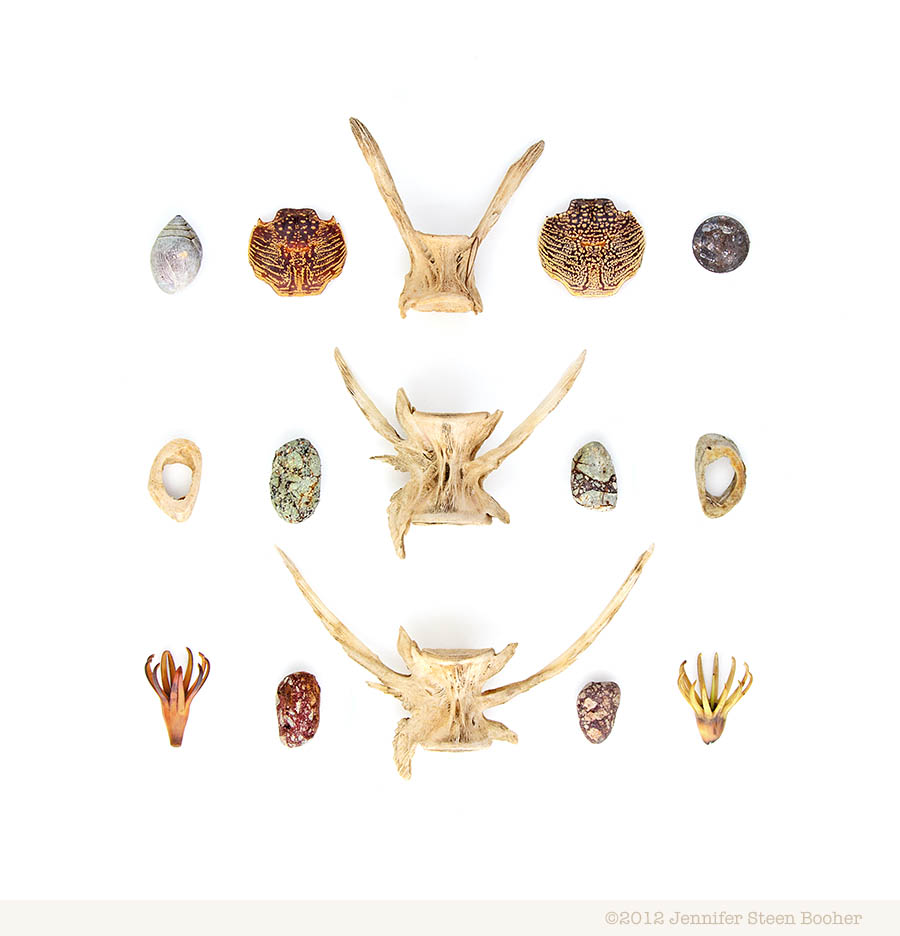
Matava, Kadavu; March 14, 2012 (Fiji Beachcombing series No.2):    Unidentified shell, Sally Lightfoot crabs (Grapsus sp.), Vutu flower stems (Barringtonia asiatica), ‘mudstones,’ vertebrae of a very large but unidentified fish
Matava, Kadavu; March 14, 2012 (Fiji Beachcombing series No.5):   Bone, Sally Lightfoot crab shells (Grapsus sp.), and mudstone. I can’t figure out what these stones are really called, but they feel sedimentary and you can crush them with your fingers, so I called them mudstone.
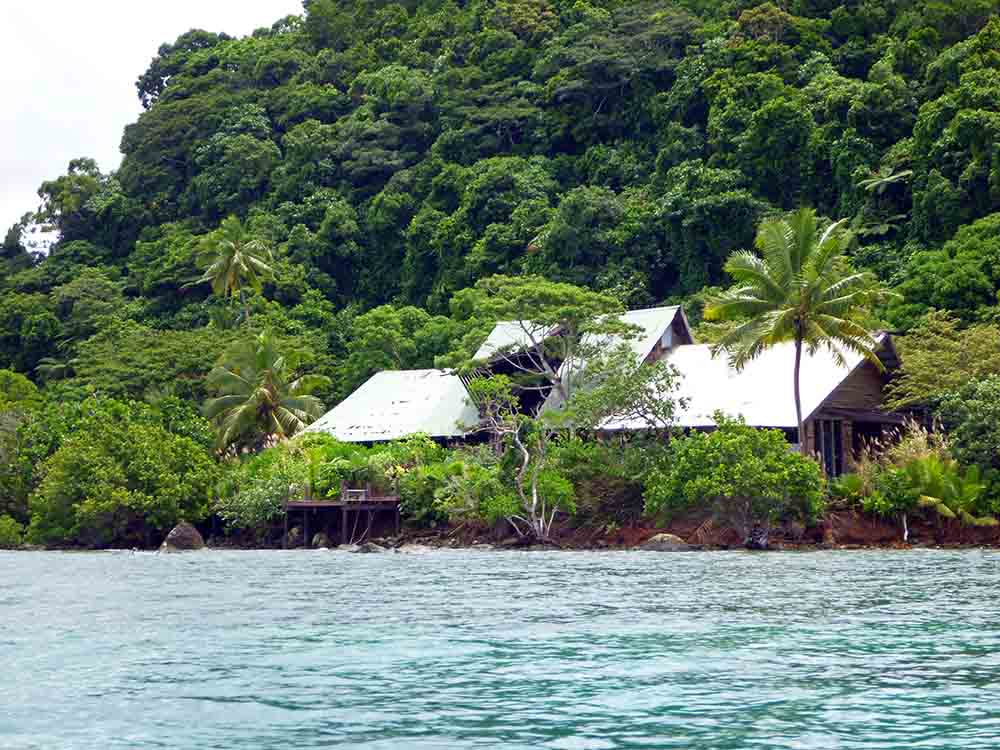
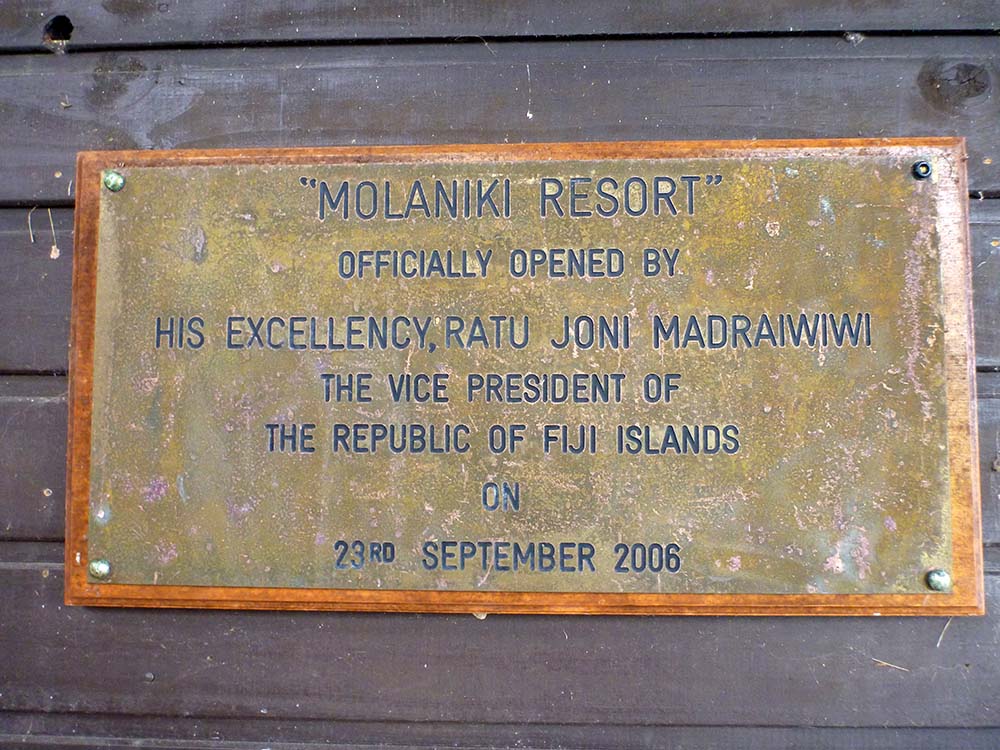
On the second day, Richard and Cheri took me across the bay to an abandoned resort. They had arranged a meeting with the caretaker to see if anything could be salvaged, and I went along because it sounded like an adventure.
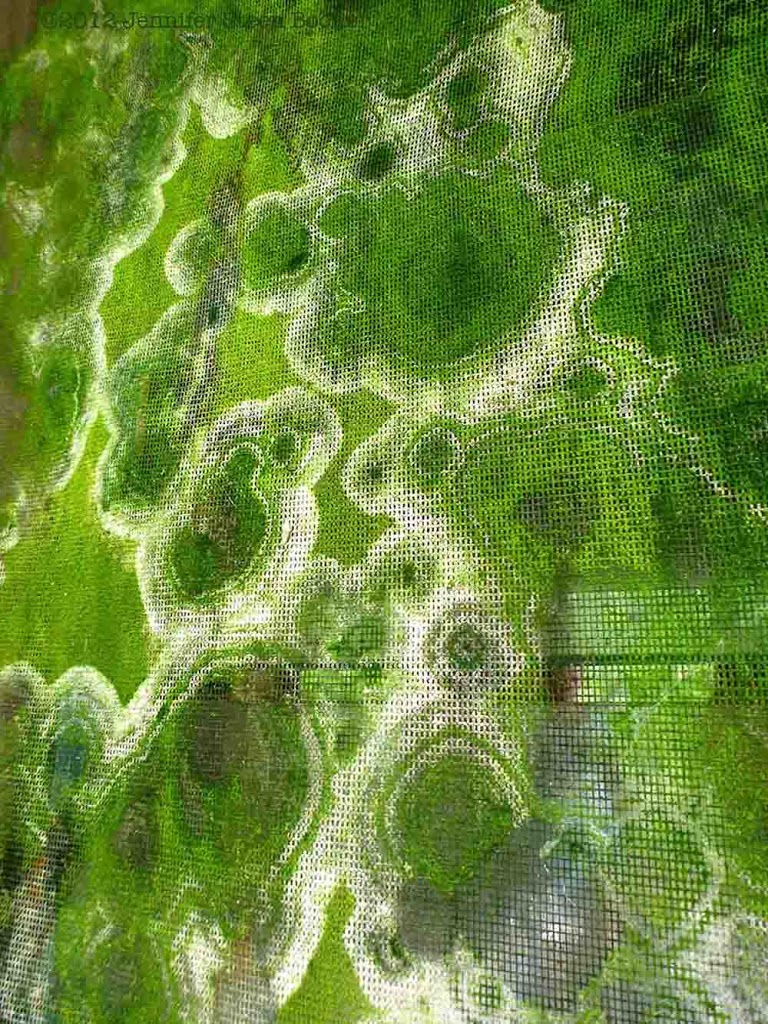
You can see it isn’t terribly old, but was built right smack on the shoreline. The hillside behind is crumbling, and the bures get soaked by waves during storms. The mold on their screens looks like Venetian marbled paper:
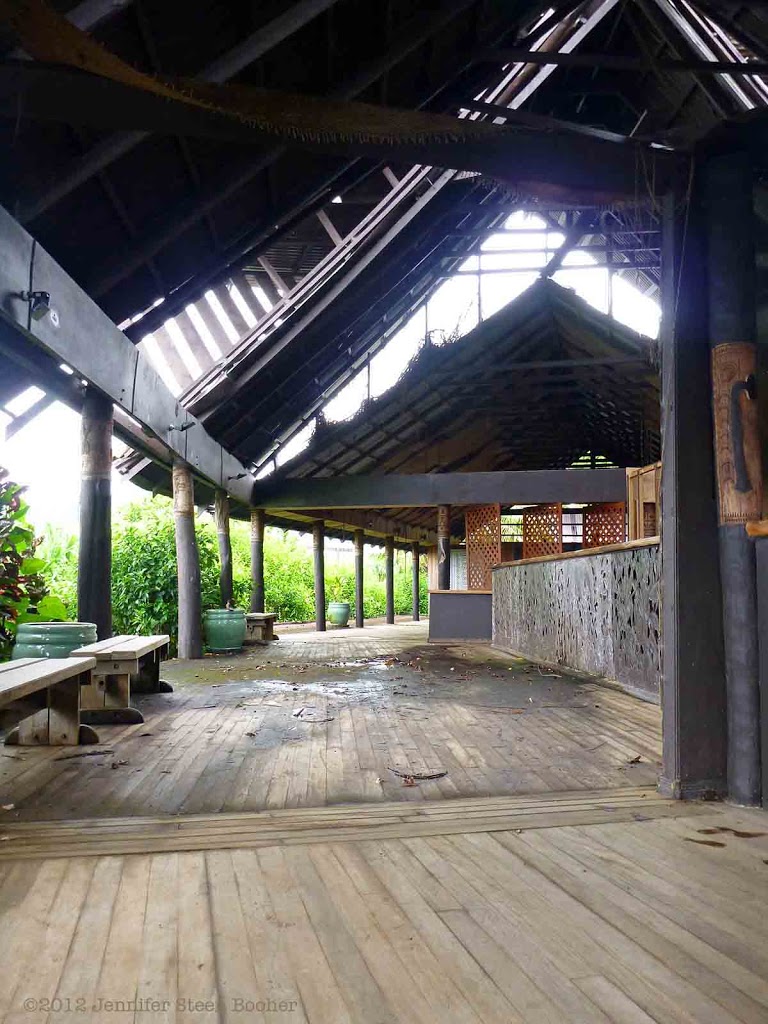
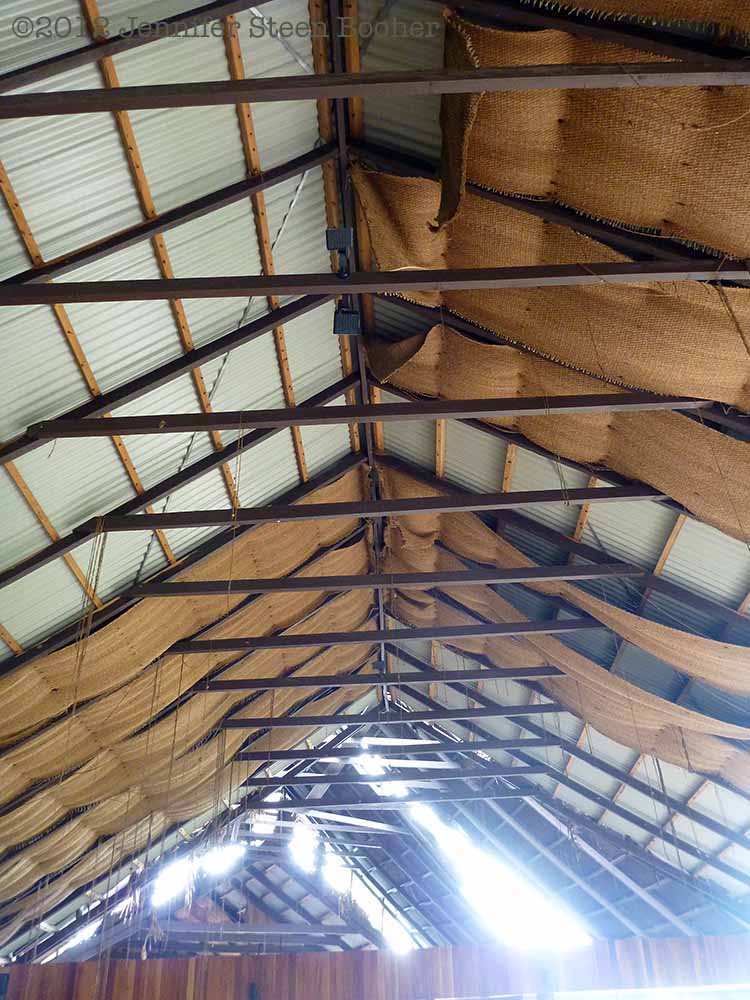
The main building must have been gorgeous when it was new. This was the lobby, I think, with a carved wood bar and cavernous ceilings. Storms have ripped off parts of the roof.

It was very beautiful and very depressing. Such a waste of materials on an island where everything must be brought in at enormous expense … The property is apparently embroiled in lawsuits and tangled in mortgages. It reminded me that Bleak House wasn’t the tremendous exaggeration I thought when I read it in college.
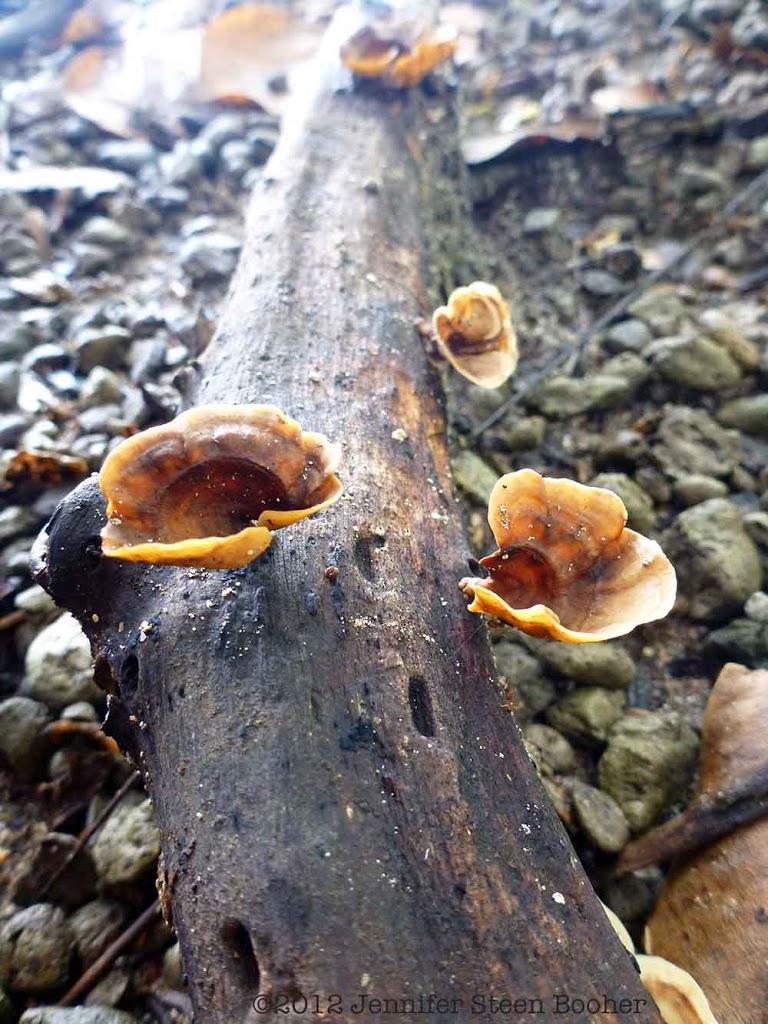
At least the fungi are happy there!
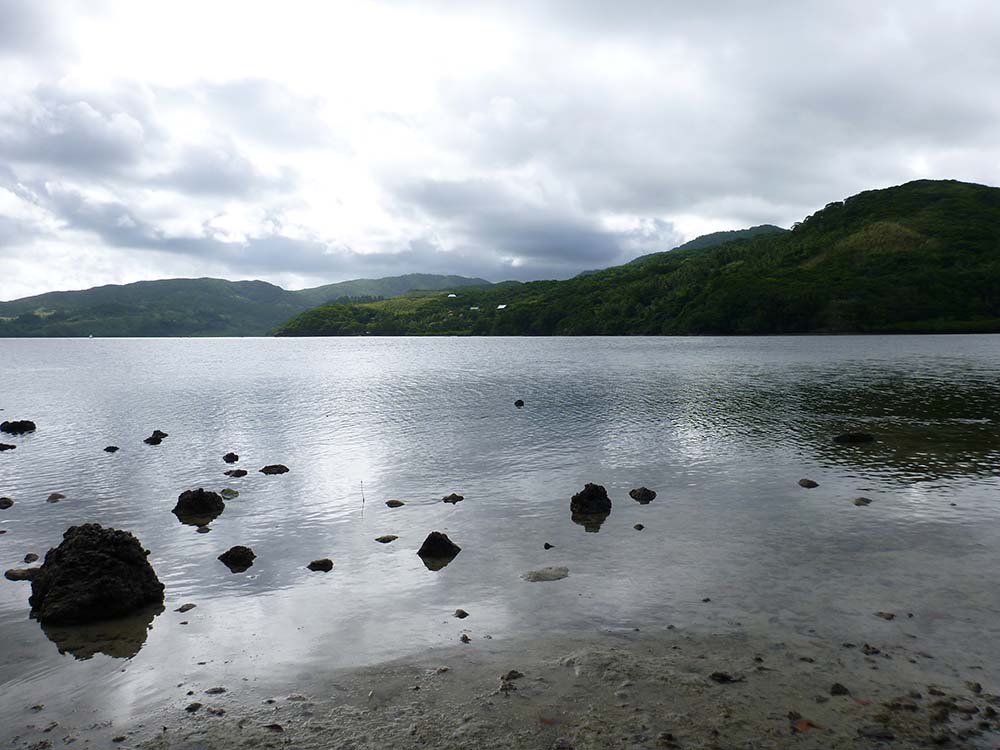
Another day of dramatic clouds and sunshine.
After lunch I explored the mudflats some more. Everywhere I looked there were intriguing creatures.

The fiddler crabs were everywhere, and I’ve got a whole post planned for you about them. They were just too cool to squash in with everybody else.

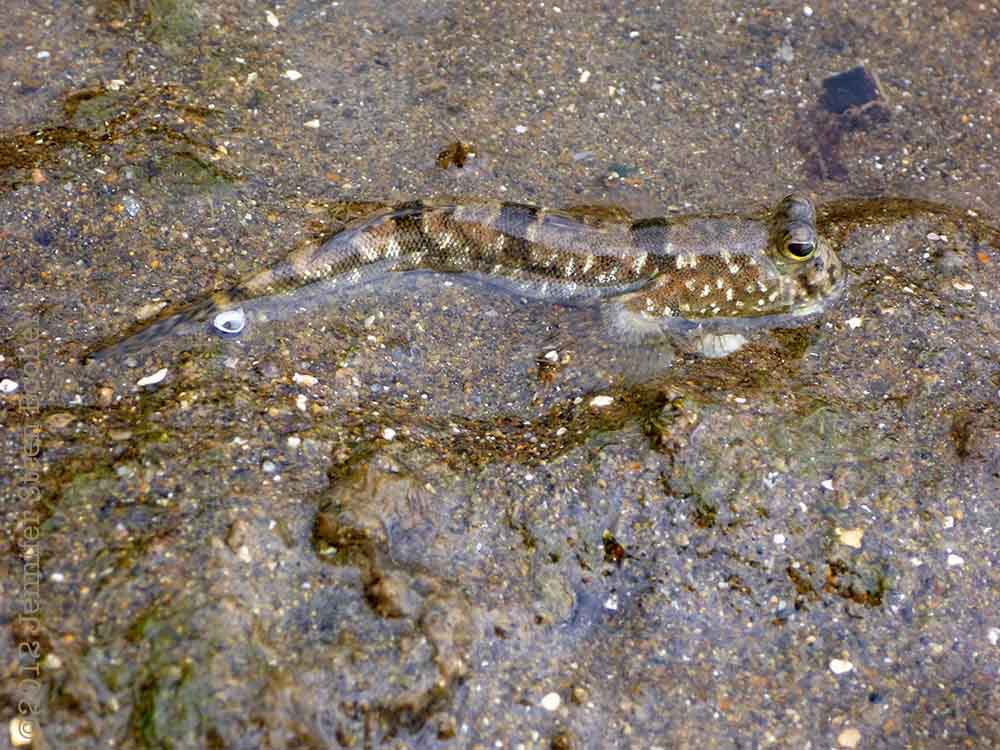
The mudskippers were highly entertaining. These are little amphibious fish, maybe three to five inches long, who hang out in the thin skim of water left at low tide near the creek outfall. When you splash through the mudflats, they skip ahead of you like self-tossing stones.
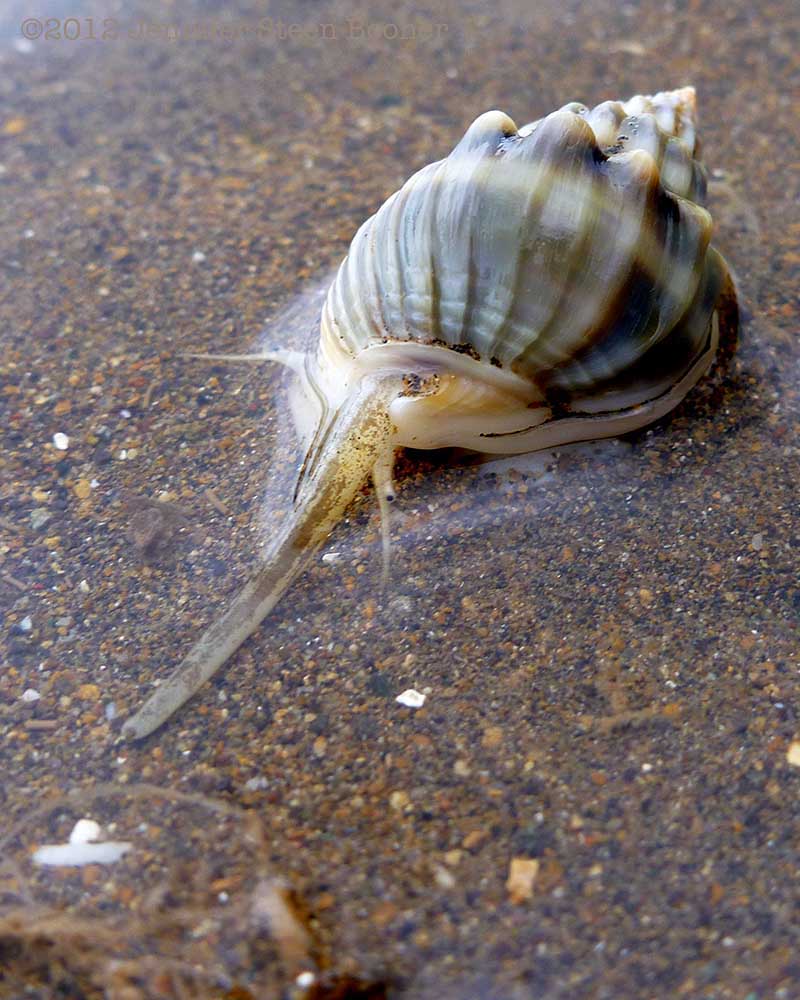
It’s a gastropod and it’s feeding. Now you know as much as I do! You can see how these animals make use of the tiniest bit of water – it’s only a little bit deeper than the diameter of that siphon. I look at the mudflats and think, “The tide’s out, there are only a few puddles there,” but really there is a whole watery microsystem. This is why I love the littoral zone so much. Always with the surprises and the challenges.
Salt-stained tree bark.
Matava, Kadavu; March 14, 2012 (Fiji Beachcombing series No.4)
Matava, Kadavu; March 14, 2012 (Fiji Beachcombing series No.2):   Unidentified shell, bones of a very large fish, Sally Lightfoot crabs (Grapsus sp.), Vutu flower stems (Barringtonia asiatica), ‘mudstones,’ vertebrae of an unidentified fish, Fijian penny.
P.S. For those of you concerned about wildlife: all the still lives were taken in Fiji, everything in them was found dead on the shore, and most of the things I photographed went back on the beach when I finished.  I’ll show you my portable light tent in a later post. Live animals were photographed as they were found and left in place.
Share

Fiji: Tuesday, March 13, Beachcombing Begins

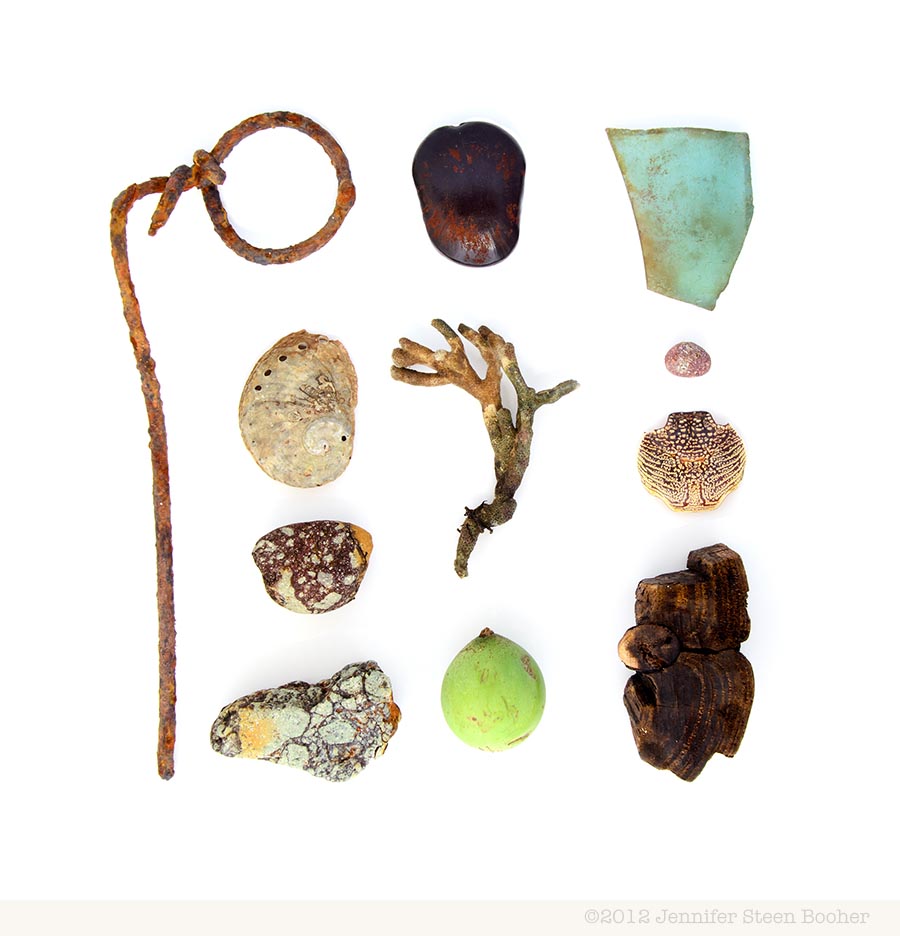
Unnamed point southeast of Matava, Kadavu; March 13, 2012 (Fiji Beachcombing series No.1):    Driftwood, Nerites (Nerita sp.), plastic bottle cap, sea glass, beach stones, Nerite (Nerita cf. lineata), Cone Snails, paper, Calophyllum inophyllum drupe, part of a Spider Conch (Lambis sp.), spinal disks, unidentified corals, Walai vine seed (Entada phaseoloides), interior of a spiral shell.

The coolest things I saw on my first day of beachcombing:

 Rainclouds and sunshine fighting it out over the mountains.

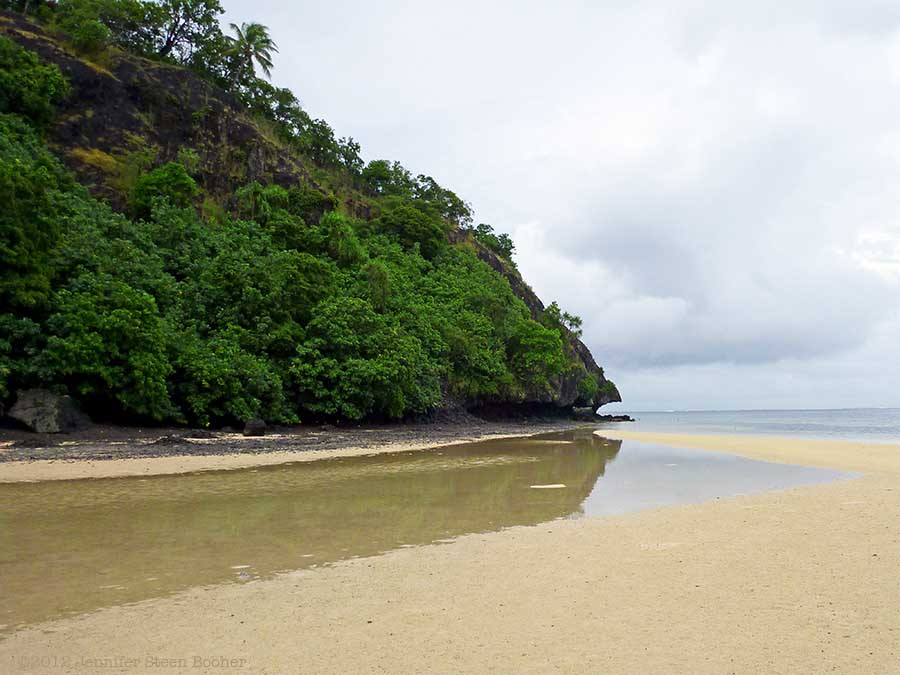
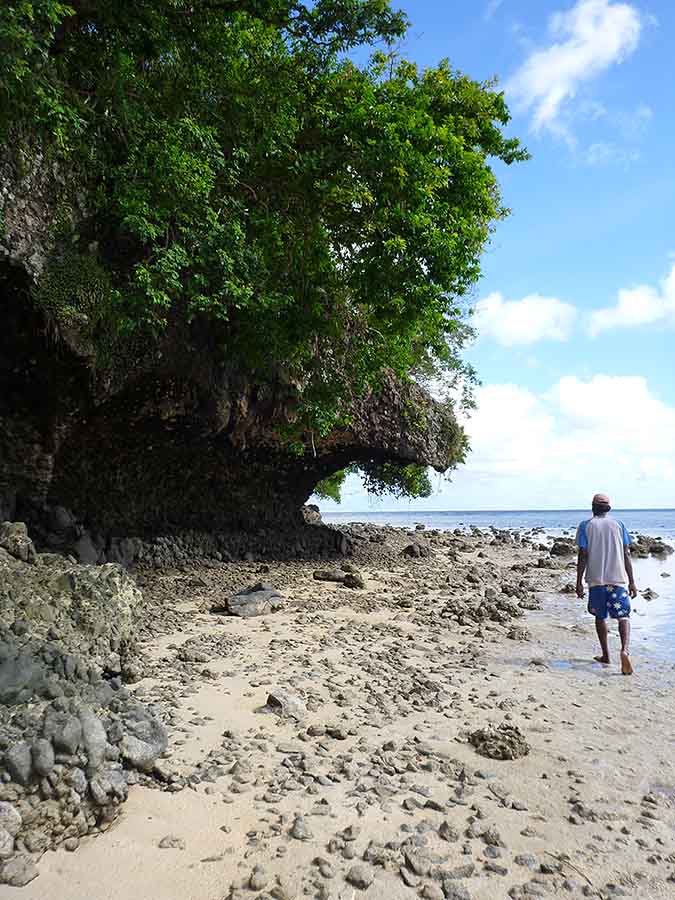
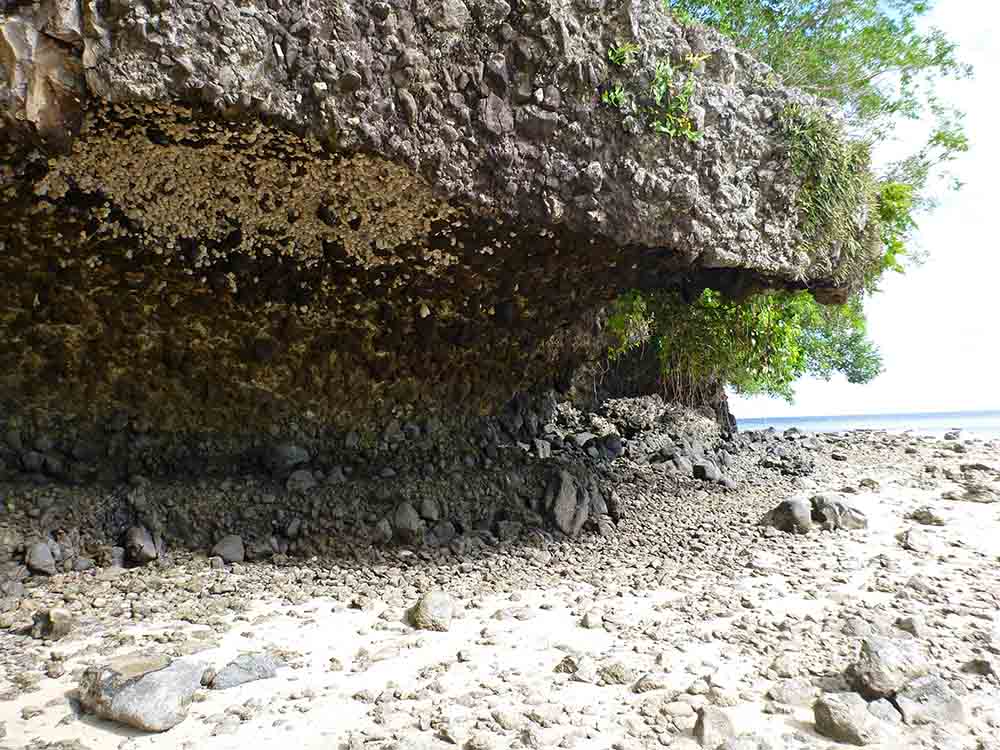
Crazily sculpted shorelines that look like a sedimentary formation of volcanic stones. My brief research seems to show this is called a conglomerate, but frankly I’m still trying to understand the geology here. (Geologic map of Fiji)

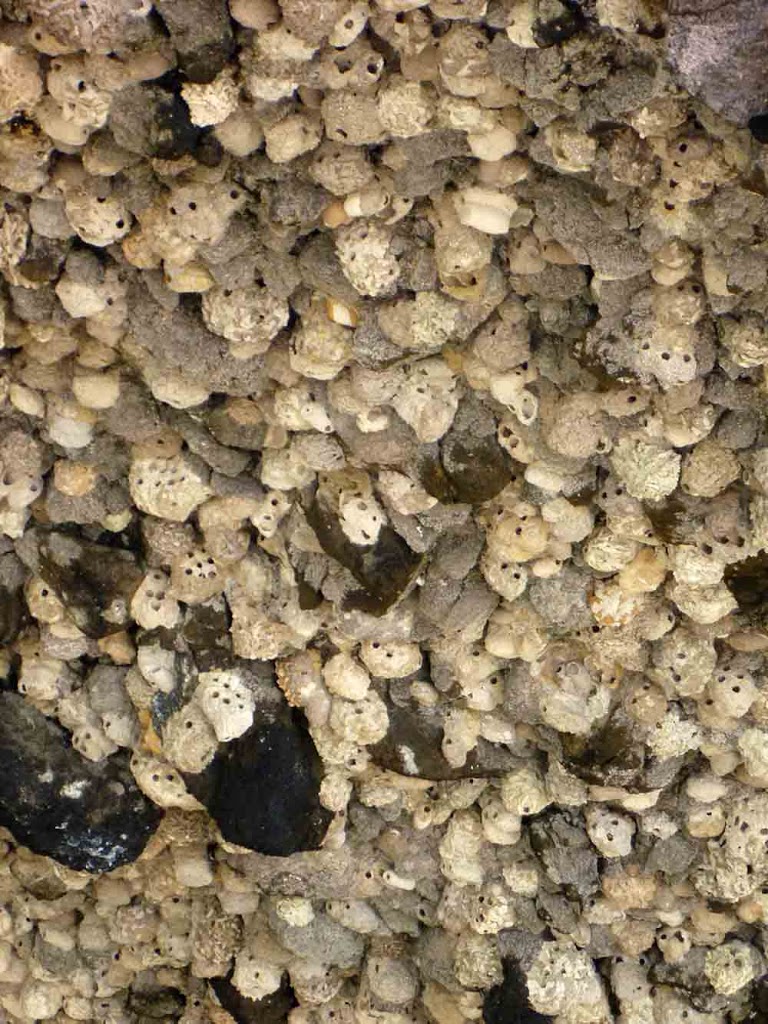
Mud-Dauber Wasp nests in a shallow sea cave. There was no mistaking the loud hum that drew me in to investigate. These wasps are not at all aggressive, unlike the ones I’ve known my whole life. There were a lot of them in our bure who would just fly in and out through the thatched walls as they pleased. It was extremely disconcerting until we realized they were only mildly interested in us. Every now and then one would come and hover at eye level until one of us asked it to go away. They flew so slowly I even walked into them on a couple of occasions! So when I saw this mass:

I didn’t run off posthaste the way I would in North America. I moved in to get a better look at these cool little nests. Even tucked up against the rock like that they must get their feet wet at high tide!

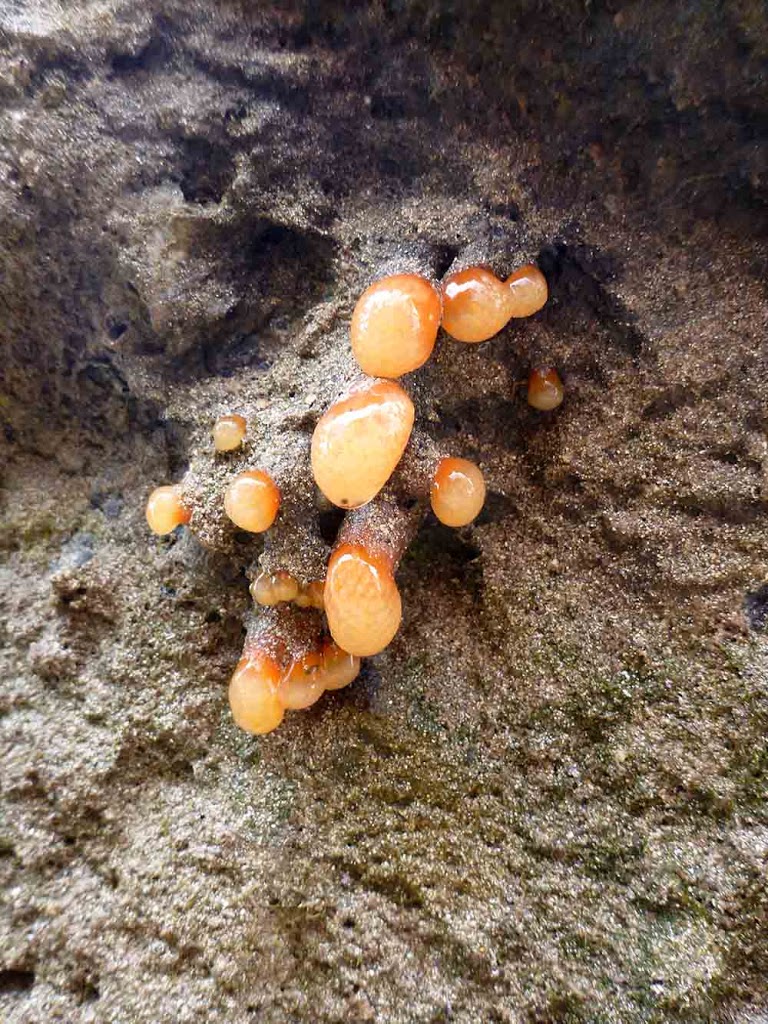
This is some sort of polyp. I showed the photos to one of the dive masters and the language barrier made explanations difficult, but I gather it opens out when underwater, something like an anemone.

I never did identify this shell – it was occupied by a hermit crab so I left it in place.

This is a kind of algae the locals called Dead Man’s Eyeball. It is usually clearer and less green. It is also usually underwater. This one had washed up with the seaweeds.

See the big, oval, dark brown seed in the top photo? I asked Sami, one of the crew, about that. He said they were from the wallai tree, and are called limbi nuts. He also said if you are walking in the forest and get thirsty, you use your machete to slash a wallai tree and water will come out. Unfortunately, I never figured out which were the wallai trees. It could be useful to know. Or I could have completely misunderstood what he was trying to say! Another local, Ta, said the nuts are drilled and strung as anklets for traditional dances. They must make a great percussive noise. Now I can’t find anything about the trees online, so I assume my phonetic spelling must be way, way off. Remember I’m just taking notes while people are talking! Maybe it’s uallei, or welei, or valai… the Fijian accent was new to me… If you know more about this than I do, please chime in with a comment because I’m most awfully curious.

Sami also opened a green coconut for me with his machete. (Those are green coconuts in the photo – green meaning both the color and that they are not ripe.) The milk was effervescent, but a month later I can barely remember the taste. When I finished the milk, he split the nut for me, too, and we scraped the flesh out with shards of the rind. It was soft and almost jello-ish. Nothing like the ripe, old coconuts we get in the stores here, with dark brown husks and woody shells. Wonderful and strange!

January 25, 2014
I’ve finally identified that bean: it’s Entada phaseoloides, and it does seem to be called Walai in Fiji, although it has several other names, and it isn’t a tree, it’s a vine. Here’s a shot of the plant: http://www.flickr.com/photos/dweickhoff/5491307518/ and the seed pods: http://www.flickr.com/photos/dweickhoff/5491304504/

Share

Fiji: Monday, March 12 – Matava Eco-Resort

Well, we finally arrived at the Matava Eco-Resort on Kadavu Island.

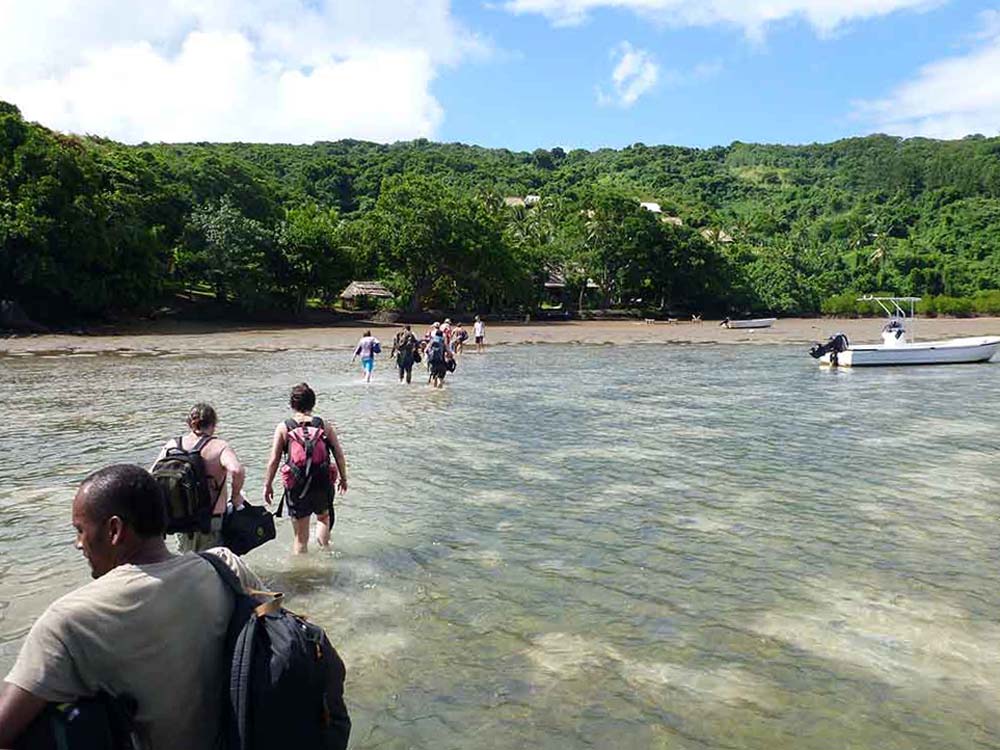
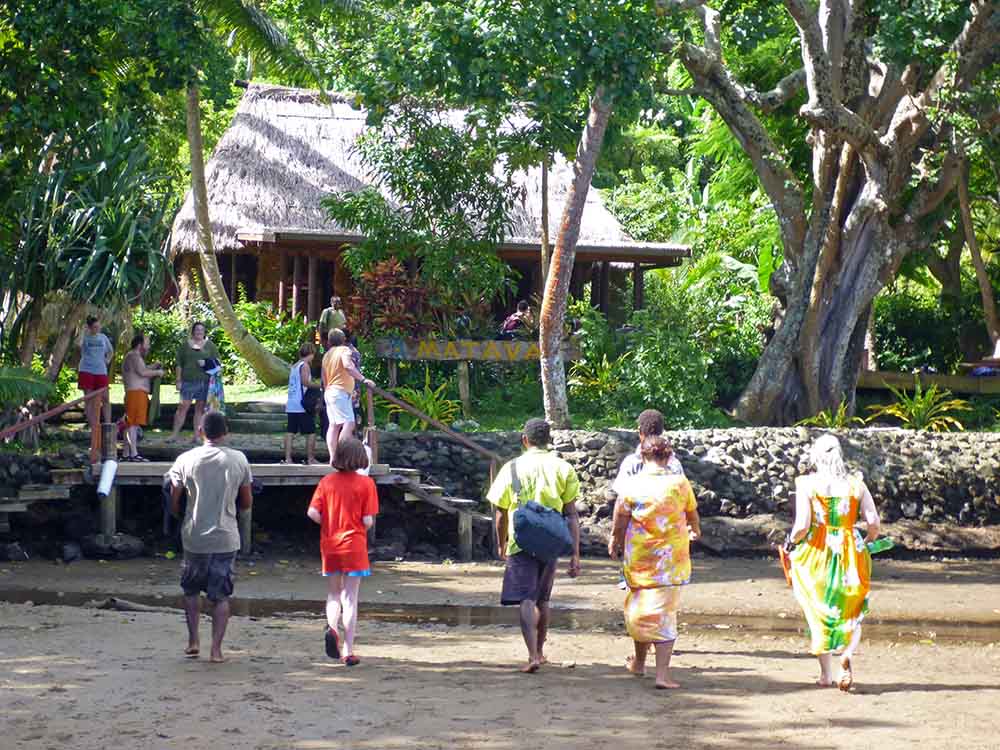
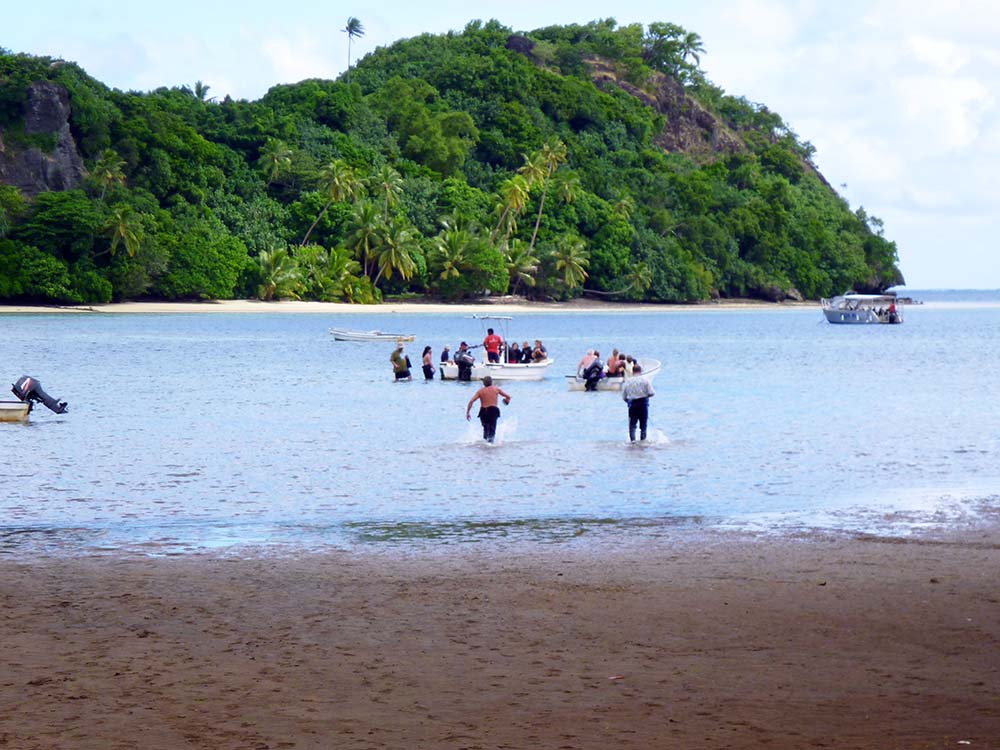
The tide was out, so we waded through shallow water along a narrow path through the seaweed and coral up to the mudflat along the shore. Everybody from the resort came down to help us carry our bags.

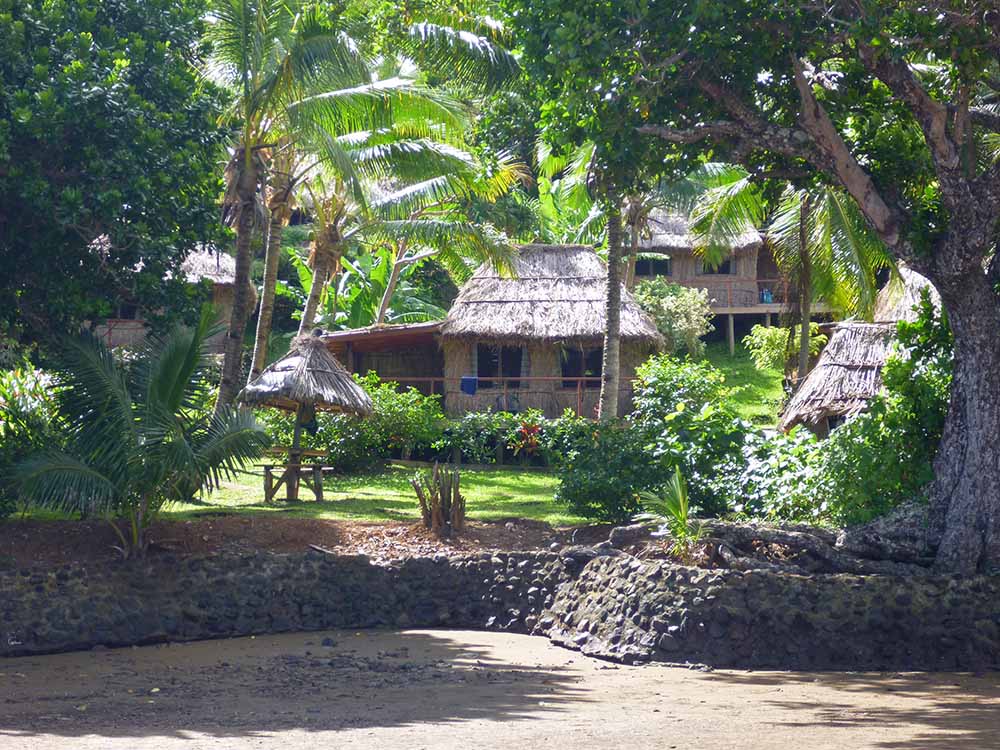
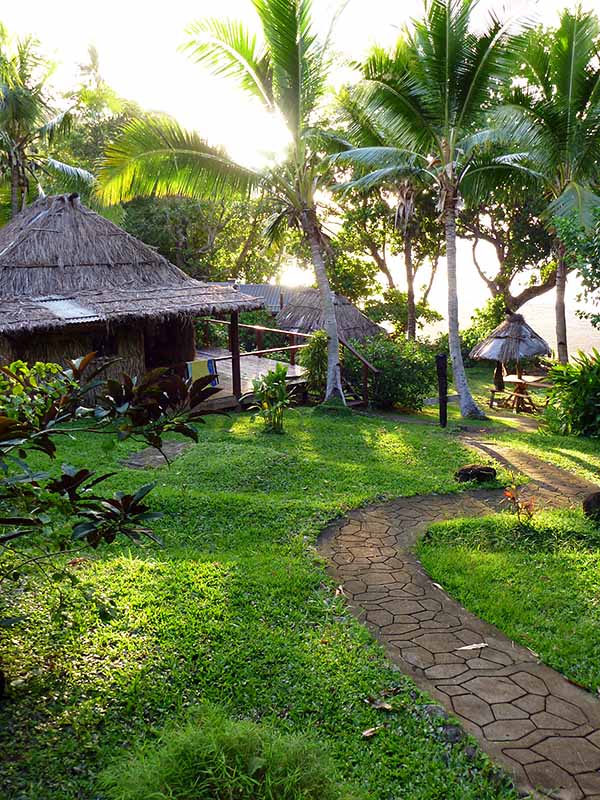
Our first glimpse of the bures we’d be staying in – thatched roofs, thatched sides, wide porches and big windows. Very picturesque.

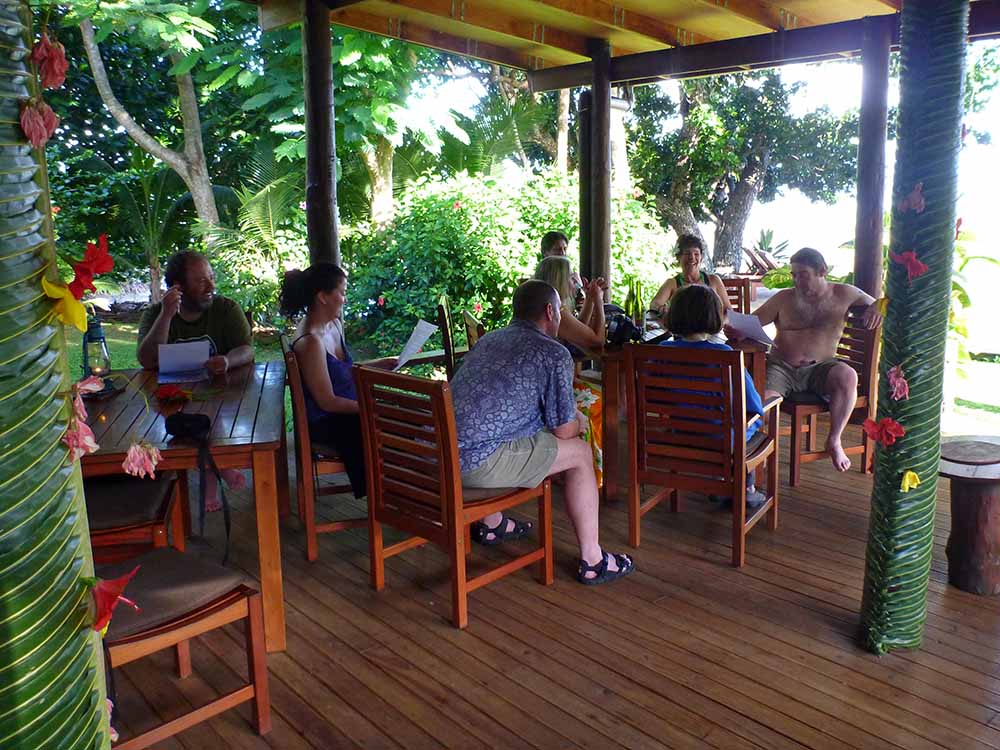
That’s the main bure, where meals are served (and parties are held!)

Reading the ‘user manual’ for the resort – don’t walk under coconut trees, electricity is available from 9am to 5pm (the resort is solar-powered), kerosene lanterns will be provided after dark …

Every houseplant my mother nursed through the New England winters grows wild here.

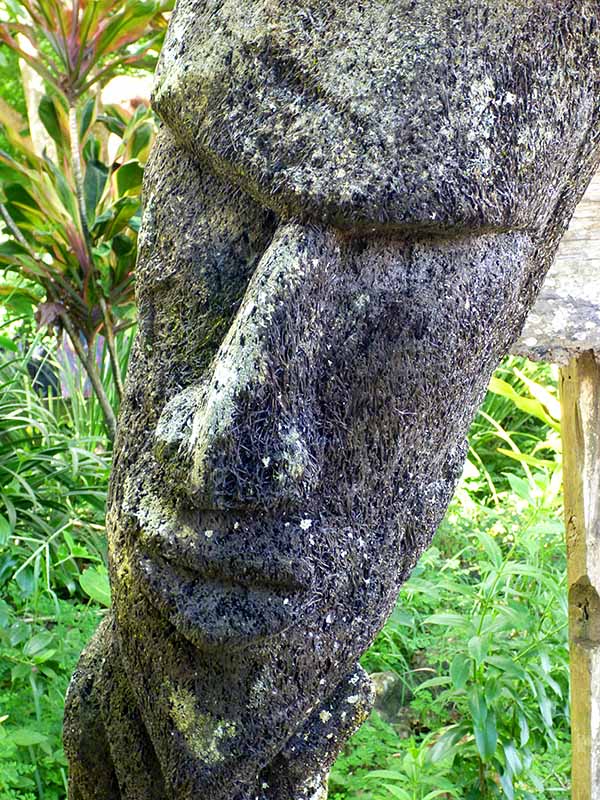
Statues carved from coconut palm trunks stood at each bure.

Finally, a picture of me!

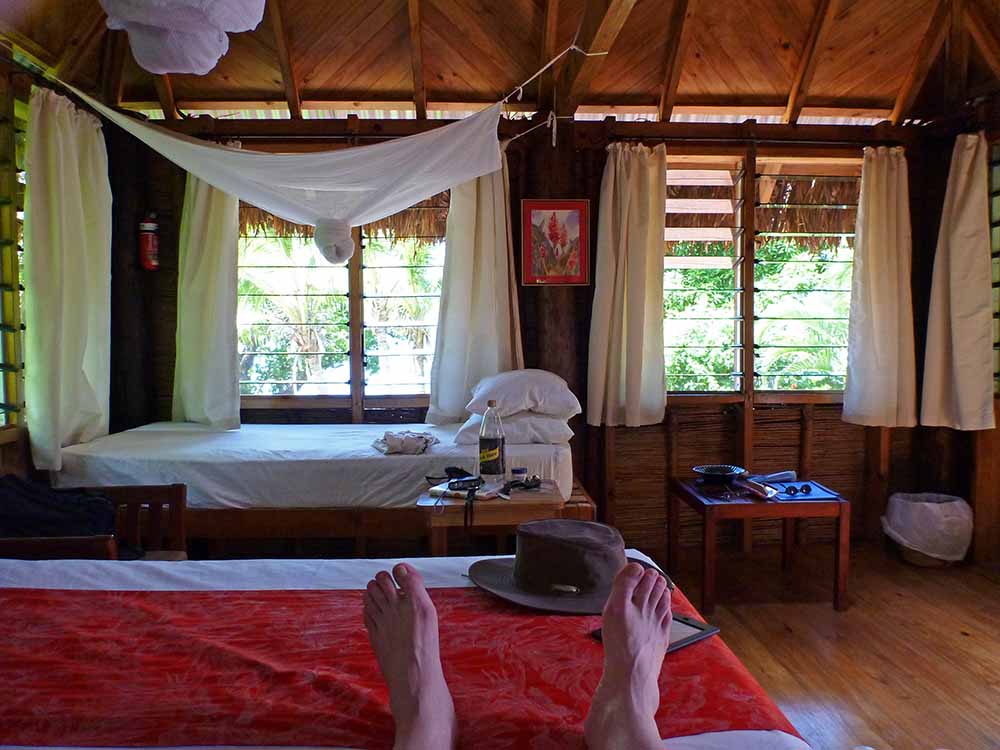
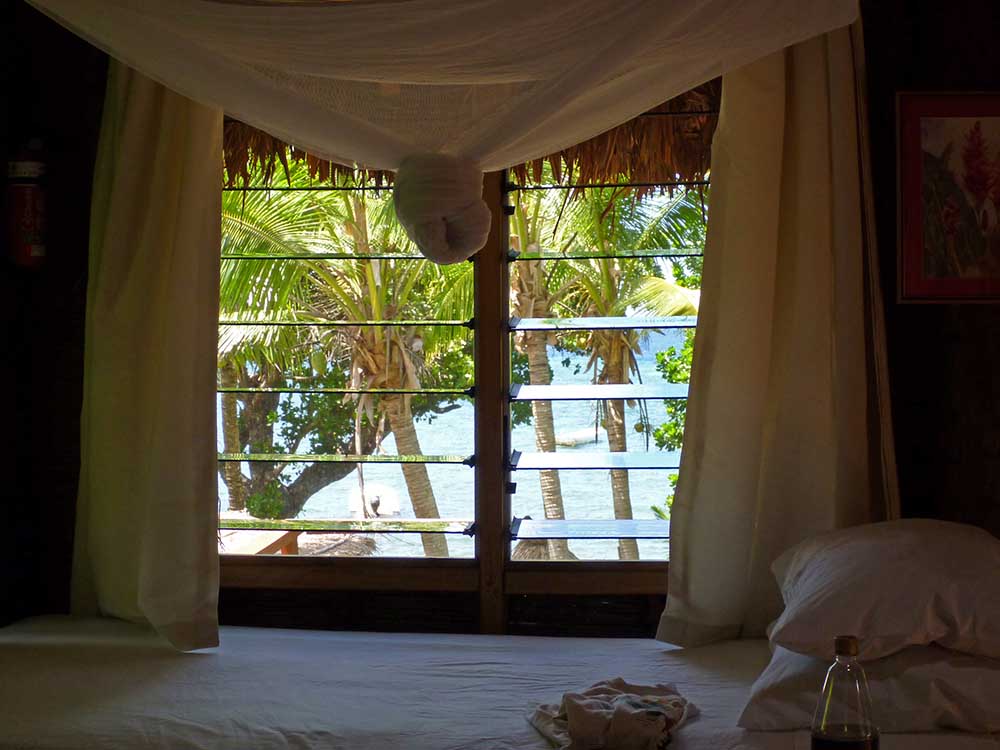
Inside our bure. Plenty of room, just enough ocean breeze to temper the heat, and these were some of the cushiest beds I’ve ever tried. The owners did a great job of balancing ‘eco’ with ‘resort’ – no air-conditioning or fancy shampoos, but plenty of hot water, excellent food, and perfect beds. My daughter said it was like camping … except comfortable. I couldn’t manage to properly expose both the window and the interior, so the shot above is the view from my feet

 … and here’s another shot of what I saw through the window.

Tomorrow … the beachcombing begins!

Share