Jennifer Steen Booher

Platja San Sebastià, Barcelona, Spain; May 20, 2014

BarcelonaNo2.jpg

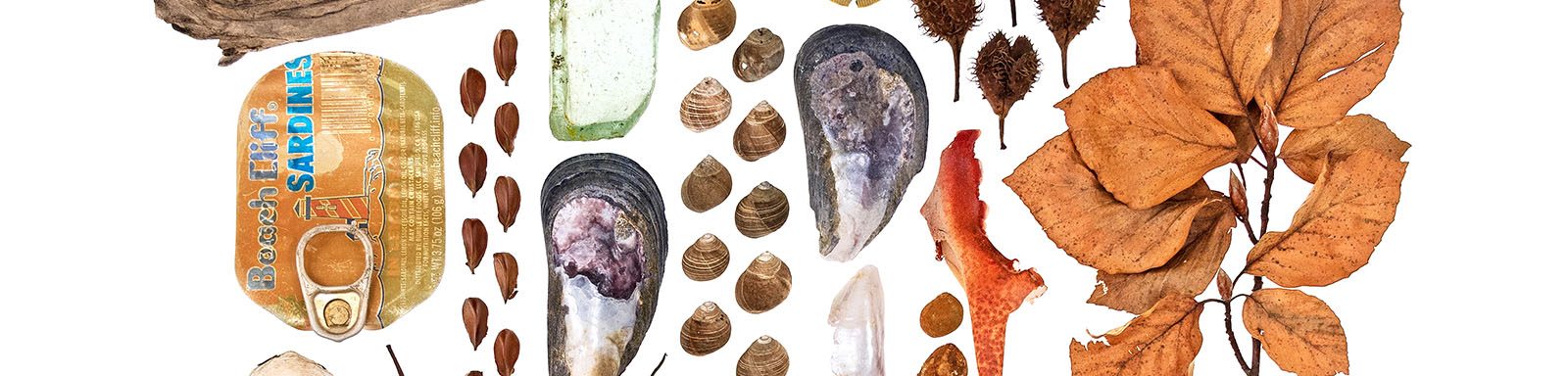
Seabird feathers, brick, driftwood, granite beach stones, mussel shells (prob. Mytilus galloprovincialis), balloon, European Green Crab (Carcinus maenas), bottle cap, sunflower seeds, pottery, sea glass, sugar packet, plastic army man, Euro penny, rose petal, limpet with Coralline and seaweed, clam shell, Toad or Lyre crab (prob. Hyas species)


I’m sorry for all this jumping back and forth in time, but real life keeps throwing fresh, interesting experiences at me before I’ve finished sharing the older ones with you. As far as dilemmas go, it’s a pleasant one,  but it offends my logical mind. Today’s post leaps back to Barcelona on May 20 – I’ve just finished the final revisions on the still life photo from that day’s beachcombing. Looking at the map in my last post on Barcelona, Platja San Sebastià is just north of Platja Barceloneta, and I’m not really sure where one stops and the other begins.

IMG_0976

It was cool, humid, overcast, and very windy. I was on the beach by about 10am, which is the crack of dawn by Barcelona standards, so there were very few people out. There was some interesting activity, though, which answered several questions from the last Barcelona post:

IMG_0966This crew is laying out boardwalks across the sand from the esplanade to the high tide line. Other crews were busy grooming the beach, mostly burying the trash but also removing it. Do you remember the questions I posed last time:   1) Why was the sea glass so small?   2) Why was there no “raw” sea glass (i.e. broken glass.)   3) That’s a very odd mixture of stones. What is the geology here?   4) That big white thing at the top is a cuttlebone, the internal structure of a squid. Why have I never found one of those on the shore in Maine?

I think the beach grooming explains #2.

IMG_0968

I think that #1 and #3 have a similar cause – these are artificial beaches. As nearly as I can tell, the shoreline of Barcelona was originally marshy, but by the end of the 19th century the marshes had been drained to provide farmland and eradicate malaria. The current beaches were apparently built for the 1992 Olympic Games, although I can find nothing about the nature of the shoreline in the years between. The sand is replenished regularly, which explains why all the sea glass is so small – it must get polished during the excavation and transportation of the sand, and also why there is such a peculiar assortment of beach stones – some must be washed in from offshore, while others are imported with the sand. If, no when, I get back to Barcelona, I will make a point of visiting the Museu Blau, a new science museum which I understand houses the collection of the former Museu de Geologia. Perhaps I can find more information about the changes in the shoreline there.

And I don’t have an answer to #4, unless perhaps the cuttlebones I found on Platja Barceloneta were discarded by fishermen just offshore, and there are fewer people fishing for squid here in Maine, or they don’t clean their squid til they get home… But that’s a wild guess.


P.S. Did you see the miniature soldier in the last photo? He shows up in the still life, too.


Share

21 Broad Street, Nantucket

rarebrick_20140630_3726

Photo ©2014 Rare Brick

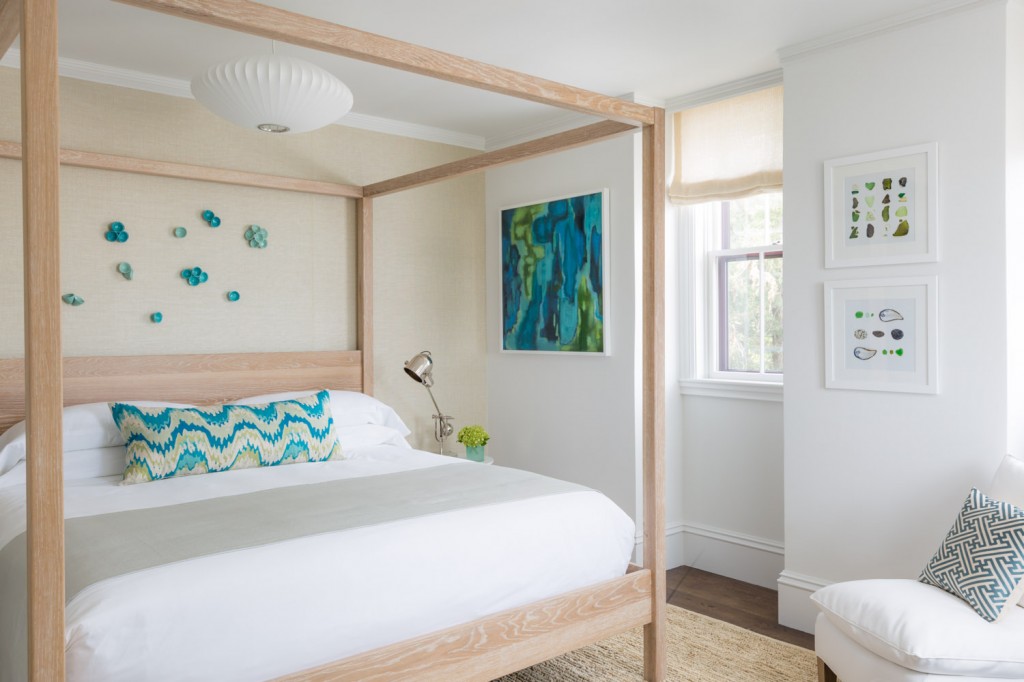
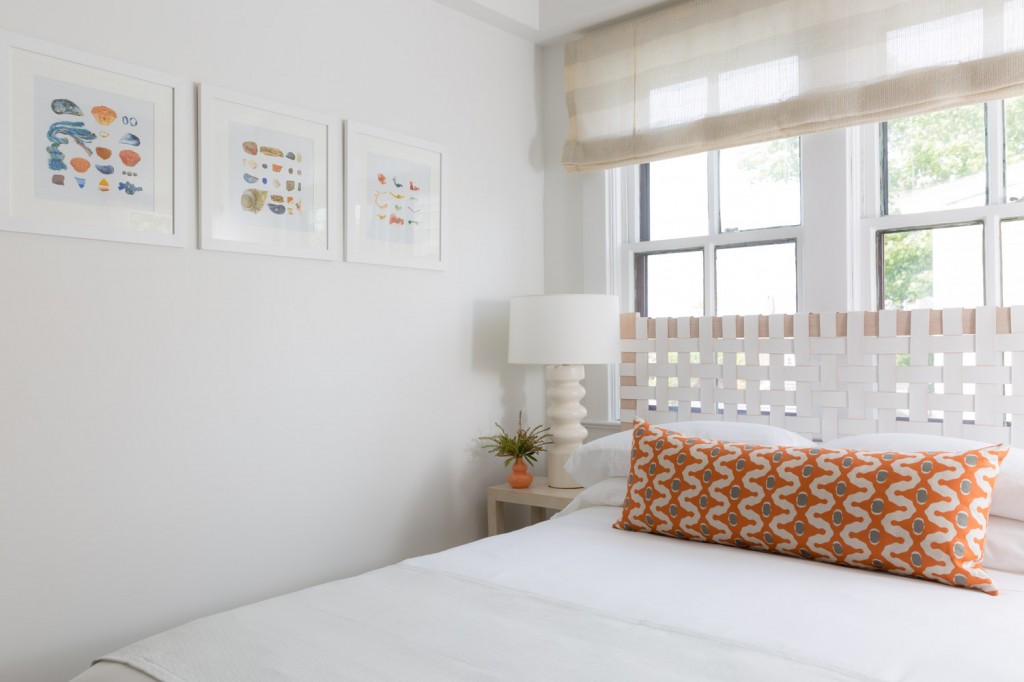
Just got photos of this fabulous hotel on Nantucket Island called 21 Broad Street. I love it! The bright, sunny, white rooms with vividly color art and fabrics… but wait, some of that vividly colored art looks familiar, doesn’t it? The interior design is by Rachel Reider Interiors of Boston, who used 36 of my photos in the bedrooms of the newly renovated hotel. It was such a treat to work with them!

Photo ©2014 Rare Brick
©2014 Rare Brick

Just look at those wonderful chandeliers:

Photo ©2014 Rare Brick

Only three years til my 25th wedding anniversary – this looks like a nice place to celebrate, don’t you think?

Share

Frozen Charlotte

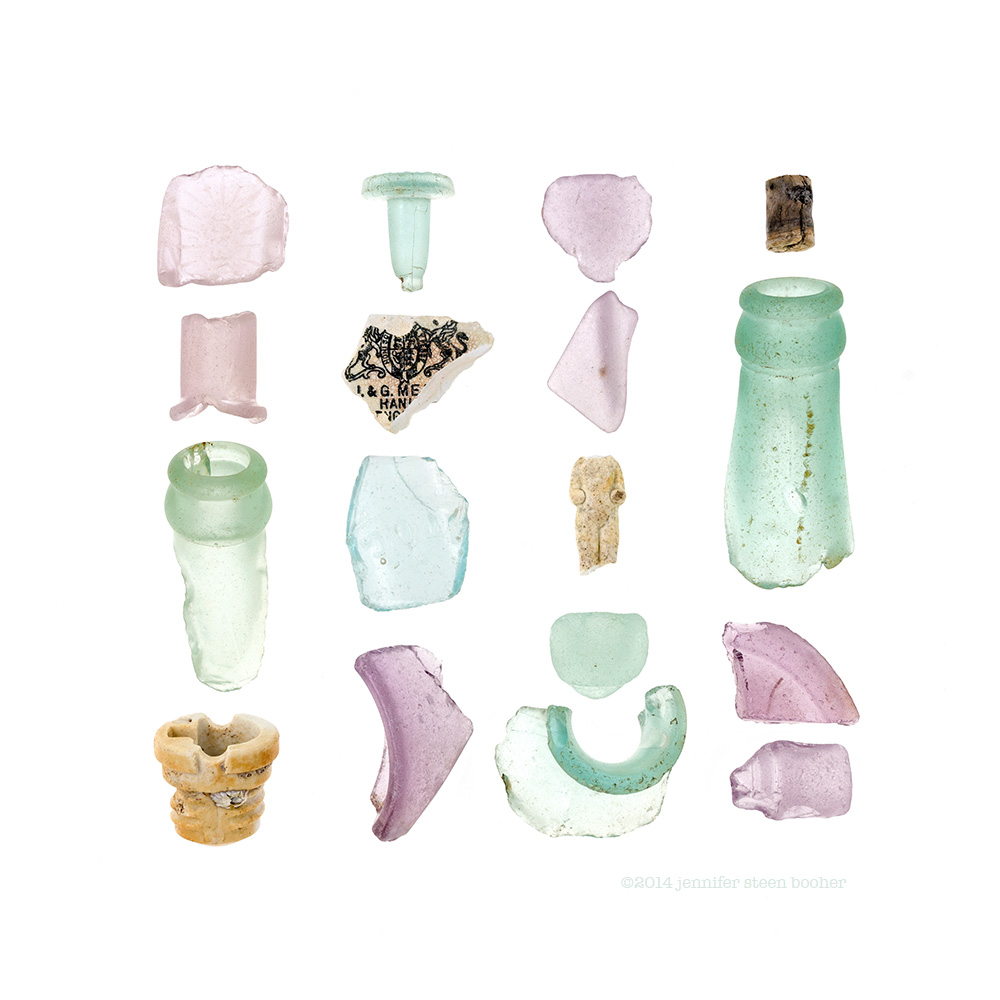
Kristi_web©My friend Kristi and her husband Matt own the most gorgeous inn right on the shore here in Bar Harbor, so of course she’s a beachcomber, too. About a week before Christmas, Matt had the (ahem) brilliant idea to commission me to do a still life of Kristi’s finds, and to make a long story short, I’ve just finished it. I love the colors of sea glass she’s found – those purples take decades to form. Most purple sea glass starts out clear, and the manganese in the glass very, very slowly turns purple with exposure to sunlight (to UV rays, specifically.) Sea glass is all about chemistry and patience! The star of this piece, though, is the tiny, headless china doll. She’s a type of doll popular in the late 19th century known as a Frozen Charlotte: the name comes from a ballad about a young girl named Charlotte who refused to wear a cloak over her party dress and consequently froze to death. Cheery little ditty!
Share

Acadia Photo Safari, Seal Harbor, Maine

_DSC1198_web©

Howie Motenko and Brenda Beckett are old friends with many talents. Howie has been leading photo tours here on Mount Desert Island for a few years now, and they’ve just finished renovating a lovely old Ellis 28-foot picnic boat with room for 6 passengers. The brass gleams and the teak glows, Brenda captains the boat, and Acadia Photo Safari is heading out to sea!

_DSC1111_web©

We joined Howie and Brenda for a sunset cruise. The tour starts at the Seal Harbor dock, which is a treat in itself – Seal Harbor is lovely, so leave yourself a little time to walk on the beach before you go. First we visited the seal colony on Bunker’s Ledge. A few seals slid into the water as we approached, but most of them couldn’t be bothered, too busy lolling around in the sun. When they are in the water, the sleek wet heads remind me of swimming Labrador Retrievers. A few gulls drifted around, and a bald eagle swooped in and perched on the monument. Brenda does an amazing job of getting in close (as close as one can without hitting a rock or scaring the seals) and holding the boat steady. She took several passes to make sure everyone on each side of the boat got a clear view. You can see I found it hard to get crisp shots here, what with the rocking of the boat, my telephoto at its farthest extension (makes it harder to focus), and the evening light. Howie gave me a lot of good advice: next time I’ll crank my ISO to 800 or 1200 and shoot with a wide open aperture.

_DSC1091_web©

When we had enough photos of the seals, we headed toward Islesford on Little Cranberry Island, but were distracted by a pair of Arctic Terns (Sterna paradisaea) who landed on a can just as we motored past. Brenda promptly backed the boat up and held her steady as the rest of us clicked away. This is the beauty of joining a photo-oriented tour – unlike the larger nature cruises, which hold to a set course, Captain Brenda moves the boat into ideal positions, takes multiple passes around a subject, and is in no hurry to move on from an intriguing subject. What a treat!

_DSC1224-2_web©

_DSC1215_web©

_DSC1209_web©

Eventually we moved on to the harbor at Islesford. We’d lingered over the terns for so long that the light was slanting fairly low, and we wanted to catch the sun setting over Mount Desert Island, so we just took a quick walk over the dock.

_DSC1243_web©

These are full of lobsters waiting to be sold:

_DSC1267_web©

Barrels of chum: herring used as bait in the lobster traps:

_DSC1282-web©

_DSC1288-web©

The entrance to a lobster trap:

_DSC1303-web©

Heading back toward Seal Harbor, we stopped to photograph the osprey nest at the tip of Sutton Island. The setting sun and the orange lichen made the granite cliffs glow.

_DSC1405-web©

_DSC1392-web©

When you go (because you must!) bring your longest lens and plenty of memory cards (or film if you roll the old ways) – I took almost 500 photos, and as usual tossed more than half as soon as I got home. I was humbled by how long it took me to get the hang of shooting from a rocking boat. Half my seal photos were of the sky! You’ll also want long pants and a warm jacket because the temperature drops quickly as the sun sinks and the wind shifts over the Gulf of Maine. Non-photographers are welcome – my husband had a fabulous time chatting with Brenda, drinking red wine while watching the seals and the photographers at play. At the risk of sounding like an ad, note that Howie doesn’t care how fancy your gear is and will teach you to use whatever you’ve got: one of the people on our trip was shooting with an iPhone, while another had a DSLR and lens combo that made mine look amateur.


_DSC1332-web©

As we headed for home, Howie brought out glasses of wine, grapes, cheese, crackers, and cups of hot tea, and we toasted the sunset between sips of wine and clicks of the shutter.


Share

Platja Barceloneta, Barcelona, Spain; May 18, 2014 (Barcelona Beachcombing series No.1)

_DSC1471-web©

Cuttlefish bone (probably Sepia officinalis), clam shell (possibly Callista chione), sea glass, basalt beach stone, shell fragment, various unidentified beach stones (that might include marble and schist), clam shells (unidentified species), Green Crab shell (Carcinus maenas), plastic bottle top, plastic-coated wire, driftwood, metal bottle cap with pull-tab, charred wood, and mussel shell (probably Mytilus galloprovincialis).


On Sunday morning everyone slept late, and I seized an hour to go beachcombing. We were staying in an adorable apartment at the edge of the Barri Gótic (the Gothic Quarter), only a block away from the water. I thought it would be relatively simple to pop out to the shore. Knowing I’d have to move fast, I left my (very heavy) camera at home, planning to use my iPad mini to get quick shots of the beach for this blog. I set off at a trot, holding my crumpled map out like a perfect caricature of a lost tourist. As it turned out, yes, we were right near the water, but not so close to the beach. There were a large marina and a small neighborhood (Barceloneta) between me and a beachcomb-able shoreline. It was a question of getting from Point A to Point B as quickly as possible.

Screen Shot 2014-06-28 at 10.06.28 PM

I got distracted almost immediately. The marina is lined with a broad promenade, and on Sunday morning the promenade was lined with musicians, craftspeople, and performers. I trotted past all temptations, very aware that half my available time would be used up just getting to and from the beach, but the Castellers stopped me in my tracks. Catalonia is famous for (among other things) these groups of people who build themselves into human towers. I can’t explain. Just watch!


Finally, sweaty and puffing, I made it to the beach: Platja Barceloneta, I later discovered. I looked to the left (back toward the city):

web-0884

And I looked to the right (out toward the point):

web-0887

And I started beachcombing!

IMG_0908

It was windy and a little overcast, and very very urban. Not in a bad way, mind you, but I’m used to having to climb over ice-covered granite boulders to reach the shore here in Maine, and for seven months of the year I’m usually the only person in sight. In Barcelona, there’s a very civilized esplanade lined with little restaurants (that red box at right is the back of an ocean-facing café.) I noticed a few other differences about city beachcombing. Pigeons outnumbered seagulls, for starters. People sitting on the beach were checking their smart phones. And the tide line was marked by cigarette butts, not seaweed.

IMG_0959

There was a surprising amount of sea glass, most of it smaller than a nickel, in lots of colors – teal, emerald, clear, blue, even a few itty bitty red pieces that didn’t make it into the final photo. Here’s a shot of my still-damp haul after I rinsed it and laid it out on the apartment counter:

IMG_0924

There were a few strange things about what I found. I think I figured some of them out over the next couple of days (and I’ll tell you in my next post), but here’s the list:

1) Why was the sea glass so small?

2) Why was there no “raw” sea glass (i.e. broken glass.)

3) That’s a very odd mixture of stones. What is the geology here?

4) That big white thing at the top is a cuttlebone, the internal structure of a squid. (I found two of them, but this one smelled much less revolting than the other.) Why have I never found one of those on the shore in Maine?

5) What, no doubloons? Nuts.


And the very best thing about urban beachcombing? I’d only had an hour for the whole adventure, and of course I ran late … so I took a taxi home!


Share

Rabbit Rabbit

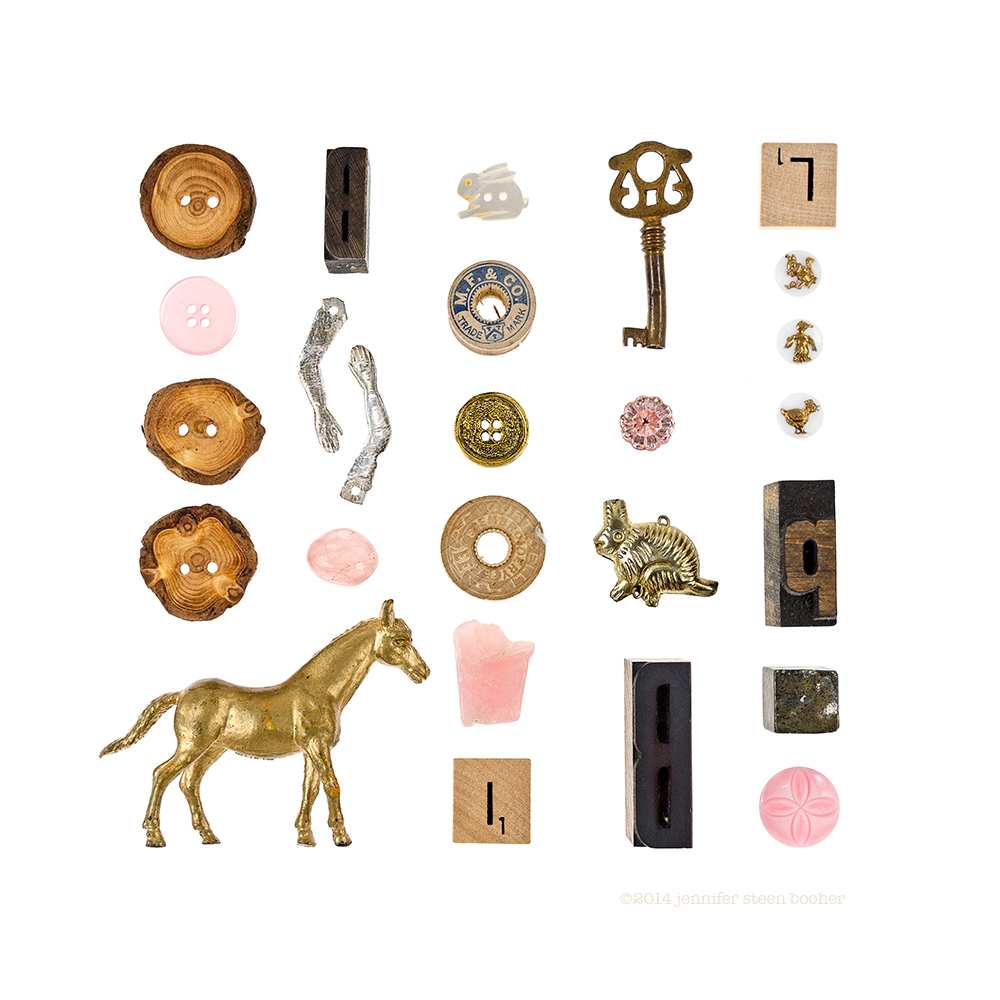
RabbitRabbit2_web©This feels like a birth announcement: The Jealous Curator and I are delighted to announce the arrival of twins! (Twin photographs, that is.) Maybe you remember the package of beautiful bits that Danielle sent me a few posts ago for this collaboration? Allow me to introduce the final photographs: Rabbit Rabbit (above) and Letter Dance (below.) I think Danielle’s favorite is Letter Dance, but I just love that gold horse in Rabbit Rabbit. And in Danielle’s own post about the collaboration, she tells us where some of the objects came from and why they are important to her. These two works of art are very exclusive, as they are only available in The Jealous Curator’s shop on Great.ly.

RabbitRabbit1_web©I know I should have waited and made this the first post of a new month, but that’s almost two weeks away and I couldn’t wait to show off my newborns!

Share

La Boqueria market, Barcelona

Mercat de Sant Josep de la Boqueria, la Boqueria, Barcelona, Spain, Espana, Catalonia, Catalunya, fish, market, mercado

ALERT: lots of photos of dead fish and animals ahead. Please skip this post if you are a vegetarian or squeamish.

Mercat de Sant Josep de la Boqueria, la Boqueria, Barcelona, Spain, Espana, Catalonia, Catalunya, fish, market, mercado, shellfish, clam, clams

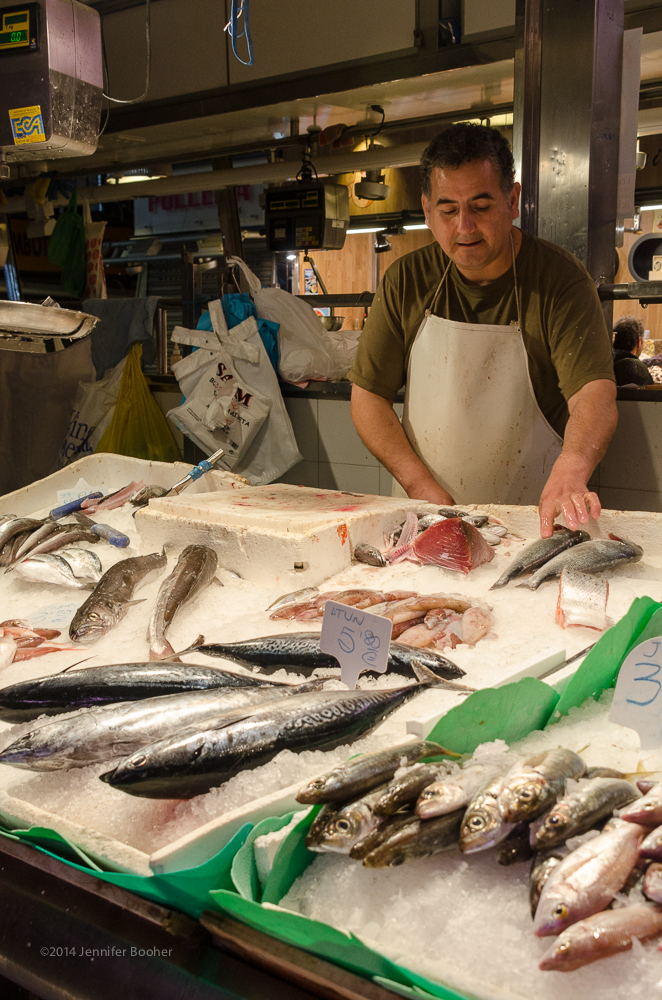
Mercat de Sant Josep de la Boqueria is a cavernous 19th-century Art-Nouveau-ish structure just off Las Ramblas, on a site which has been a market since the 13th century. According to Wikipedia, it has housed mainly fishmongers and butchers since at least 1826 (hence my warning at the beginning of the post.) We dashed through around 5 in the afternoon, gathering ingredients for that night’s dinner (and snapping photos while discussing menu options.) Many of the booths had already closed, but several fruit stands and a handful of butchers and fishmongers were still open.

There were butchers slicing up tripe, but we weren’t in the mood for tripe:

Mercat de Sant Josep de la Boqueria, la Boqueria, Barcelona, Spain, Espana, Catalonia, Catalunya, meat, market, mercado, butcher, shop, tripe, chopping

and none of us had any idea how to prepare a sheep’s head:

Mercat de Sant Josep de la Boqueria, la Boqueria, Barcelona, Spain, Espana, Catalonia, Catalunya, market, mercado, caps de xai, sheep's head, butcher, shop

there were one million different kinds of chile peppers:

Mercat de Sant Josep de la Boqueria, la Boqueria, Barcelona, Spain, Espana, Catalonia, Catalunya, chile, pepper, string, strand, spice, spices, market, mercado

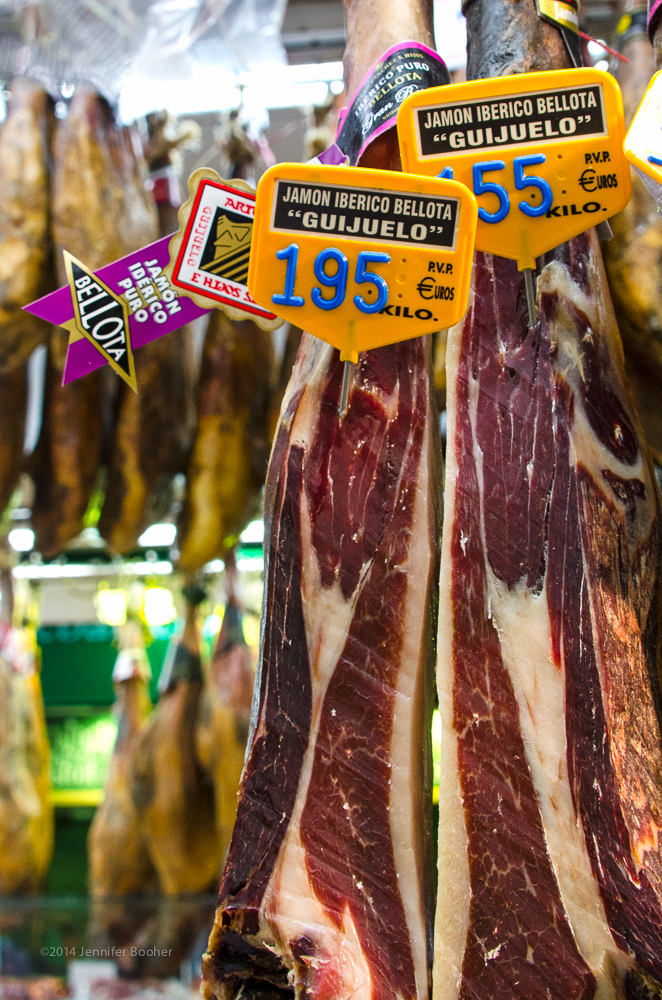
jamón ibérico at a variety of price points (all of them quite high):

Mercat de Sant Josep de la Boqueria, la Boqueria, Barcelona, Spain, Espana, Catalonia, Catalunya, jamon, jamon iberico, ham, Spanish, Iberian, market, mercado

and an amazing array of seafood:

Mercat de Sant Josep de la Boqueria, la Boqueria, Barcelona, Spain, Espana, Catalonia, Catalunya, fish, market, mercado, fishmonger, seller, slicing, gutting, cleaning

Mercat de Sant Josep de la Boqueria, la Boqueria, Barcelona, Spain, Espana, Catalonia, Catalunya, fish, market, mercado, fishmonger, seller, slicing, gutting, cleaning

Mercat de Sant Josep de la Boqueria, la Boqueria, Barcelona, Spain, Espana, Catalonia, Catalunya, fish, market, mercado, squid, calamar, calamari

Mercat de Sant Josep de la Boqueria, la Boqueria, Barcelona, Spain, Espana, Catalonia, Catalunya, fish, market, mercado, fishmonger, seller, mussel, mussels, mejillon, musclo, Galicia

Mercat de Sant Josep de la Boqueria, la Boqueria, Barcelona, Spain, Espana, Catalonia, Catalunya, fish, market, mercado, fishmonger

In the end we decided it had been a long day and no one wanted to cook, so we bought bags full of ripe fruit (cherries, figs, peaches, and watermelon), sausages rolled in rosemary, manchego cheese, and an assortment of savory pastries that we cut up and served as tapas.

Mercat de Sant Josep de la Boqueria, la Boqueria, Barcelona, Spain, Espana, Catalonia, Catalunya, market, mercado, bakery, pastries, pasties, meat pies

Photography note: the lighting is a mix of fluorescent and incandescent, which makes color-balancing the photos a nightmare. I was rushed, so had to spend a lot of time fixing color in Lightroom. If you go, leave plenty of time so you can pay attention to the light sources! My best tip is one I picked up from one of the ten-year-old boys traveling with us – he showed me the shots he had taken on his Dad’s iPhone, all, obviously, at a ten-year-old’s eye level. He was looking right into the fishes’ mouths! I totally stole his viewpoint for some of these shots. Thanks, Gabriel!

Share

A very small tree

_DSC1462-web©

[Interrupting the Spanish travelogue because life is hurtling along and I’m easily distracted.]

The only part of my garden that gets weeded regularly are the edges by the front walk. As I go in and out of the house I notice weeds, pull them, and usually leave them on the sidewalk as I run off to my appointment. I was once a devoted gardener, now I am a distracted gardener. On my way in tonight I spotted this oak seedling and gave it a tug – it came up with half an acorn still attached. I thought I’d share it with you.


Share

Basilica de la Sagrada Família, Barcelona

_DSC0777–web©

The Sagrada Família left me speechless. I never studied Gaudí, although my undergrad major was art history. He was mentioned but not discussed, so I arrived at the basilica with no real idea what I was looking at. I knew that it had been begun in the late 1800s and was still under construction, but very little more than that. I also knew that it is a World Heritage site ( No.320) and I’ll visit any site on that list without knowing a thing about it. They never disappoint.

At first sight the exterior was a confusing jumble of towers, sculptures, scaffolding, and cranes:

_DSC0766–web©

The style of the sculptures changes as you move around the building, reflecting the different artists and architects who have worked on it over the hundred-odd years of its construction.

_DSC0760–web©

When we walked inside, the light struck me so profoundly I couldn’t really look at the building, only the way it captured and channeled light. The windows are not finished – some still have clear glass – and you can immediately see the change in the quality of light in the unfinished portions:

_DSC0807–web©

This is what you see when you walk in through the main door in the Nativity façade:

_DSC0776–web©

It’s a miracle I didn’t walk straight into another tourist, stumbling around with my eyes on the light pouring through the ceiling. When I finally was able to study the architecture, I was bewildered and amazed. It was like looking at an inscription in a foreign alphabet. Looking at hieroglyphs or runes. You know they mean something, you know there’s a logic to it, but what?

_DSC0788–web©

_DSC0797–web©

_DSC0805–web©

_DSC0779–web©

Fortunately, there is a small exhibit just off the entrance in the Nativity façade which translates the architecture, describing the mathematical underpinnings and the natural forms that inspired them. I can’t explain it – I’m still trying to wrap my brain around the hyperbolic paraboloid – but there’s some explanation on the basilica’s website if you’re curious.  There also a museum/workshop in the basement below the entrance where you can see dozens of models used in constructing the church. Some are by Gaudí, others are still under construction, like the church itself. It’s included in the admission ticket, so don’t miss it!

_DSC0829–web©

There’s a fair amount of information about how the forms were constructed, which was fascinating, because many of them, like the twisted columns and honeycomb forms, seem almost alien.

_DSC0832–web©

_DSC0834–web©

If you know something about ordinary building techniques, or if you think about things like how bricks are laid, this place is going to disconcert and bewilder you. The Palau de la Musica was amazing for the craftsmanship and detail, but I never once wondered “How did they do that?” because the answer was pretty obviously patience and practice. At the Sagrada Familia, I kept blinking at the columns and trying to figure out how they could possibly have shaped them. (There’s a machine in the basement that demonstrates.)

_DSC0781–web©

Even the stained glass was cryptic. I kept looking for the figures and stories that I’m used to seeing in Catholic churches, but could only see shifting colors and abstract patterns. Beautiful, but meaningless. Later, one of my friends tried to show me the scenes of the Passion in those windows, but I could only vaguely see the shapes he pointed out. It was humbling.

_DSC0799–web©

_DSC0821–web©

I’m still not sure what I think of this building. Parts of it are stunningly beautiful. The play of light is exquisite. Other parts seemed, to my eyes, chaotic. All of it was somewhat bewildering.  As I’ve worked through editing these photos, I’ve had a chance to study the building more, and reading through the UNESCO website I’ve started to get a sense of the construction history. Now I can glimpse the Gothic-Revival skeleton under the oldest part of the church, and the places where Gaudí’s work begins to grow outward from it…

_DSC0771–web©

_DSC0770–web©

And just today I found a video showing what the final form of the church will be, and seeing how much remains unbuilt I can accept the current bizarre mess on the exterior – it’s just a construction site, something I understand.


In short, there’s a lot to look at and even more to think about. If there’s a mathematician in your family, do not miss this!

_DSC0789–web©

And go on a sunny day, so the stained glass will glow like bonfires.


Share

Palau de la Música Catalana, Barcelona


Palau_web©-9

Our stay in Madrid was only three days – just long enough for the graduation and the saint’s day – and then we hopped the train to Barcelona. The friends we were traveling with had lived in Barcelona for many years: they had, in fact, met and married there, so touring the city was also a tour of their romantic past. It was so sweet! It also meant it took us a lot longer to reach a given Metro station because we kept taking short detours to see their favorite landmarks; for example, the steps where Ferdinand and Isabella greeted Columbus upon his return, or the church where our friends were married. When the youngest members of the party needed a bathroom, our guides had the brilliant idea to use the ones at the Palau de la Música. We hadn’t planned on visiting the Palau until Sunday, when we had tickets to a flamenco show there, but I’m so glad Augusto took us in daylight, too. Quite an elegant place for a bathroom break!

barcelona, Palau de la Musica, Catalana, Catalonia, theater, theatre, Lluís Domènech i Montaner

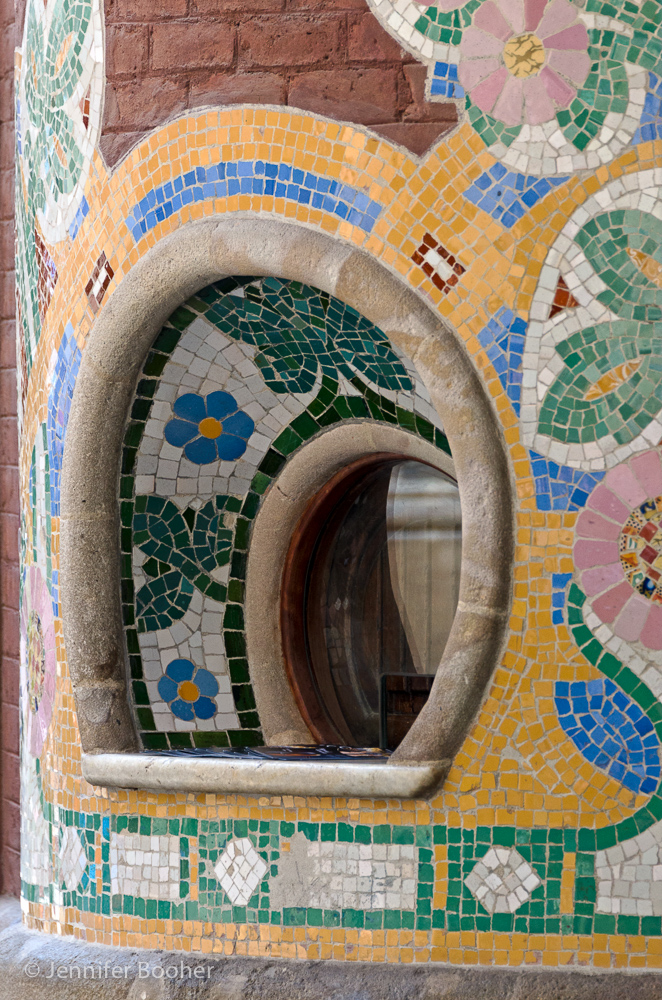
One of the original ticket windows (there’s a lovely, modern addition at the rear of the building with larger ticket facilities.)


The Palau de la Musica is a World Heritage site (No.804), which distinction it thoroughly deserves. It was designed by the Art Nouveau architect Lluís Domènech i Montaner, a contemporary of the better-known-outside-Catalonia Antoni Gaudí. The theater was completed in 1908. That’s all the history I’m going to give right now, but if you’re curious, the World Heritage entry  has tons of detail. I’m just going to show you details!

Palau de la Musica, Catalonia, Barcelona, Lluís Domènech i Montaner

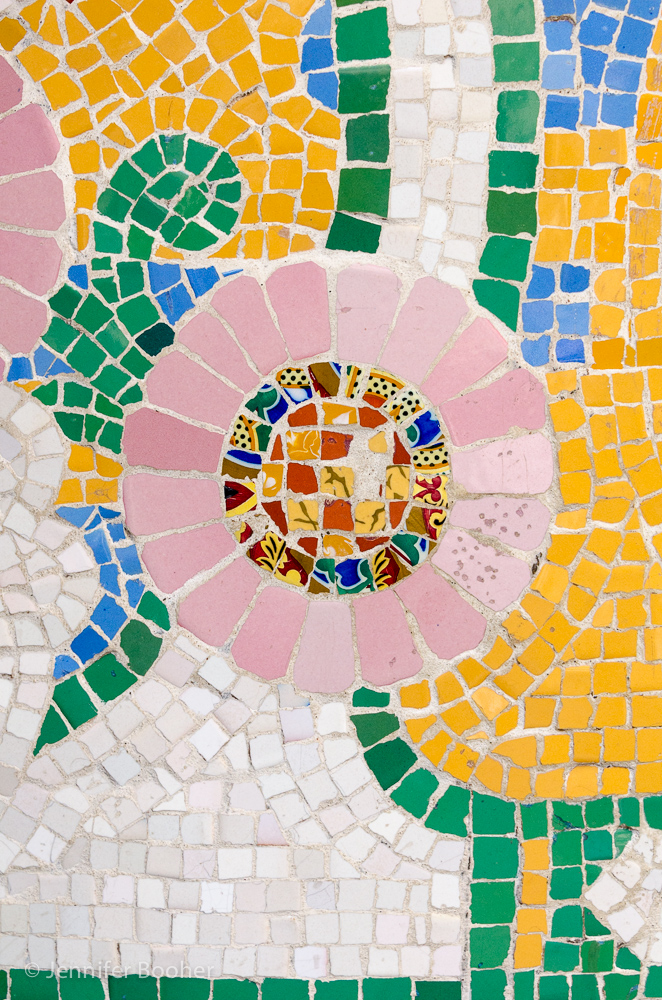
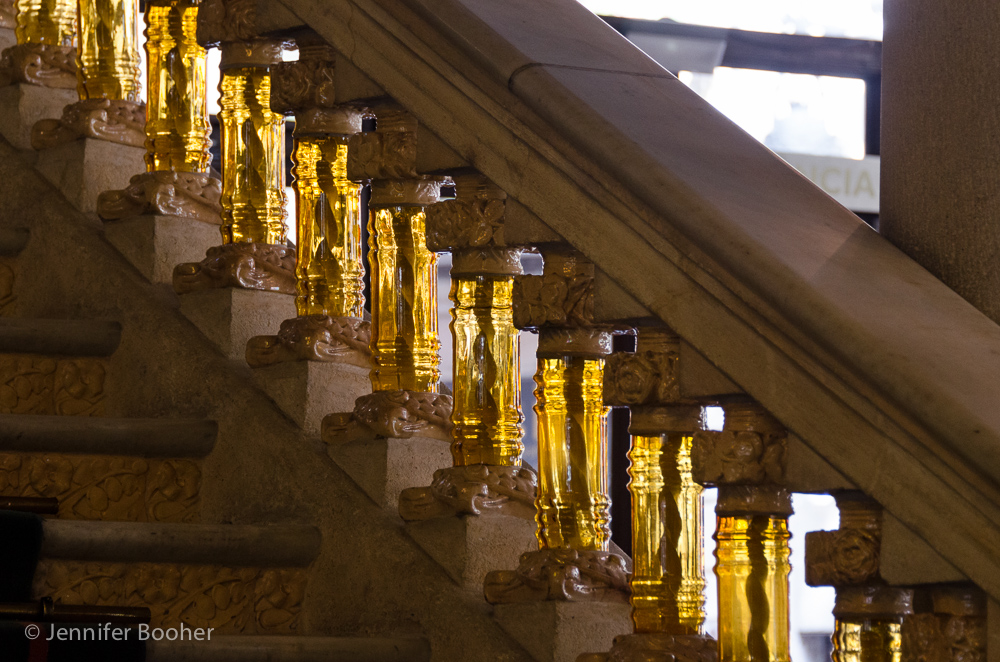
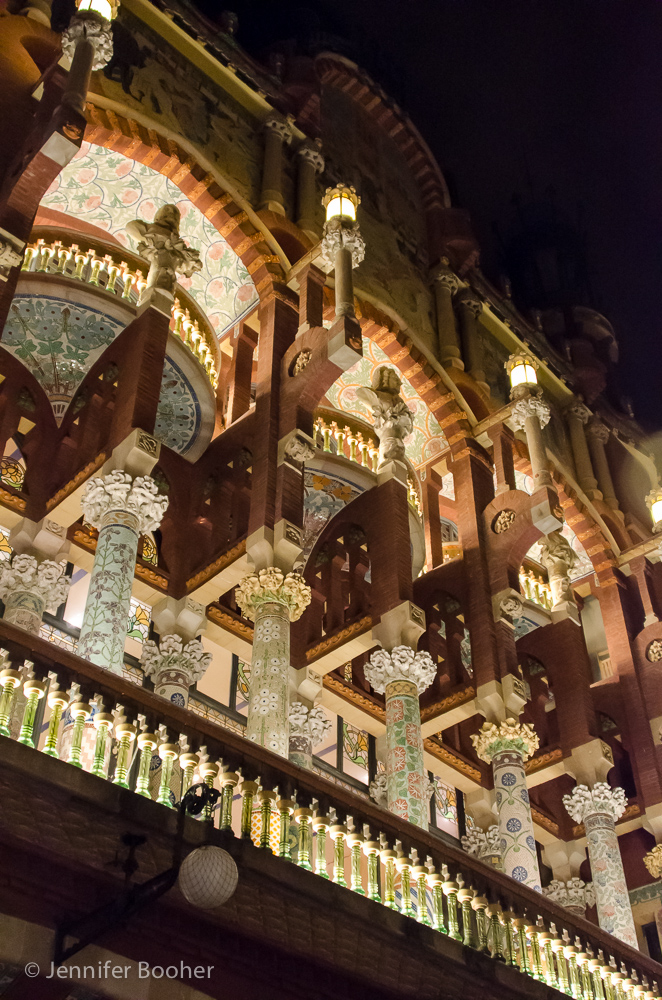
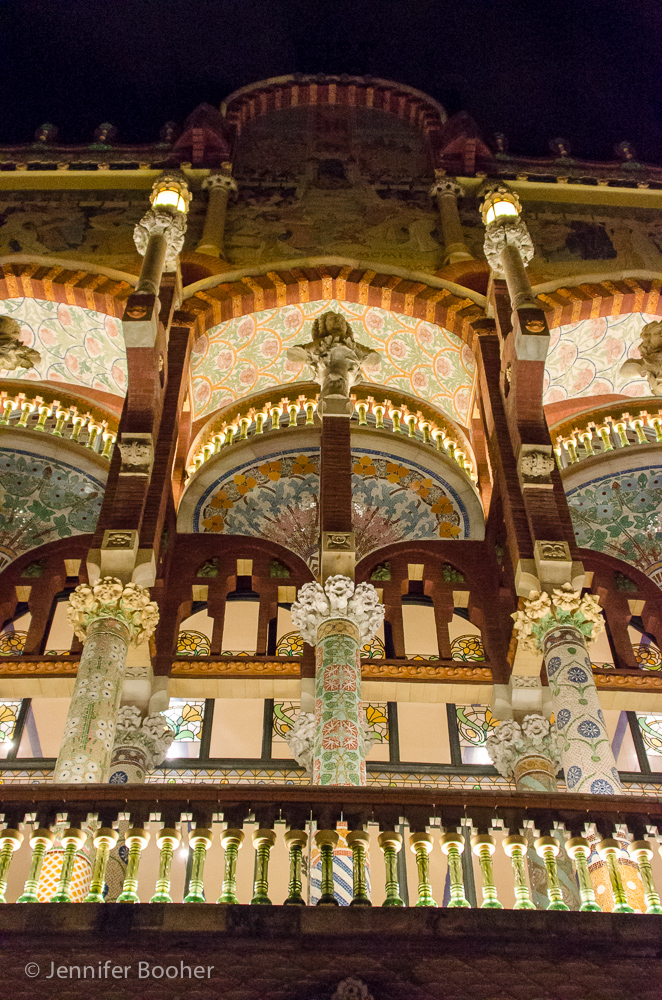
The front façade is just about impossible to photograph – not without a severely professional wide-angle lens – because it faces a narrow street. You can only move about 15 feet away from the building, so it’s hard to take in as a whole. But good lord, the details on it – every square inch is decorated! Mosaics, majolica flowers, cast concrete flowers (or maybe they’re carved stone), patterned brick … You’ll see in the night-time photos that those bannisters behind the bust are emerald-green stained glass. Like this (except these are inside the building):

Lluís Domènech i Montaner

Here are a sampling of the wonders:

Lluís Domènech i Montaner

Lluís Domènech i Montaner

Lluís Domènech i Montaner

Lluís Domènech i Montaner

We did attend a flamenco performance here later in the week, and I turned my ISO up to 6400 (!) to get some shots of the moodily-lit interior. This is the stage, which I gather is designed for choral performance. The row of chairs were used by the flamenco musicians and singers, and that black mat is where the dancers performed. Look carefully at the back wall – the curved wall is decorated with sculptural busts of the Muses, which emerge from two-dimensional mosaic bodies. I’m afraid the lighting is too harsh to convey the effect, which was very cool.

Lluís Domènech i Montaner

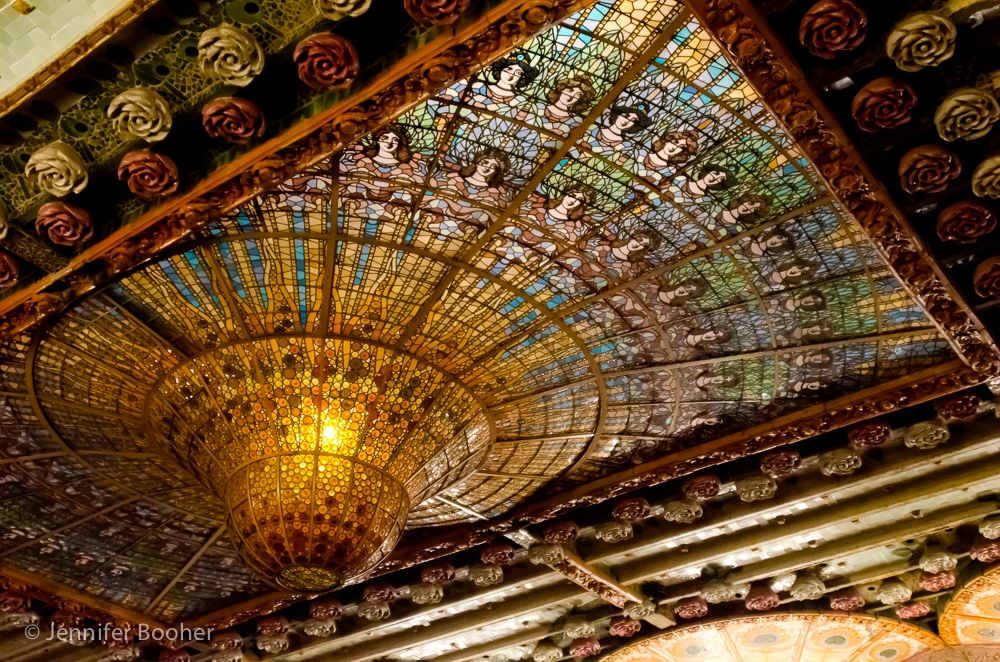
More muses in the stained glass ceiling:

Lluís Domènech i Montaner

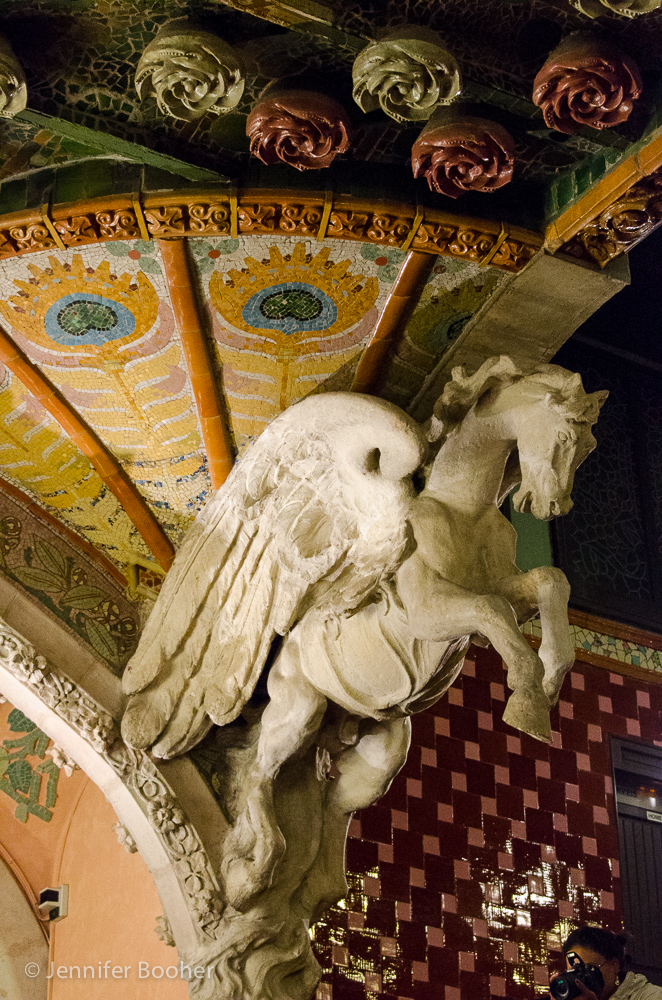
And wild Pegasi going berserk at the corners of the balcony:

Lluís Domènech i Montaner

Lluís Domènech i Montaner


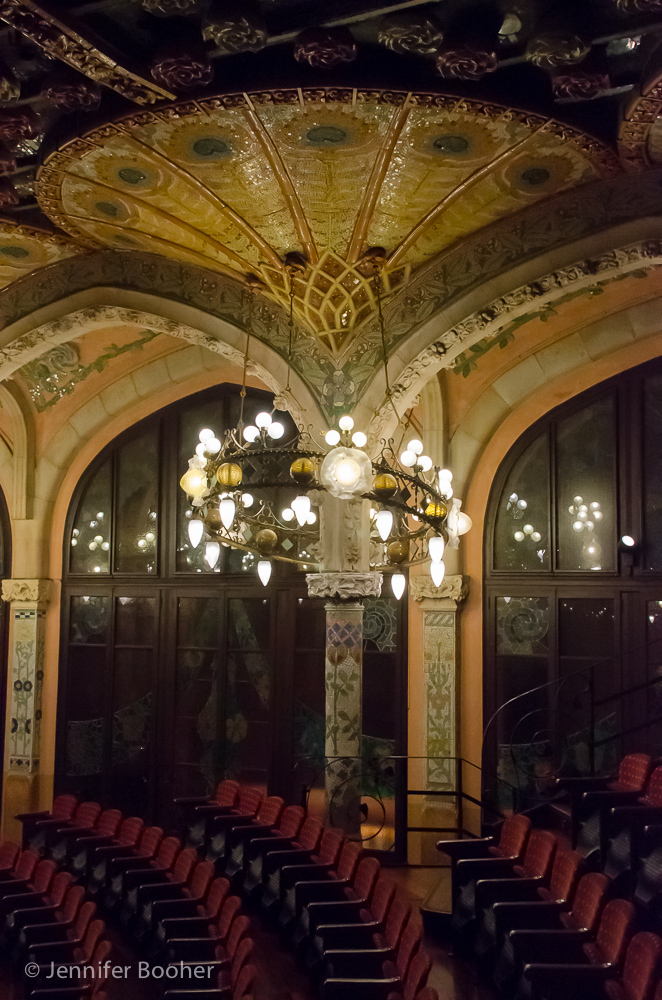
Asymmetrical chandeliers encircling columns topped with majolica and mosaic peacock feathers:

Lluís Domènech i Montaner

And here’s the façade again (look for the stained glass balusters):

Lluís Domènech i Montaner

Lluís Domènech i Montaner

Lluís Domènech i Montaner

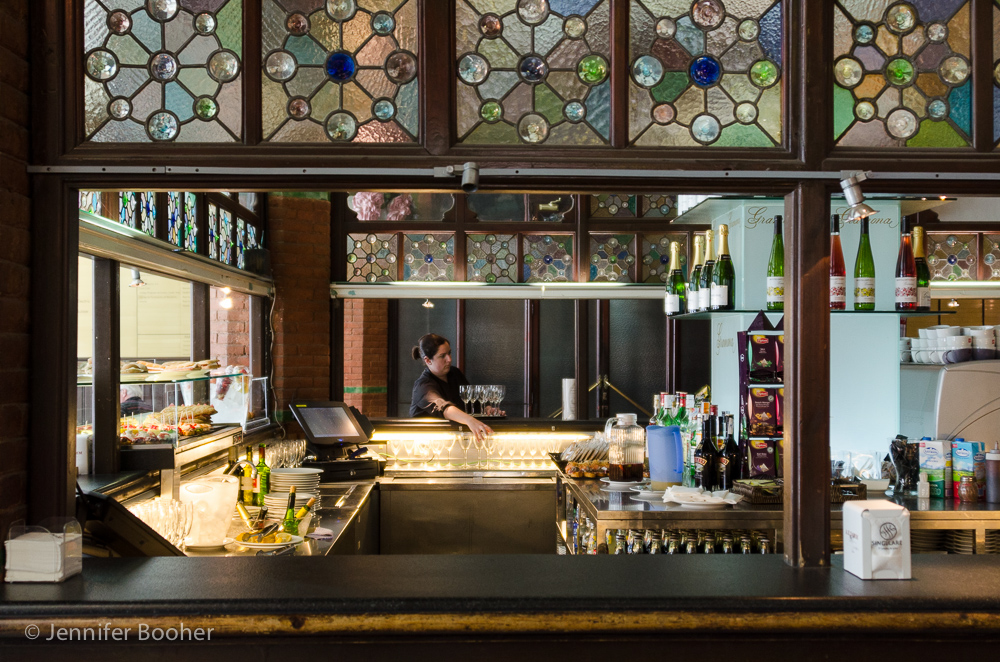
I’ll leave you with one last image showing the unbelievable attention to detail here:

Lluís Domènech i Montaner

In this one photo, there are stained glass, wrought iron, glazed brick, majolica, plaster, and ordinary brick laid on a curve. Mind blown.

Share